


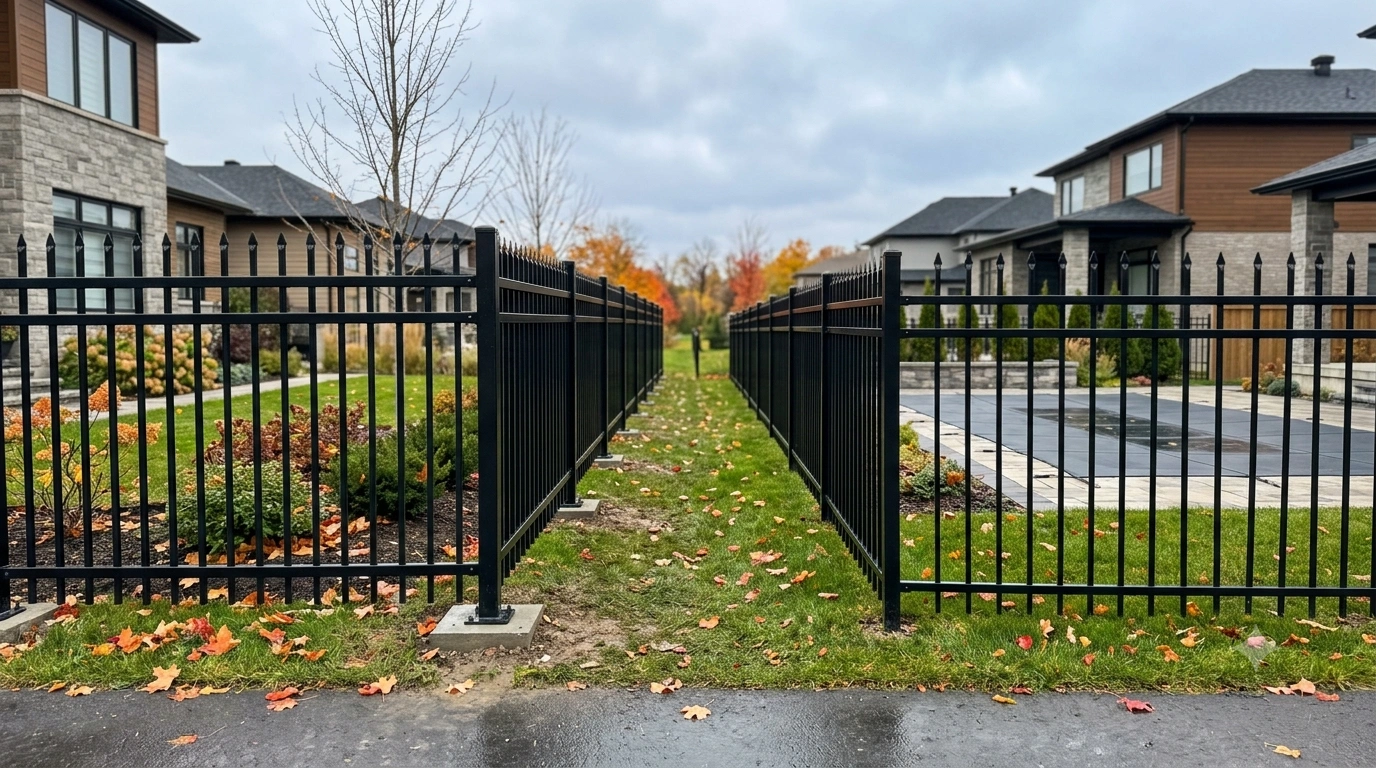
If you have ever stood on a job site in November, watching the first freezing rain coat everything in a thin layer of ice, you already understand why material selection for ornamental fencing is not something you rush through. The choice between steel and aluminum is one of those decisions that looks simple on paper but gets complicated fast once you factor in Canadian freeze-thaw cycles, soil conditions, building code requirements, and long-term lifecycle costs.
Whether you are an architect writing Division 32 specifications, a contractor pricing a subdivision perimeter, or a homeowner trying to figure out what will actually hold up around your pool deck in Mississauga, this guide breaks down the technical differences between steel and aluminum ornamental fencing so you can make a decision you will not second-guess in five years.
Why This Decision Matters More in Canada Than Anywhere Else
Let's get the obvious out of the way. Canada is not kind to outdoor building materials. We are not talking about light coastal humidity or the occasional rainstorm. We are talking about sustained periods of temperatures dropping below minus 20 in much of Ontario, Alberta, and the Prairies, followed by spring thaws that saturate soils and create constant moisture exposure at grade level. Road salt spray near municipal sidewalks, de-icing compounds on commercial lots, and acidic soil in parts of British Columbia and Quebec all add up.
This is why picking a fencing material based on upfront cost alone, without considering corrosion resistance, tensile strength, thermal expansion, and coating systems, is a mistake that catches up with you. Sometimes within just a few seasons.
For a deeper look at how different materials perform specifically under Canadian climate conditions, have a read through our article on What Is the Best Fence Material for Canadian Weather.
Steel Ornamental Fencing: Strength Where It Counts
Steel ornamental fencing has been the go-to for high-security commercial and institutional perimeters for decades, and for good reason. From a structural standpoint, carbon steel has a tensile strength roughly two to three times that of aluminum, which translates directly to better impact resistance, higher load tolerance on long spans, and improved resistance to forced entry.
For specifiers working on school board projects, government buildings, correctional facilities, or any application where CPTED (Crime Prevention Through Environmental Design) principles come into play, steel is often the default starting point.
That said, steel is not without its vulnerabilities. The most obvious one is corrosion. Untreated carbon steel will rust, and in Canadian environments where road salt, moisture, and temperature swings are constant, that rusting can begin within the first year if the protective coating is compromised during installation or by impact damage.
This is exactly why Medallion Fence developed the Armour-Shield™ corrosion protection system for all of its steel ornamental fence products. Rather than relying on a single layer of powder coat over bare steel, the Armour-Shield™ process combines hot-dip galvanization with a chromate conversion layer and a UV-stable polyester powder coat finish. The result is a multi-layer barrier that resists oxidation, salt spray, and UV degradation far beyond what standard painted steel fencing can deliver. Medallion backs this system with a 20-year warranty, which gives you a sense of how seriously they stand behind the process.
The Preston™ Series
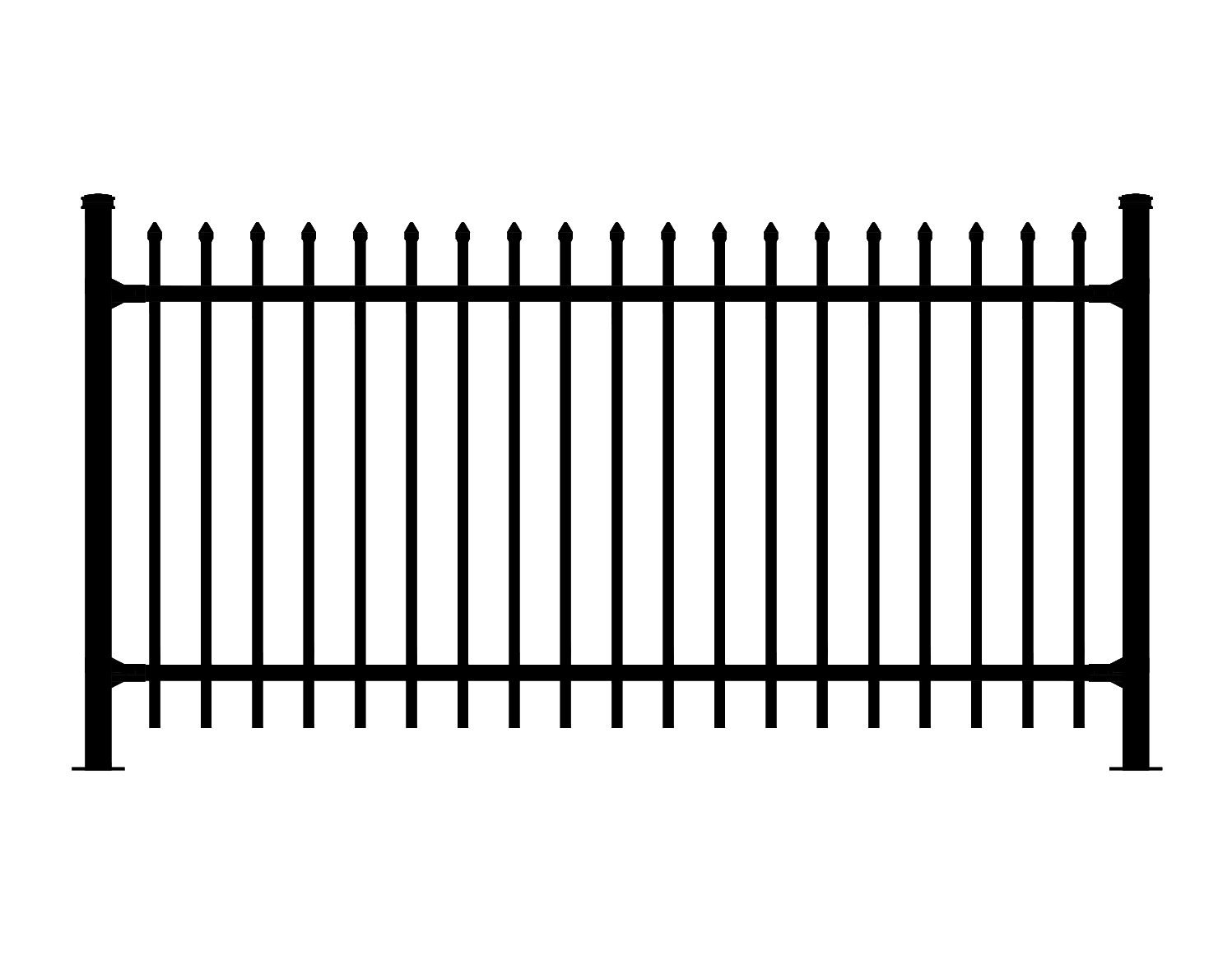
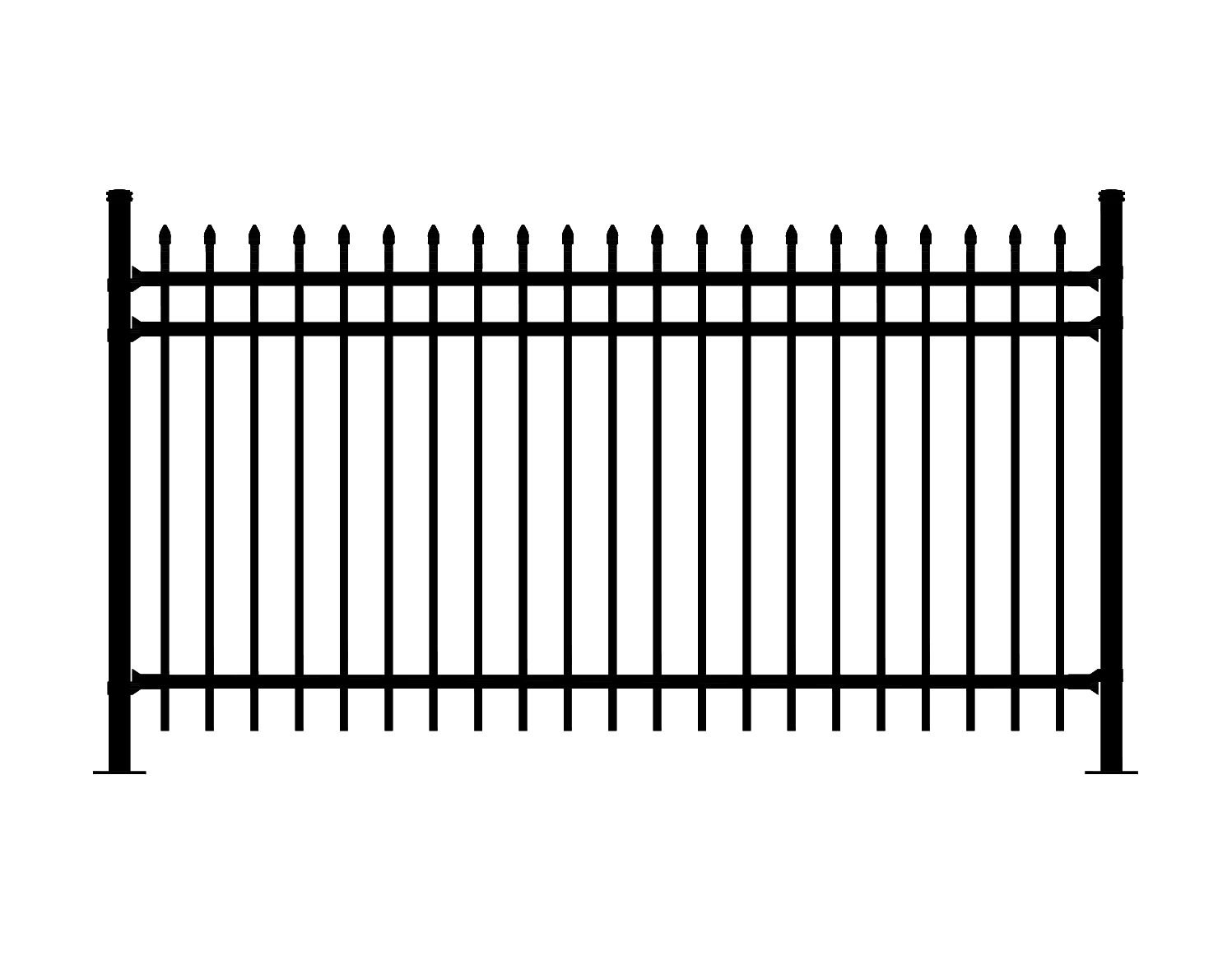
The Preston™ Series is a strong example of what steel ornamental fencing looks like when it is built to commercial and institutional standards. With heavier rail profiles and fully welded picket-to-rail connections, this series is designed for applications where security is non-negotiable but the aesthetic still matters.
The Oxford™ Series
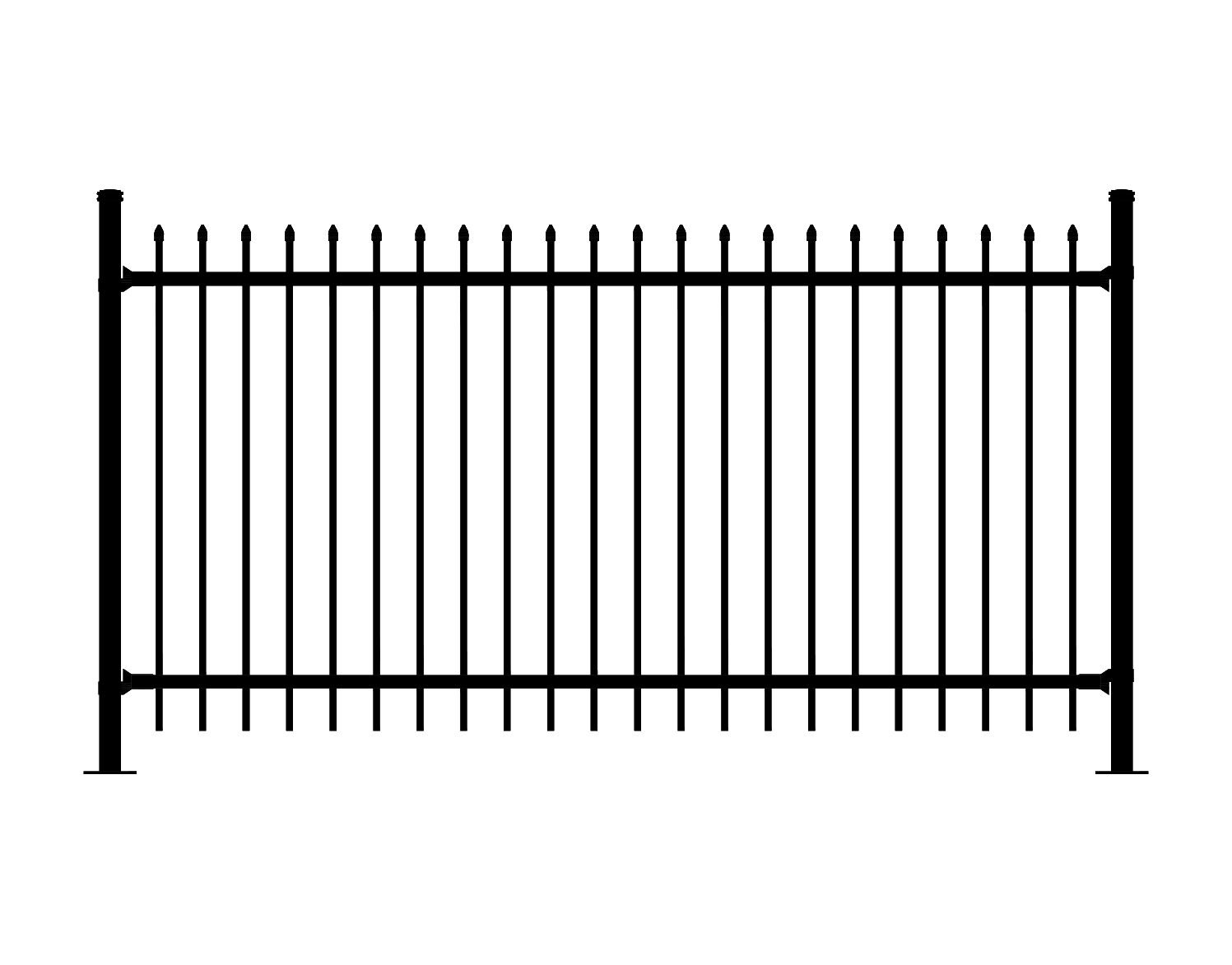
If you are specifying for a project that demands both perimeter security and clean architectural lines, you might also want to check out the Oxford™ Series. It uses 1-1/2" x 1-1/2" rails, 3/4" x 3/4" or 1" x 1" pickets, and a minimum 2-1/2" x 2-1/2" post size, making it suitable for industrial, commercial, and institutional applications. Every style in the Oxford line is available in both steel (Armour-Shield™) and aluminum (Alu-Tuff™), with full DWG and PDF specification sheets available for download directly from the product page.
For architects and engineers who want to dive deeper into the specification process itself, we have a comprehensive resource: Specifying Commercial Fence Systems: A Comprehensive Guide for Architects.
Aluminum Ornamental Fencing: Lighter, Corrosion-Proof, and Surprisingly Versatile
One of the biggest misconceptions about aluminum fencing in the Canadian market is that it is a "lesser" material compared to steel. In reality, aluminum is a fundamentally different engineering solution that excels in applications where corrosion resistance, reduced weight, and ease of installation are priorities.
Aluminum does not rust. Period. Unlike steel, it does not require galvanization or sacrificial coatings to resist oxidation because the metal itself forms a natural oxide layer that protects it from moisture and atmospheric corrosion. For properties near the coast in BC or Nova Scotia, around chlorinated pool enclosures, or anywhere salt exposure is a constant factor, this is a significant advantage.
From an installation standpoint, aluminum panels are substantially lighter than their steel equivalents, which means reduced shipping costs and faster on-site labour. For residential contractors working on tight project timelines during our short Canadian building season, that weight difference can save a full day or more on a typical backyard perimeter installation.
Medallion's Alu-Tuff™ finish system adds an additional layer of protection and aesthetics on top of aluminum's inherent corrosion resistance. The process includes a chromate conversion pretreatment followed by an electrostatically applied polyester powder coat, and Medallion backs the aluminum products with a 25-year warranty, which is actually five years longer than the steel warranty.
The Fairmont™ Series
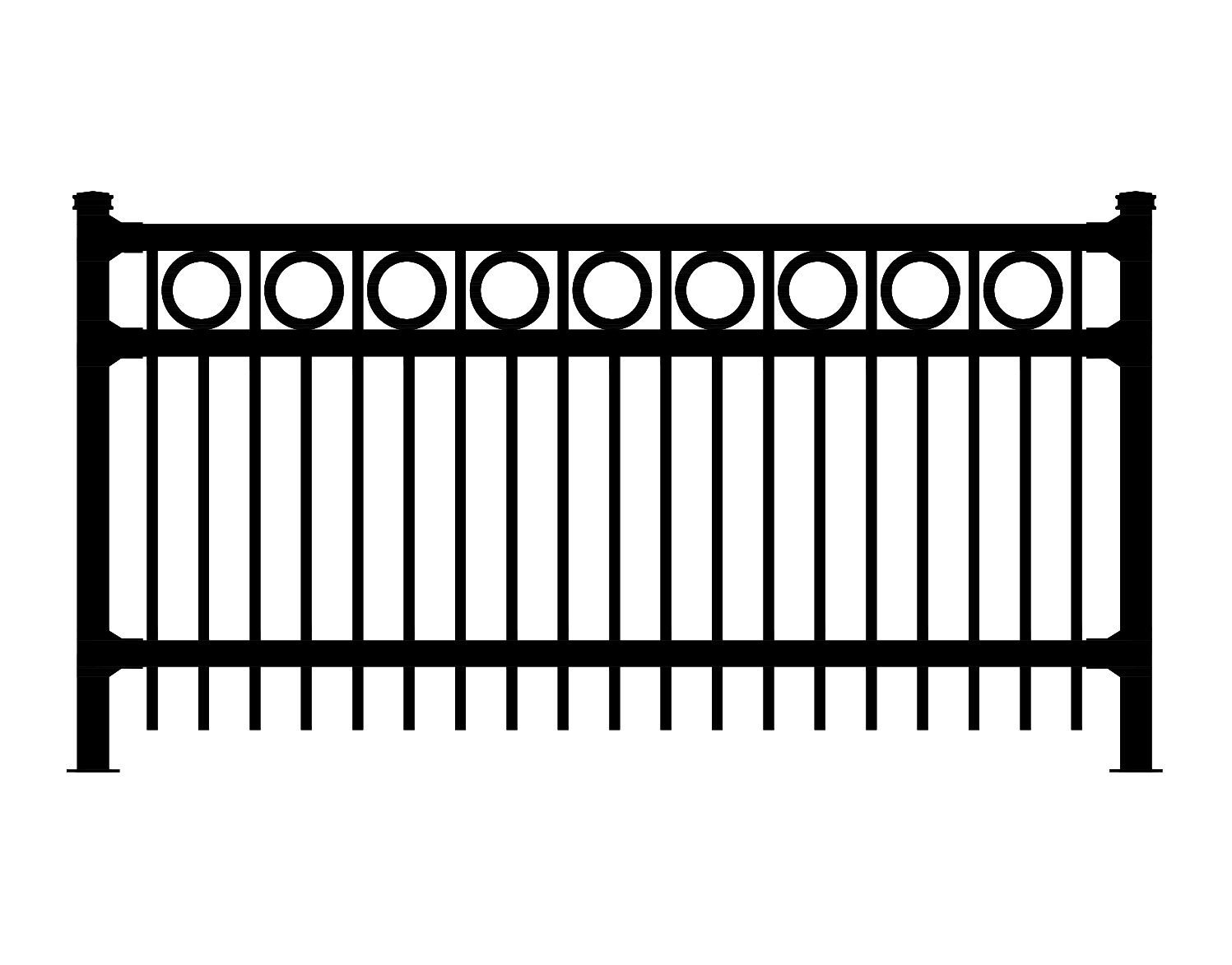
The Fairmont™ Series is one of Medallion's most popular residential aluminum lines, and for good reason. With 1-1/4" x 1-1/4" rails, 5/8" x 5/8" pickets, and a minimum 2" x 2" post, it offers a classic ornamental profile that suits everything from suburban lot lines to estate properties across the GTA. Styles like the Aristocrat-DR and Windsor give homeowners and architects plenty of design flexibility without sacrificing structural integrity.
The Wellington™ Series
For residential estate or light commercial projects that need slightly heavier aluminum profiles, the Wellington™ Series steps things up with 3/4" x 3/4" pickets while maintaining the same clean lines and low-maintenance performance.
The Questions Canadian Buyers Actually Ask (But Most Manufacturers Won't Address)
Having worked with homeowners, contractors, and architects across Ontario and beyond for over 50 years, we have heard just about every question there is. Here are some of the ones that come up repeatedly but rarely get a straight answer elsewhere.
Will aluminum fence pickets bend if my kids push on them or a heavy snow load shifts against the panels?
It depends entirely on the picket gauge and the spacing. Thinner-walled aluminum pickets on budget fencing from big-box stores absolutely can bend. However, when you are specifying solid aluminum tubing with fully welded connections (not bolt-together or roll-formed), the rigidity increases dramatically. Medallion's panels are fully welded from solid tubing, not hollow roll-formed extrusions, which is a critical difference.
Can I use aluminum fencing around a pool, or does my municipality require steel?
In most Canadian jurisdictions, the material itself is not specified in pool barrier bylaws. What is regulated is the height (typically a minimum of 1.2 metres), the maximum gap between pickets (usually no more than 100 mm), and the gate hardware requirements (self-closing, self-latching from the pool side). Aluminum fencing meets all of these requirements easily. We cover pool fencing regulations across every province in detail here: Pool Fence Compliance in Canada.
Does steel fencing interfere with property grading or drainage after installation?
Not if the post footings are designed properly. But this is actually a more nuanced issue than people realize, especially on properties with mature trees. Root systems near fence lines can complicate post installation and long-term stability. We wrote a detailed guide on this exact scenario: How to Install a Fence Post Near Tree Roots Without Damaging the Tree or the Foundation.
I am an architect working in Revit. Can I get CAD files for these fence profiles?
Yes. Every Medallion product page includes downloadable DWG files and PDF specification sheets for both the steel (Armour-Shield™) and aluminum (Alu-Tuff™) versions of each style. If you are working in Revit specifically, we also have a workflow guide that walks through how to model and specify fencing within your BIM environment: How to Model and Specify Fencing in Revit.
Head-to-Head: When to Specify Steel vs. Aluminum
There is no universally "better" material. The right choice depends on your project. Here is how to think about it.
Choose steel when your project requires maximum impact resistance, when the perimeter is subject to potential forced entry, when the application is institutional or high-security, or when the budget allows for a heavier-duty product with a 20-year warranty backed by multi-layer corrosion protection.
Choose aluminum when corrosion resistance is the top priority (pool enclosures, coastal properties, salt-exposed areas), when faster installation and lighter handling matter, when you need the longest possible warranty period (25 years with Alu-Tuff™), or when the application is residential, light commercial, or decorative.
For a side-by-side comparison focused specifically on commercial applications, our blog post on Aluminum vs. Steel: Choosing the Right Material for Your Commercial Fence Project goes into even more detail.
The Manufacturing Difference: Why It Matters Who Builds Your Fence
One thing that often gets lost in the steel-versus-aluminum conversation is the manufacturing quality behind the product. You can specify the right material and still end up with a subpar result if the panels are bolt-together assemblies rather than fully welded, if the coating system is a single layer of paint over raw metal, or if the tolerances are loose enough that panels do not align cleanly from section to section.
Medallion Fence manufactures everything in-house at its facility in Maple, Ontario. Every step, from CNC punching and welding to chromate conversion and powder coating, happens under one roof with multi-point quality inspection throughout the process. That vertical integration is what allows them to maintain consistent tolerances, which matters enormously when a contractor is trying to install hundreds of linear feet of fencing across uneven grade on a commercial site.
If you are evaluating ornamental fence suppliers for an upcoming project, it is also worth understanding how Canadian building codes apply to your specific situation. Our guide to Understanding Canadian Building Code Requirements for Perimeter Fencing is a useful starting point.
Final Thought
At the end of the day, the best ornamental fence is the one that matches your site conditions, your performance requirements, and your long-term maintenance expectations. Steel and aluminum are both excellent materials when they are manufactured properly and finished with coating systems that can withstand what Canadian weather throws at them.
If you are ready to start specifying or just want to talk through what makes sense for your project, reach out to the Medallion team directly. They have been doing this for over 50 years and they are happy to help with technical support, pricing, and lead times.
Ready to Specify Your Next Fence?
Reach out to the Medallion team for technical support, pricing, and lead times on steel and aluminum ornamental fencing systems.
Request a Quote Explore All Fence Series