


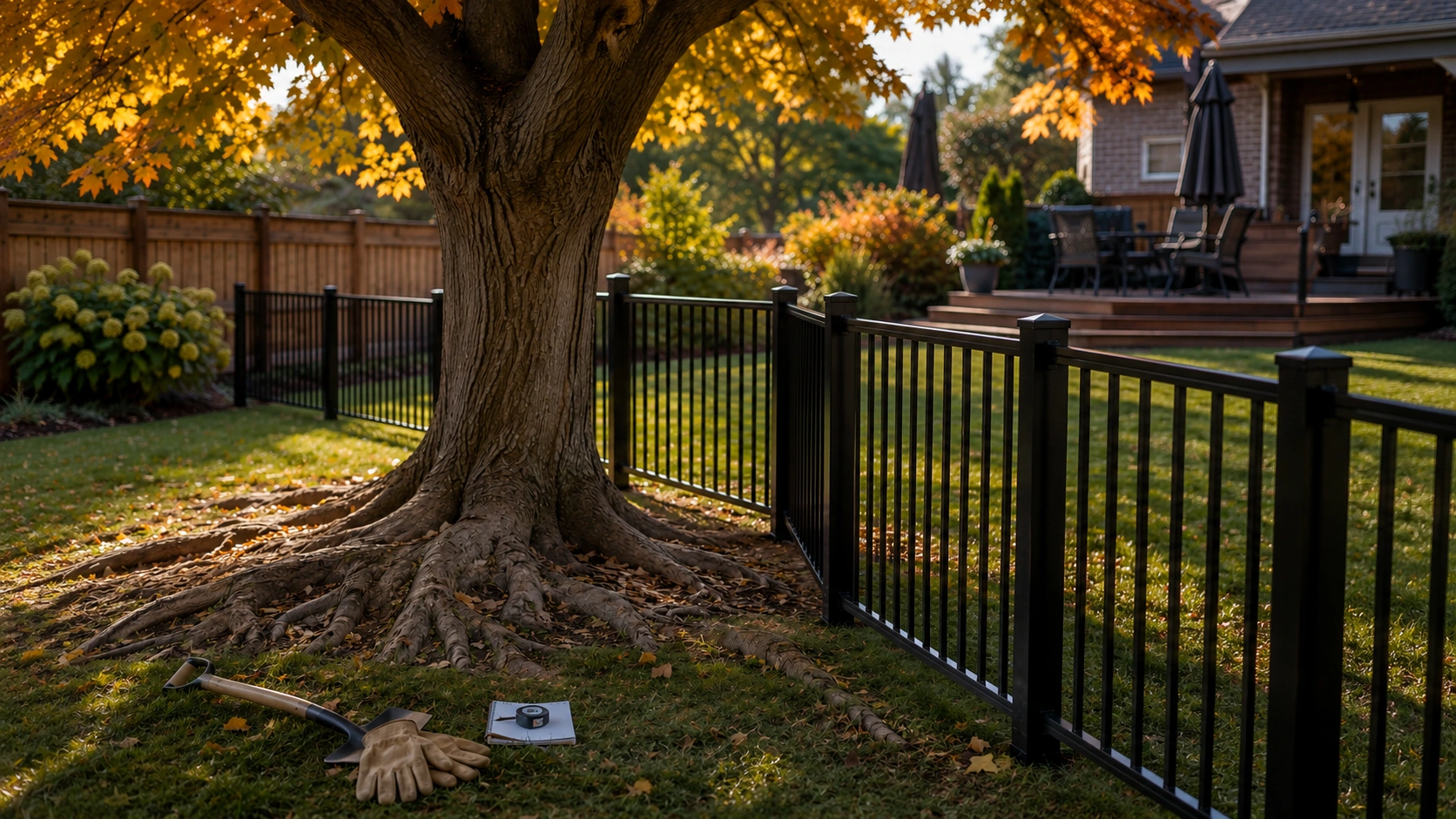
If you have ever stood in your backyard with a shovel in one hand and a fence layout in the other, staring down a forty year old silver maple that seems to have sent roots directly under where your third post needs to go, you already know the problem this article is about. It happens on almost every mature Canadian property, from century home lots in Cabbagetown to acreages outside Calgary. The tree was there first. The fence has to work around it. And most of the advice online either tells you to just auger through everything and hope for the best, or to move your entire fence line six feet to the left, which usually is not an option when you are trying to hold a property line.
Root interference does not announce itself right away. A fence post set too close to a major structural root can look perfectly fine for two or three seasons before it starts to lean, twist, or heave out of the ground. Around the same time, the tree above it may start dropping deadwood, thinning in the canopy, or developing a lean of its own. Both problems usually trace back to the same mistake made on installation day: digging blind.
Map the root zone before you dig
Every mature tree has what arborists call a critical root zone, sometimes shortened to CRZ, and a related tree protection zone that is usually drawn a bit wider as a buffer. The standard method used across North America measures the tree's diameter at breast height, taken about 1.4 metres up the trunk, and multiplies it by a set factor to get a protective radius. A common rule of thumb is roughly 30 centimetres of radius for every centimetre of trunk diameter, though some municipalities use an inch and foot version of the same idea. A 40 centimetre diameter maple, which is a fairly average mature street tree, works out to a root protection radius in the neighbourhood of 3.5 to 4 metres in every direction from the trunk.
That circle is not just a courtesy. In cities like Toronto, any tree with a trunk diameter of 30 centimetres or more on private property is considered protected under municipal tree bylaws, and compacting soil or excavating inside its root zone without a permit can trigger fines even if the tree itself is never cut down. Other municipalities across the GTA, and in cities like Vancouver, Ottawa, and Montreal, run their own versions of the same rule with different thresholds. Before a single post hole gets dug near a mature tree, it is worth a call to the local building or forestry department to find out whether your project needs sign off.
Hand digging versus mechanical augers
Once you know roughly where the roots are likely to be, the digging method matters as much as the layout. A gas or tractor mounted auger is fast, but it does not know the difference between soil and a six inch anchor root, and it will shred through both without much resistance until it hits something the machine cannot handle. For post holes that fall inside or near the root protection zone, hand digging with a spade and a digging bar, or renting an air spade that blows soil away with compressed air instead of cutting through it, is slower but dramatically safer for anything with roots thicker than about two inches in diameter.
A workable rule that a lot of experienced installers use in the field: roots under roughly two inches thick can usually be pruned cleanly with a sharp saw or loppers without much long term impact on the tree, provided the total amount of root removed across the whole project stays well under a quarter of the tree's total root mass. Larger structural or anchor roots, the ones that are visibly thick and radiate straight out from the trunk, should be worked around rather than cut. If a hole keeps hitting one of these, that is the signal to shift the post rather than push through.
The offset post technique
This is where a lot of straight line thinking causes problems. A fence does not have to march in a perfectly rigid line from post to post. Shifting a single post twelve to eighteen inches off the planned line, either toward or away from the property boundary, is usually enough to clear a major root while keeping the overall fence run structurally sound. Ornamental aluminum systems handle this kind of adjustment far better than wood or vinyl, since the panels can be trimmed or racked to follow a slight jog in the post line without leaving an obvious gap.
For posts that simply cannot go deep enough to clear frost line requirements because of root interference, no dig anchors, surface mount brackets, or driven ground spikes are worth considering as an alternative to a full concrete footing. This matters more in Canada than almost anywhere else, since frost depth requirements already range from about 60 centimetres on the BC coast to well over a metre and a half on the prairies, and a post that cannot reach that depth without cutting a major root is stuck between two separate structural problems at once. A shallow footing set beside a compacted, root void filled area is also more prone to frost heave later, since the soil around it settles unevenly once the roots that used to hold it in place are gone.
Maintaining structural integrity while protecting the tree
Where offset posts and irregular spacing are unavoidable, a rackable panel system earns its keep. Medallion's Hillcrest Series is built specifically for uneven ground and post lines that need to bend around obstacles like tree roots, retaining walls, or slopes, without sacrificing the finished look of a straight run.
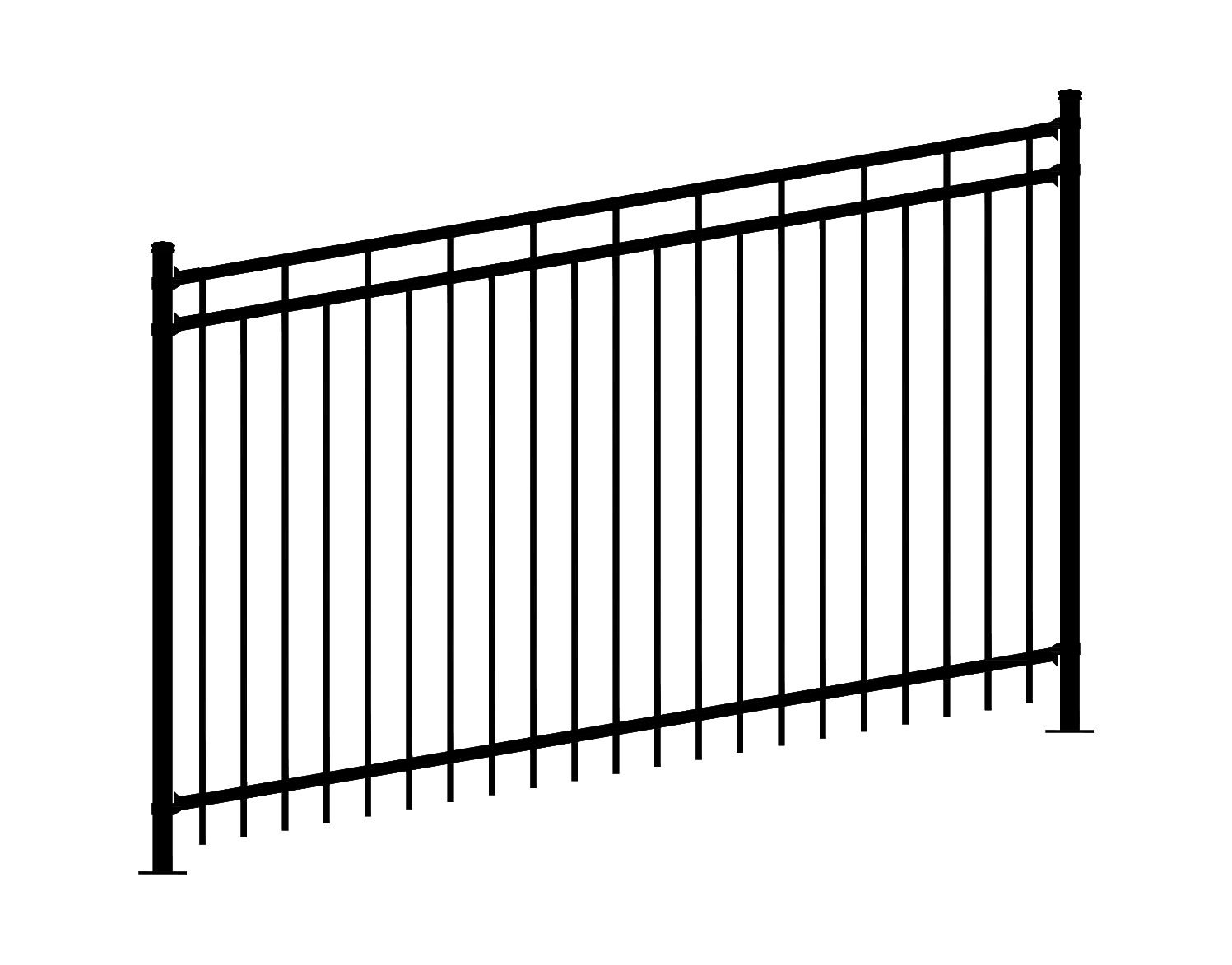
Hillcrest Series
View Product Page →Built specifically for uneven ground and post lines that need to bend around obstacles like tree roots, retaining walls, or slopes, without sacrificing the finished look of a straight run.
For property lines where the root interference is more occasional than constant, a standard residential aluminum system still holds up well, since aluminum posts need a smaller footing than wood and will not rot if a root cut leaves the surrounding soil damp for a season while the tree recovers. The Fairmont Series is a common choice for this kind of project.
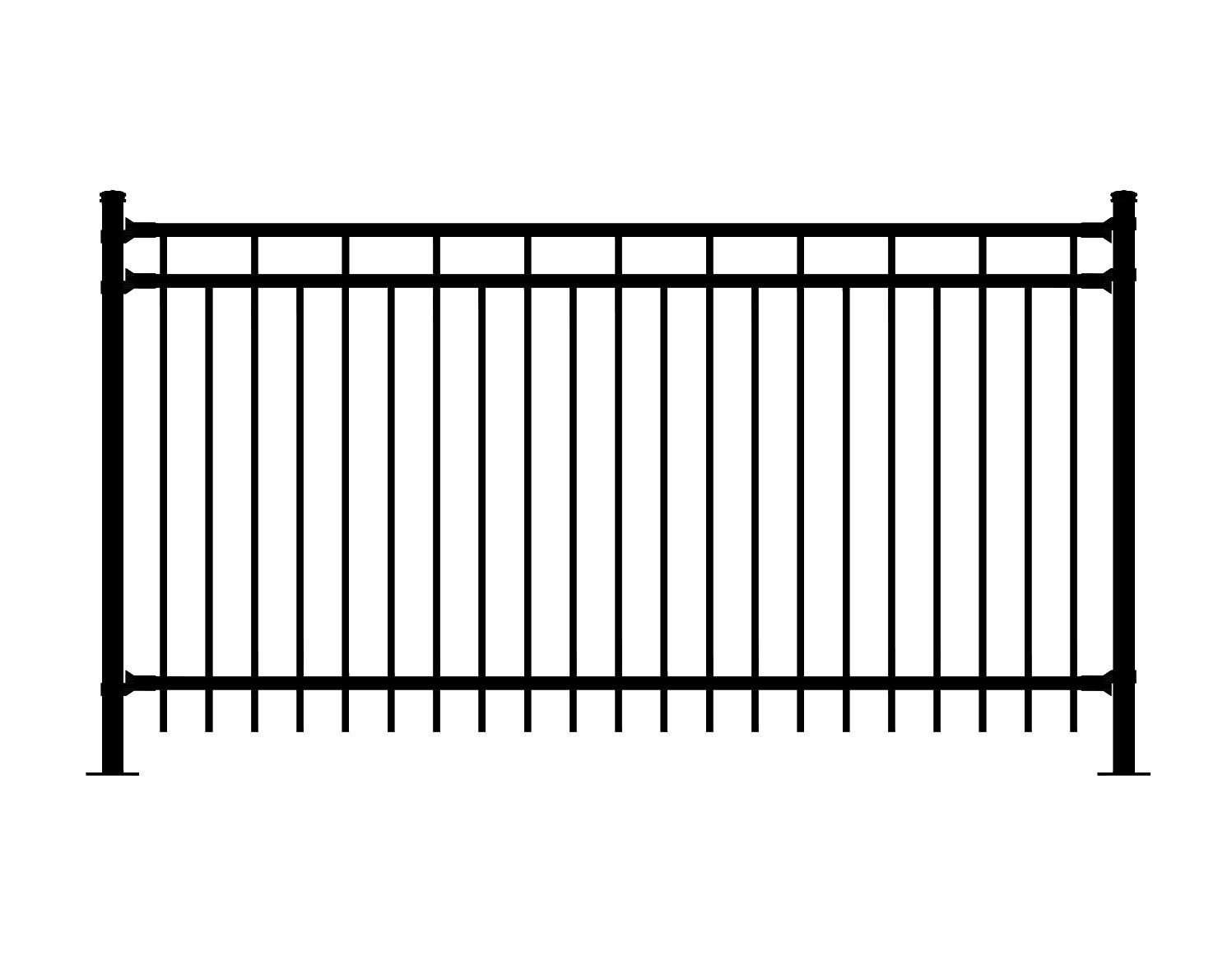
Fairmont Series
View Product Page →A standard residential aluminum system that holds up well on property lines with occasional root interference. Aluminum posts need a smaller footing than wood and will not rot if surrounding soil stays damp.
On larger estate lots with more mature tree cover, where post spacing often has to flex around several trees along one boundary, the Wellington Series offers a heavier residential profile while keeping the same installation flexibility.
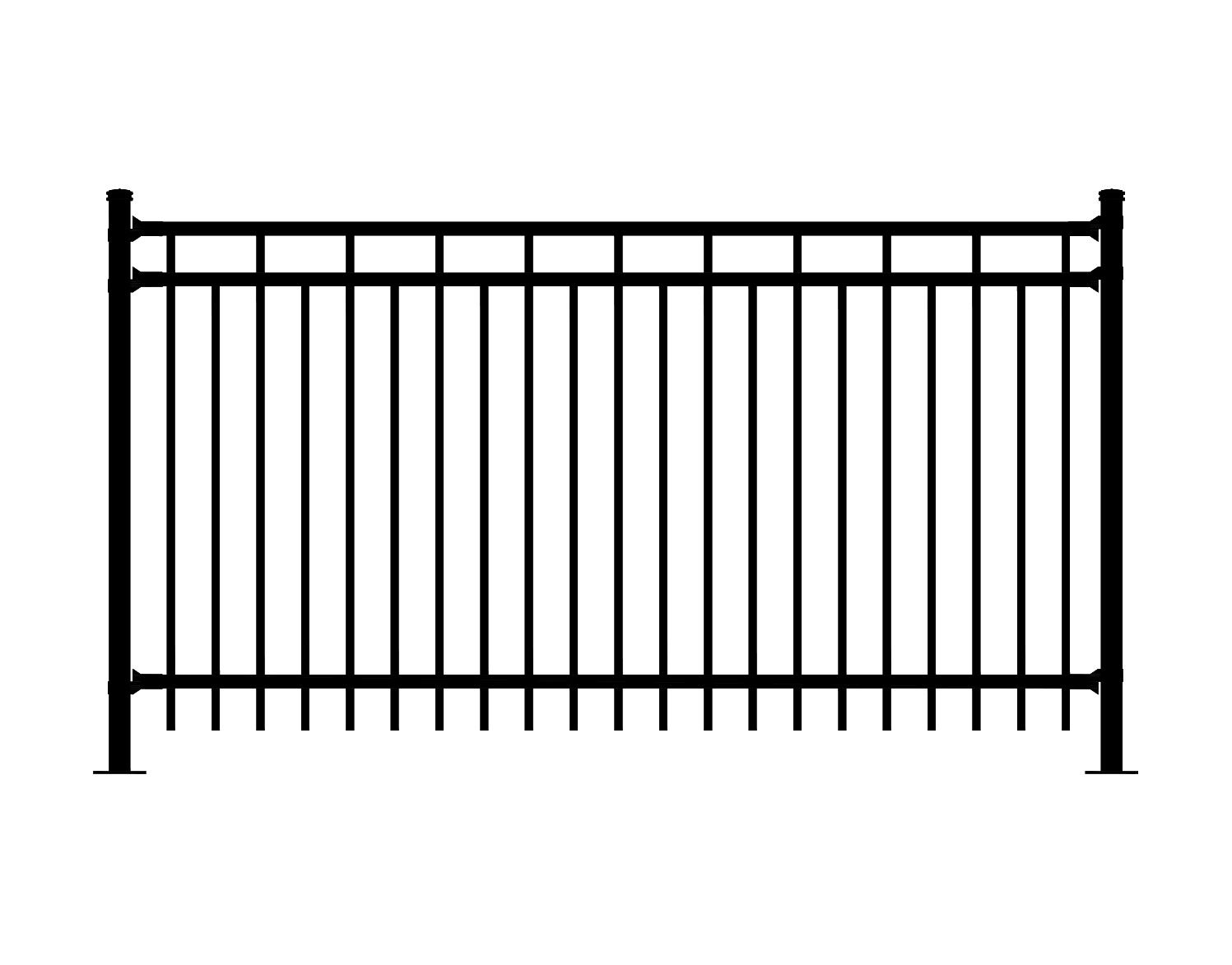
Wellington Series
View Product Page →A heavier residential profile for larger estate lots with mature tree cover, offering the same installation flexibility when post spacing needs to flex around several trees along one boundary.
Questions Canadian homeowners rarely get a straight answer to
Who actually owns a tree that sits on the property line?
In most provinces, a tree whose trunk straddles a boundary is treated as jointly owned by both neighbours, which means both properties generally have some say before major root work happens, even if the fence itself is entirely on your side. This varies by province and sometimes by municipality, so it is worth a quick check before assuming you are free to cut.
Can a neighbour actually hold you responsible if their tree declines after your fence goes in?
Yes, this happens more often than people expect, particularly in cities with active urban forestry bylaws. Documentation matters here. Photos of the root zone before digging, and a record of which roots were cut and how, can make the difference if a dispute comes up two summers later.
Does a stump grinder ruin the ground for a new fence line?
Grinding chews the visible stump into mulch but leaves the structural roots intact underground for years, sometimes over a decade for larger hardwoods, so a fresh post hole in that spot can still hit solid wood.
Will home insurance cover a fence or fence line tree that fails because of root damage from installation?
Most standard homeowner policies treat this as a maintenance and workmanship issue rather than a covered loss, which is one more reason to get the root mapping and digging method right the first time rather than relying on insurance to sort it out later.
A fence line that respects the roots underneath it tends to outlast one that does not, and so does the tree standing next to it. Getting both right on the same afternoon just takes a bit more planning than most installation guides let on.
Need Help With Your Layout?
If you are working out a post layout around mature trees on a Canadian property and want help matching the right series to the site conditions, Medallion Fence's team can walk through the layout with you before anything gets dug.
Contact Our Team