


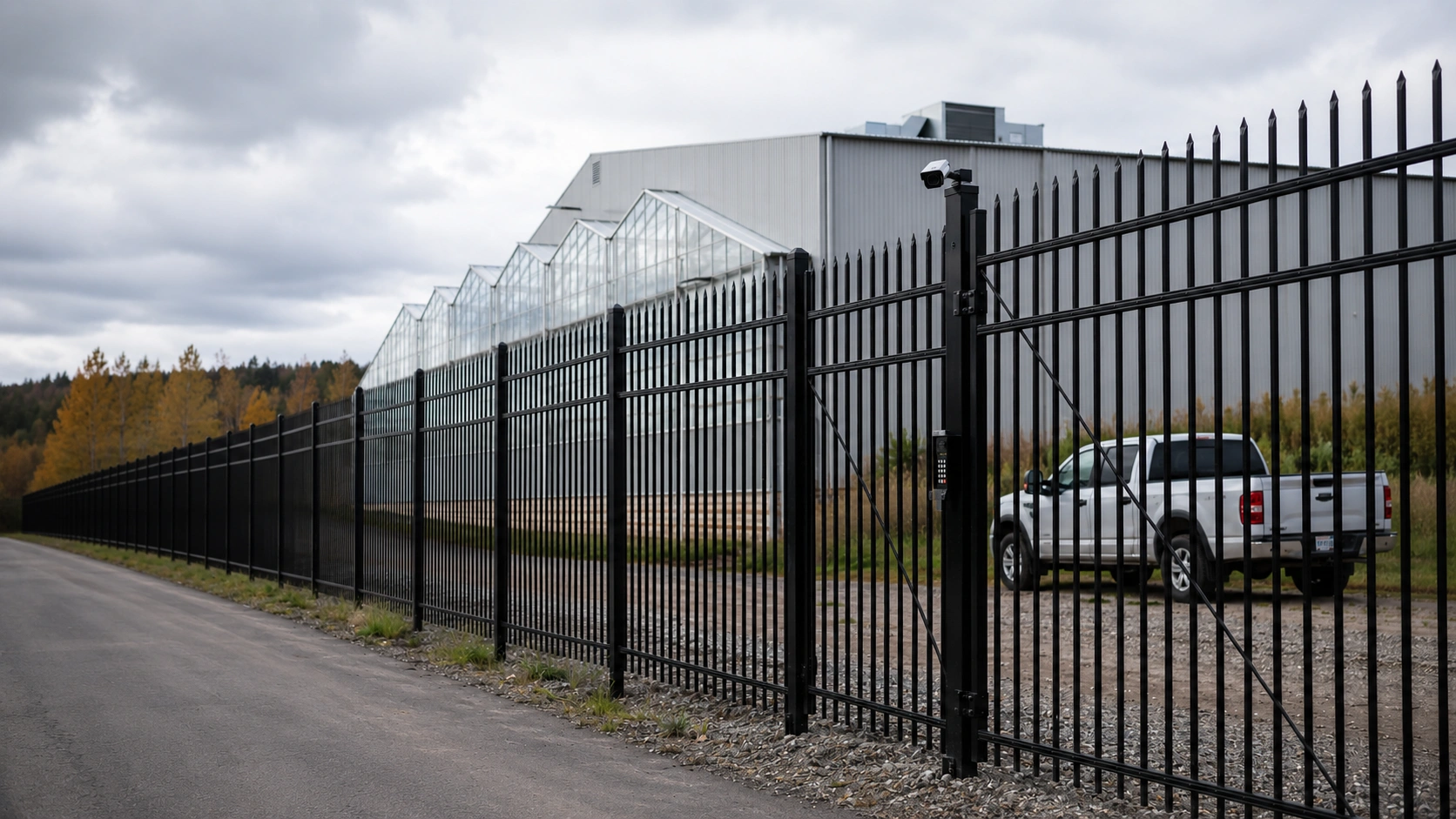
Most people assume the hardest part of opening a licensed cannabis facility in Canada is the license itself. Ask any contractor who has worked on one of these sites and they will tell you a different story. The perimeter fence is where projects stall, budgets balloon, and inspections go sideways. Health Canada does not treat fencing as an afterthought under the Cannabis Regulations, and neither should the people building it.
This is a niche most fence companies barely touch, and most licensees don't find good information on it until they're already behind schedule. So let's get into what the rules actually say, what they don't say, and where contractors keep making the same avoidable mistakes.
What Health Canada Actually Requires
Under Part 11 of the Cannabis Regulations (sections 63 through 74), every standard cultivation, standard processing, and sale-for-medical-purposes site needs a physical barrier surrounding the entire perimeter, plus separate barriers around storage and operations areas. The regulation language is deliberately broad. Fences need to be continuous, well maintained, without gaps, and built so the bottom sits close enough to the ground that nobody can slide underneath. If the fence line crosses a trench or culvert, that opening needs its own grille or barrier. And the fence has to be "constructed to prevent someone from easily jumping or climbing over it."
Notice what's missing there. There's no specific height number written into the regulation for a standard site perimeter. Health Canada's guidance leans on a "rings of protection" concept instead, borrowed straight from correctional and industrial security design: the first barrier detects the intrusion, the remaining barriers slow the person down long enough for a response. That's a performance standard, not a spec sheet, and it trips up a lot of contractors who go looking for a magic number that doesn't exist in the federal text.
The Height Question Everyone Asks
Here's where it gets more specific. For outdoor cultivation, a Limited Access Area surrounding the actual grow needs to be enclosed by an eight-foot steel or equivalent fence, and industry practice has settled on that eight-foot benchmark for a reason: it's tall enough to defeat casual scaling and it's what licensing consultants and Health Canada auditors have come to expect when they review a site's evidence package. For indoor facilities where the building envelope doubles as the perimeter, the conversation shifts from fence height to wall and door construction, but any exterior yard, loading area, or outdoor storage still needs that same anti-climb thinking applied.
If a client asks you to quote a four-foot decorative fence for their perimeter because "that's what the regulation says," they've misread it. There's no such line in the Cannabis Regulations. What you're really building toward is a fence that a licensing inspector looks at and doesn't flag during the physical security evidence package review.
Line of Sight Is Where Most Sites Get It Wrong
Here's a detail that catches even experienced contractors off guard. Health Canada requires the visual monitoring system to have full camera coverage of the site perimeter, at all times, including during power outages. A solid privacy fence, the kind a lot of commercial clients ask for instinctively because they don't want the neighbours seeing a cannabis operation, actively works against that requirement. If your cameras can't see both sides of the fence line clearly, you've created blind spots that show up as deficiencies on inspection.
For outdoor cultivation specifically, there's a second wrinkle. The Limited Access Area fence is supposed to be screened so the growing area isn't visible from outside the site, while the outer site perimeter still needs to support unobstructed camera sightlines. In practice, that often means two separate fence lines doing two different jobs: an outer boundary fence built for continuous camera coverage, and an inner LAA fence built for concealment. Conflating the two into one solid wall is a common and expensive mistake.
Why Chain Link Keeps Failing Sites (and Where Aluminum Wins)
Chain link is technically permitted. Health Canada's own guidance even calls it out as a common barrier for outdoor grow areas, provided it's taut and anchored to rigid posts. But in practice, chain link creates problems that ornamental aluminum doesn't.
The mesh pattern gives climbers built-in footholds, which works against the "difficult to climb" standard unless you add outriggers, barbed toppers, or anti-climb mesh, at which point you're spending nearly as much as you would on a purpose-built commercial system anyway. Galvanized chain link also corrodes faster than most people expect once winter road salt and freeze-thaw cycles get involved, especially in Ontario, the Prairies, and anywhere near the coast in BC or Atlantic Canada. And if you want privacy slats woven through it to satisfy the concealment requirement for an outdoor LAA, wind load tears them apart within a couple of seasons, leaving a site that looks neglected right as a municipal inspector or a nervous neighbour drives by.
A welded aluminum system with narrow picket spacing solves the climbability problem without needing slats or toppers, holds a factory powder coat finish for decades without repainting, and doesn't rust the way galvanized steel mesh does. For a licensee trying to get through a municipal site plan approval where council members are already skittish about a cannabis facility in their ward, that appearance difference matters more than people expect. It's often the fence itself that determines whether the neighbours show up at the public meeting to object or stay home.
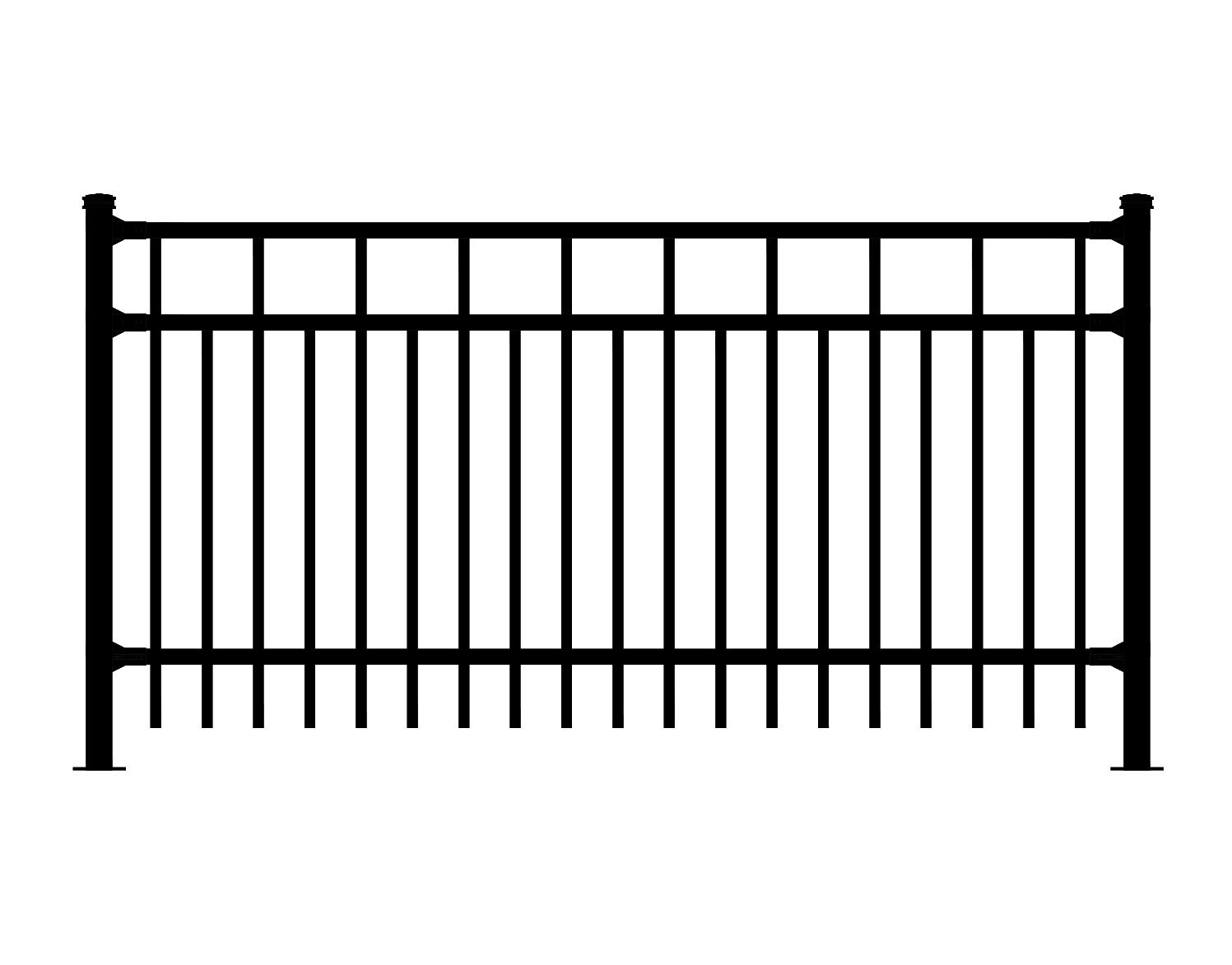
Oxford Series (ALDEN)
Built for industrial, commercial, and institutional applications with 1-1/2 inch rails and heavier 2-1/2 inch posts.
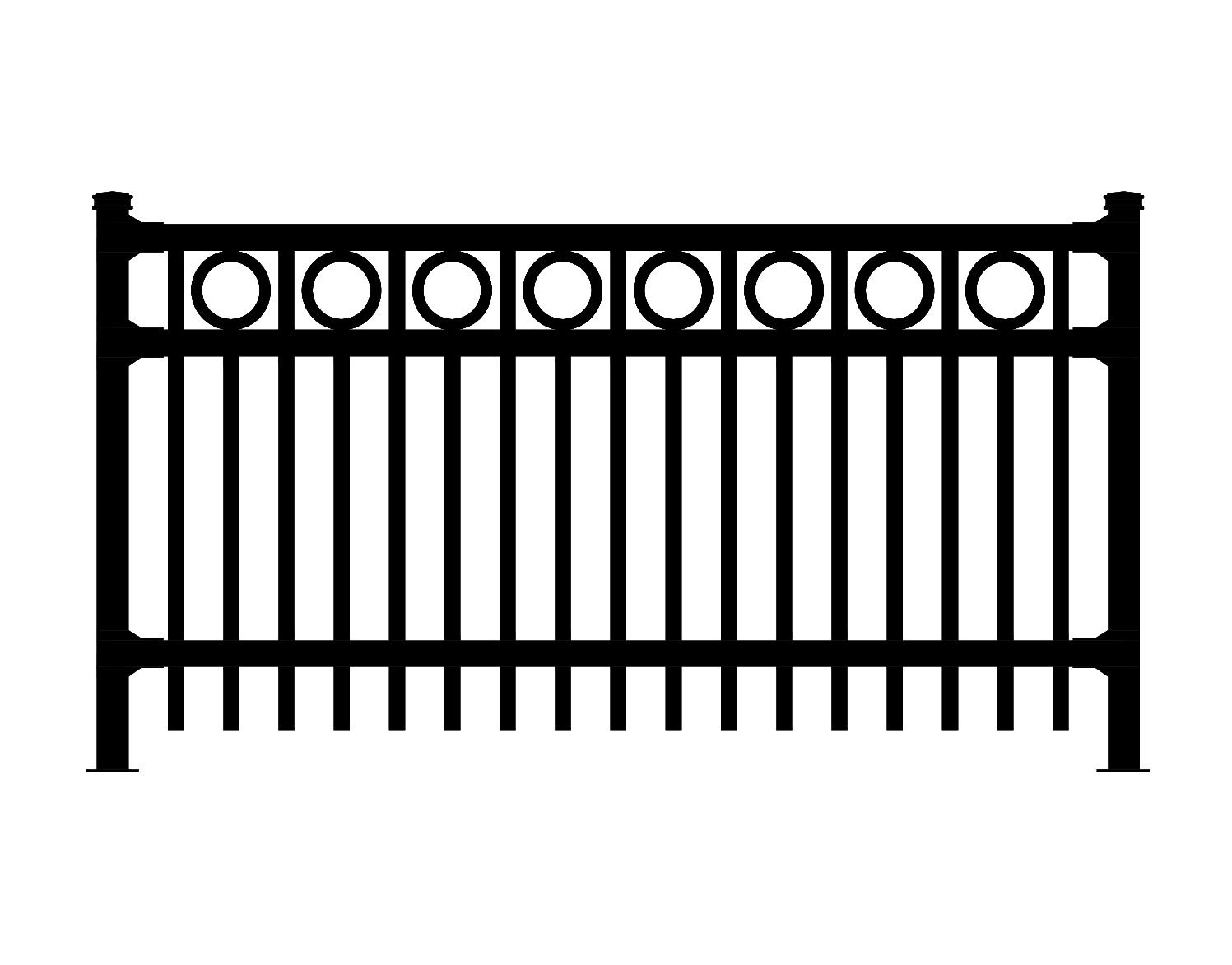
Preston Series (GUARDIAN)
Taller, more imposing profile combining anti-climb performance with a finished commercial look.
Custom Gates (Stanton Double)
Double gate design built to match the perimeter fence for visual and structural consistency.
Gates Are Where Inspections Actually Fail
Contractors spend most of their planning time on the fence line and treat the gate as an afterthought, but gates are where access control lives. Every access point, including vehicle gates, needs its own control device such as a card reader, keypad, or electromagnetic lock, and it needs to tie into the same intrusion detection and monitoring system as the rest of the perimeter. A beautifully specified fence with a gate that swings open on a basic padlock is an easy deficiency for an inspector to catch.
For drive and passage applications, a double gate design built to match the perimeter fence keeps the whole system visually and structurally consistent, which also simplifies the access control hardware integration.
Questions Contractors Rarely Get Straight Answers To
Does Health Canada approve my fence design before I build it?
Not in the sense of a stamped drawing. You submit a physical security plan as part of your licensing application, and Health Canada reviews it along with everything else in your evidence package. The real test comes during site verification, so building to the standard matters more than getting a pre-approval that doesn't formally exist.
Do municipal bylaws matter if Health Canada already signs off?
Yes, and this trips up a lot of first-time licensees. Federal cannabis regulations and municipal zoning or site plan control are two completely separate approval tracks. A fence that satisfies Health Canada can still get rejected at the municipal level over height variances or setback rules, so it pays to loop in the municipality early rather than treating federal compliance as the finish line.
Can I mix chain link on part of the site and aluminum elsewhere?
Technically yes, as long as every section meets the same anti-climb and continuity standard. In practice, mixed systems tend to create weak points right at the transition, and inspectors notice those seams.
Who's on the hook if the fence fails an inspection after installation?
Ultimately the licence holder answers to Health Canada, but a contractor who understood these requirements up front saves the client from a very expensive retrofit six months into operation.
Let's Get Your Site Compliant Before It Becomes a Problem
If you're a fence contractor bidding on a licensed cannabis site, or a commercial client trying to get through the physical security portion of a Health Canada application without a redo, Medallion Fence has already worked through these details with architects and contractors across Ontario, BC, Alberta, and beyond.
Request a Project QuoteGet in Touch
905-832-2922
Every panel is fully welded in-house at the Maple, Ontario facility, built with Canadian winters in mind rather than adapted from a warmer climate spec sheet. Bring your site plan, and let's figure out which series actually fits your compliance picture instead of guessing.