


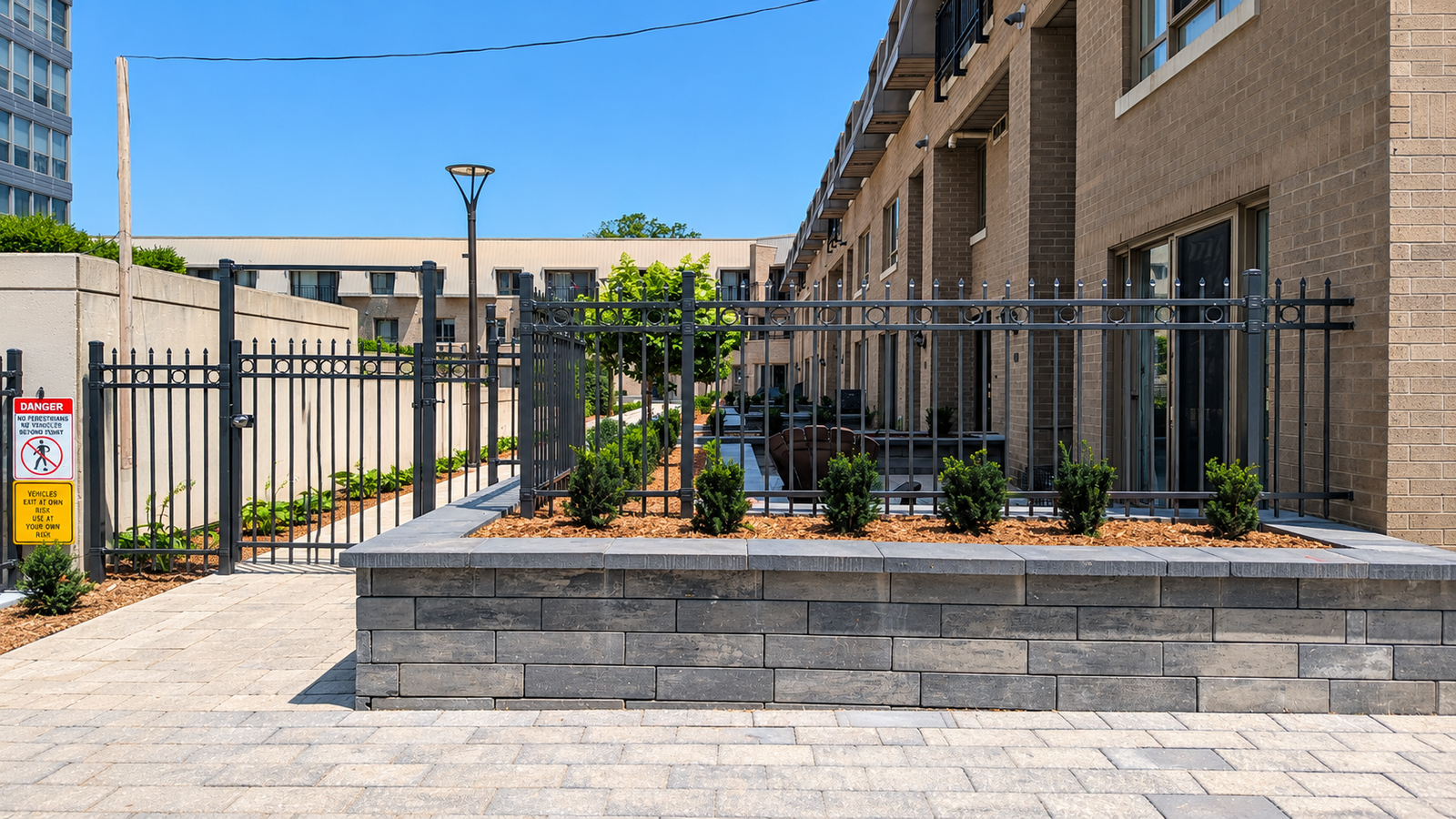
The blog cover image is for reference purposes only and does not depict the actual Medallion Fence product.
If you have ever driven through a neighbourhood in the GTA during early spring and noticed a wrought-iron fence already showing orange streaks of rust after just a few winters, you know how quickly Canada's climate can destroy a metal finish. The fence probably looked great on installation day. But a couple of seasons of freeze-thaw cycling, road salt splash from the plows, and summer UV exposure did what they always do to a conventional paint job: cracked it, peeled it, and left the substrate exposed.
That scenario is exactly why powder coating has become the preferred finishing method for ornamental metal fencing across Canada. And it is not just a marketing claim. There are real, measurable reasons why architects, contractors, and homeowners are all moving away from liquid paint finishes and toward electrostatically applied powder coat systems. Let's break down the technical reasons, the Canada-specific considerations, and the practical benefits that make powder coating the clear winner.
What Powder Coating Actually Is (And Why It Is Not Just "Thick Paint")
There is a common misconception that powder coating is simply a thicker version of regular paint. That is not accurate.
Powder coating is a dry finishing process. Instead of applying a liquid mixture of pigments suspended in a solvent carrier, the process uses finely ground particles of polymer resin combined with pigments, curatives, levelling agents, and flow modifiers. These particles carry an electrostatic charge and are sprayed onto the metal substrate, which is grounded. Because of the electrostatic attraction between the charged powder particles and the grounded metal surface, the powder adheres uniformly to every contour of the workpiece, including inside corners, weld joints, and hard-to-reach profiles on ornamental pickets and rail intersections.
After application, the coated piece goes into a curing oven at temperatures typically ranging between 140°C and 220°C. At that temperature, the powder melts, flows into a continuous film, and undergoes a chemical cross-linking reaction. The result is a molecular bond between the coating and the metal surface, not just a mechanical layer sitting on top. This is a fundamental difference from liquid paint, which relies on adhesion through surface tension rather than a true thermal bond.
For fence manufacturers who do this in-house, the quality control advantage is significant. Every panel goes through CNC punching, welding, surface preparation, electrostatic powder application, and curing under one roof. That consistency matters when you are specifying hundreds of panels for a commercial or institutional project.
Why This Matters Specifically for Canadian Properties
Canada presents some of the most demanding environmental conditions a fence finish will ever face. And we are not just talking about cold temperatures. The real threat to metal fencing in this country is the combination of multiple stressors hitting the finish simultaneously throughout the year.
Freeze-thaw cycling
Freeze-thaw cycling is the big one. In Ontario and Quebec alone, a metal fence can experience anywhere from 30 to over 100 freeze-thaw cycles per season, depending on the specific microclimate. Every time moisture penetrates a crack or pinhole in a conventional paint finish, it freezes, expands, and mechanically forces the coating apart from the inside out. This is the same process that destroys concrete driveways and bridge decks, and it is equally destructive to painted metal surfaces. Properly cured polyester powder coating remains flexible at temperatures well below freezing and handles freeze-thaw cycling without cracking or peeling. That flexibility is something liquid paint simply cannot match.
Road salt and de-icing chemicals
Road salt and de-icing chemicals are the second major concern, and one that many homeowners do not think about until the damage is already done. Municipalities across Canada use millions of tonnes of sodium chloride, calcium chloride, and magnesium chloride on roads every winter. That salt gets kicked up by traffic and deposited on any fence within splashing distance of a road or sidewalk. Calcium chloride in particular is extremely aggressive on bare metal. A paint finish with even a small chip or scratch becomes an entry point for chloride ions, which accelerate the corrosion reaction between iron and moisture. Powder coating's resistance to chipping and scratching means that barrier stays intact far longer, keeping salt away from the substrate underneath.
UV degradation
UV degradation rounds out the trifecta. Canadian summers bring extended daylight hours and intense UV exposure, especially in southern Ontario, the Prairies, and British Columbia. UV radiation breaks chemical bonds in polymer chains, which causes chalking (that powdery residue you sometimes see on older painted surfaces), fading, and eventual embrittlement. High-quality polyester powder coatings are specifically formulated with UV-stable resins that resist this breakdown. That is why a properly powder-coated fence can retain upwards of 95% of its original gloss after a decade of outdoor exposure.
Powder Coating vs. Liquid Paint: A Technical Comparison
When architects and contractors are specifying finishes for a project, the comparison between powder coating and traditional liquid paint comes down to a handful of measurable performance characteristics.
Film thickness and uniformity
A typical powder coat application produces a film thickness of 50 to 100 microns (roughly 2 to 4 mils). Liquid paint, by contrast, tends to produce a thinner and less consistent film, with runs, drips, and thin spots being common, especially on complex ornamental profiles with picket tips, scrollwork, or ring details. The electrostatic application process naturally wraps the powder around all surfaces of the workpiece, including the back side of rails and the inside edges of welded joints. Liquid paint requires multiple passes and careful technique to achieve comparable coverage, and even then, the result is rarely as uniform.
Adhesion and impact resistance
Because powder coating forms a thermal bond with the substrate during the curing process, it resists chipping, peeling, and flaking far better than mechanically adhered liquid paint. If a powder-coated fence panel takes a direct impact from a piece of landscaping equipment or a stray hockey puck (a very real concern for many Canadian properties), the coating is flexible enough to move with the dent rather than cracking and delaminating. That means even a minor impact does not compromise the corrosion protection the way it would on a painted surface.
Colour retention and fade resistance
Powder coating holds its colour and sheen over time in ways that liquid paint cannot match. Deep colours like black, hunter green, and dark brown, which are the most popular choices for ornamental fencing across Canada, are especially prone to showing UV fade with conventional paint. Powder coat formulations designed for exterior architectural applications use super-durable resins that pass industry-standard accelerated weathering tests (such as AAMA 2604 and Qualicoat Class 2), ensuring that the finish you choose on day one is the finish you still see ten or fifteen years later.
The Question Nobody Talks About: What Happens Under the Powder Coat?
Here is something that rarely gets discussed in consumer-facing content about fencing finishes, but that architects and experienced contractors already know: the powder coat layer is only as good as the substrate preparation and the corrosion protection system underneath it.
A single layer of powder coat applied directly to bare steel will eventually fail in a Canadian climate. The industry knows this. That is why responsible manufacturers use a multi-stage protection system. For steel fencing, the best practice is to start with hot-dip galvanization (which creates a zinc barrier that sacrificially protects the steel from corrosion), followed by a chromate conversion coating or equivalent pretreatment, and then the powder coat topcoat. This three-layer approach means that even if the powder coat surface is scratched or chipped years down the road, there are additional barriers preventing moisture and chloride ions from reaching the base steel.
For aluminum fencing, the substrate is inherently resistant to rust (aluminum forms its own passive oxide layer), but it still benefits from a chromate conversion pretreatment before powder coating to maximize adhesion and long-term finish durability.
This layered approach is what separates a fence that holds up for 20 or 25 years from one that starts showing white corrosion spots or rust bleed within five. If you are evaluating fencing suppliers for a project, ask specifically about what is under the powder coat. The answer will tell you a lot about the product's real-world lifespan.
Environmental Benefits Worth Mentioning
This is another area where powder coating pulls ahead of liquid paint in a meaningful way, and it matters increasingly to specifiers working on projects with sustainability requirements or LEED targets.
Liquid paint contains chemical solvents that evaporate during application and drying. That evaporation releases volatile organic compounds (VOCs) into the atmosphere. VOCs contribute to smog, ozone depletion, and respiratory health issues for workers and nearby communities. Powder coating eliminates this problem almost entirely. Because the process uses dry powder with no liquid solvent carrier, VOC emissions are negligible to zero. The overspray powder that does not adhere to the workpiece during application can be captured and recycled back into the system, reducing material waste to near zero as well.
For architects and project managers working on institutional or municipal projects in Canada, this environmental advantage can be a meaningful line item in a sustainability report. And for homeowners who simply want to make a responsible choice, it is worth knowing that the finish on your fence was applied using one of the cleanest industrial coating processes available.
Powder-Coated Fencing Built for Canadian Conditions
To see what properly engineered powder-coated fencing looks like in practice, take a look at these product lines from Medallion Fence, a Canadian manufacturer based in Maple, Ontario, with over 50 years of experience.
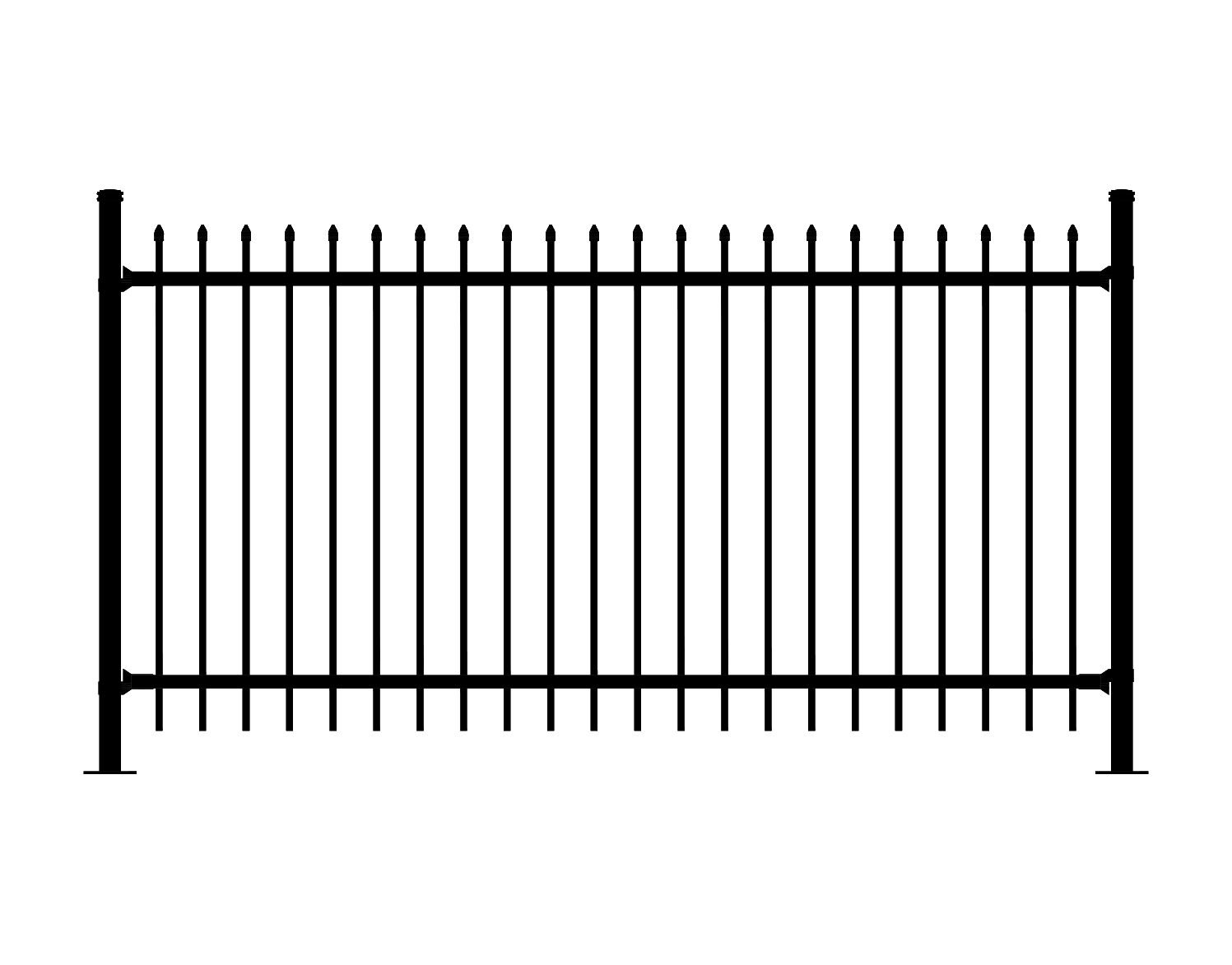
Fairmont™ Series (Residential / Light Commercial)
The Fairmont™ Series features 5/8" x 5/8" pickets and 1-1/4" x 1-1/4" rails, fully welded for clean sightlines and structural consistency. Available in both steel with Armour-Shield™ corrosion protection and aluminum with the Alu-Tuff™ finish system, every panel receives a factory-applied powder coat that eliminates the need for painting, staining, or rust treatment over the life of the fence. Styles include the Aristocrat, Cavalier, Imperial, and Windsor profiles, among others.
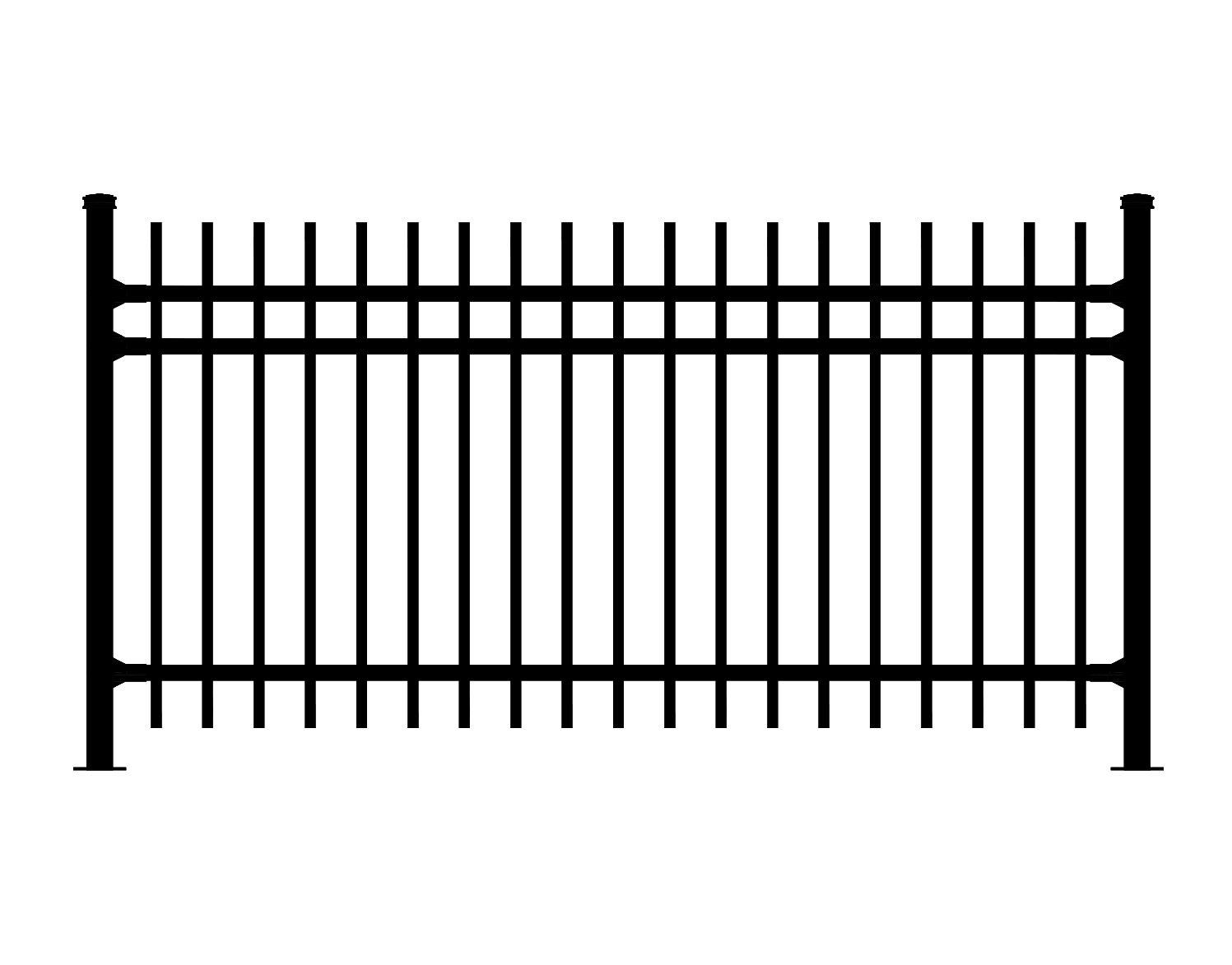
Oxford™ Series (Industrial / Commercial / Institutional)
Built for higher-security and high-traffic environments, the Oxford™ Series uses heavier 3/4" x 3/4" or 1" x 1" pickets with 1-1/2" x 1-1/2" rails and a minimum 2-1/2" x 2-1/2" post. The same multi-layer powder coat finish system protects these panels against the road salt, de-icing chemicals, and mechanical impacts that commercial and institutional properties are routinely exposed to. Architects and contractors can download DWG and PDF spec sheets directly from the product page for integration into Revit models and construction documents.
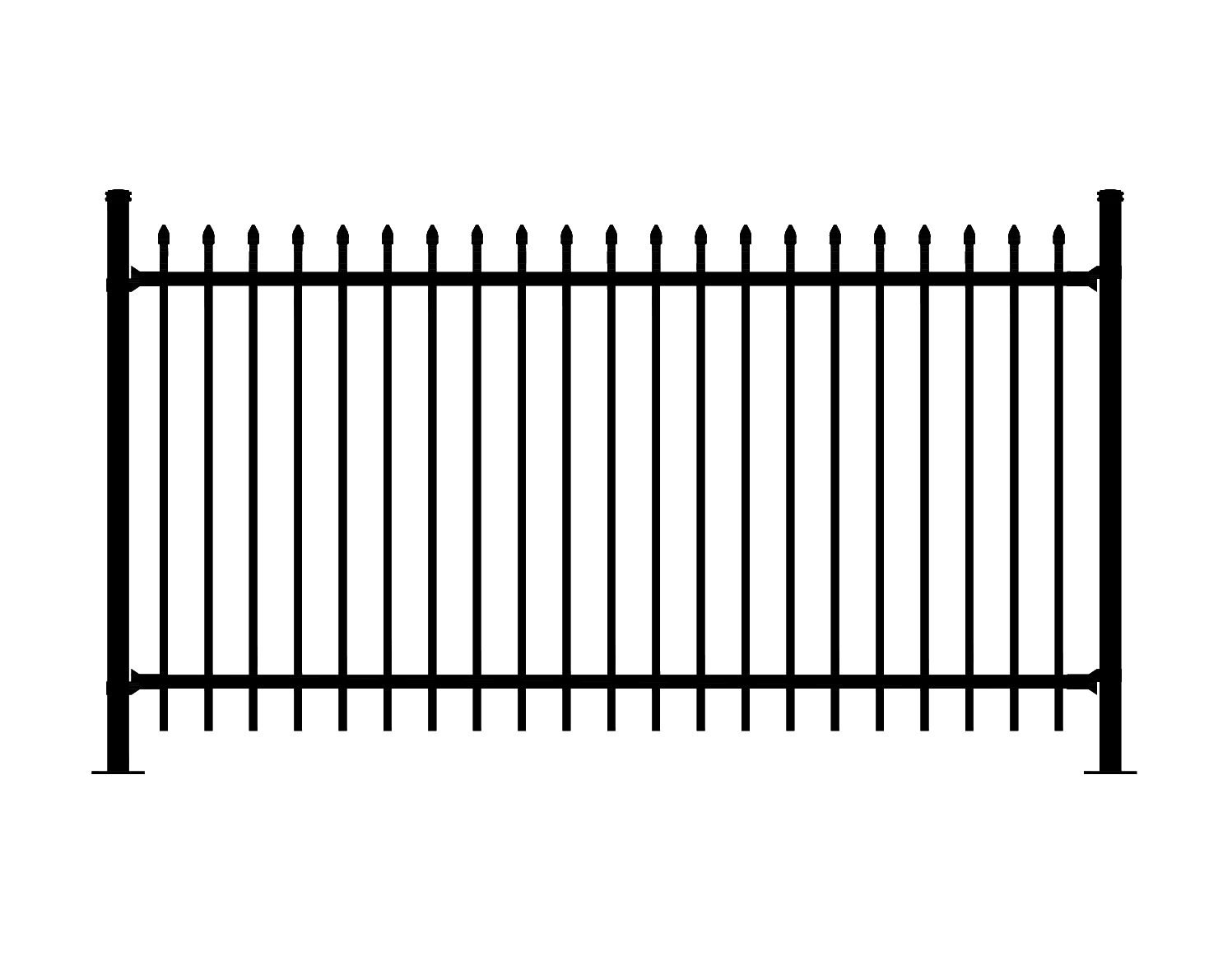
Wellington™ Series (Residential Estate / Light Commercial)
Positioned between the Fairmont and Oxford lines, the Wellington™ Series offers 3/4" x 3/4" pickets and a slightly more substantial profile that suits estate properties and upscale residential developments. The powder coat colour options include Gloss Black, Mini Texture Black, Gloss Brown, Gloss Green, Gloss White, and Antique Silver, all applied through the same factory-controlled electrostatic process and oven-cured for maximum adhesion and durability.
Custom Gates
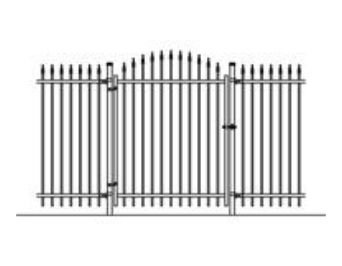
For walk gates and driveway access gates, Medallion Fence builds custom gate solutions that receive the same powder coat finish system as the matching fence panels. This consistency in finish across the entire perimeter is important because gates are often the highest-touch, highest-stress components of a fencing system. They swing, latch, and take direct contact from hands, vehicles, and weather. A gate with a lesser finish than the surrounding fence will show wear first, undermining the aesthetics and perceived quality of the entire installation.
Explore the Product Lines
Common Questions Canadian Consumers Ask
Will powder coating survive a harsh Ottawa or Calgary winter?
Yes. Properly cured polyester powder coating remains flexible well below -40°C and does not crack or peel through freeze-thaw cycling. The key is making sure the coating system includes proper substrate preparation (galvanization for steel, chromate pretreatment for aluminum) underneath the powder coat layer.
Can road salt from my driveway or the street damage a powder-coated fence?
Road salt is corrosive to bare metal, but a quality powder coat finish creates a continuous, chip-resistant barrier that prevents chloride ions from reaching the substrate. An annual spring wash with mild soap and water to remove accumulated salt residue is the only maintenance required to keep the finish performing at its best.
How long does a powder-coated fence actually last in Canada?
With a proper multi-layer finish system, you can reasonably expect 20 to 25 years of performance before any refinishing would be considered. Medallion Fence, for example, backs their aluminum fencing with a 25-year warranty and their steel fencing with a 20-year warranty.
Is powder coating better for the environment than paint?
Significantly. Powder coating produces near-zero VOC emissions and generates almost no hazardous waste. The overspray is collected and reused, and the process requires no chemical solvents. If environmental performance matters to your project or your personal values, powder coating is the clear choice.
Can I get a powder-coated fence in a colour other than black?
Absolutely. While black remains the most popular option, reputable manufacturers offer a range of standard colours including white, brown, green, and specialty finishes like Antique Silver. Custom colour matching is also possible for larger orders.
Final Thoughts
Choosing a finish for metal fencing might seem like a minor detail compared to decisions about fence height, style, and material. But the finish is the part of the fence that faces the world. It is the first thing people see, and it is the layer responsible for protecting everything underneath from Canada's relentless climate.
Powder coating is not the cheapest finishing option. But when you factor in the extended lifespan, the reduced maintenance costs over 20-plus years, the superior performance in freeze-thaw conditions, the resistance to road salt corrosion, and the environmental benefits of a solvent-free process, the total cost of ownership is significantly lower than repainting a liquid-coated fence every few years.
Whether you are an architect specifying perimeter fencing for a new institutional campus in Ottawa, a contractor quoting a 200-panel subdivision in Mississauga, or a homeowner replacing an aging fence on your property in Vancouver, powder coating is the finish that holds up to the conditions this country throws at it.
Explore Powder-Coated Fencing Systems
Discover Medallion Fence's full range of factory-finished aluminum and steel fence systems engineered for Canadian conditions.
All Series