


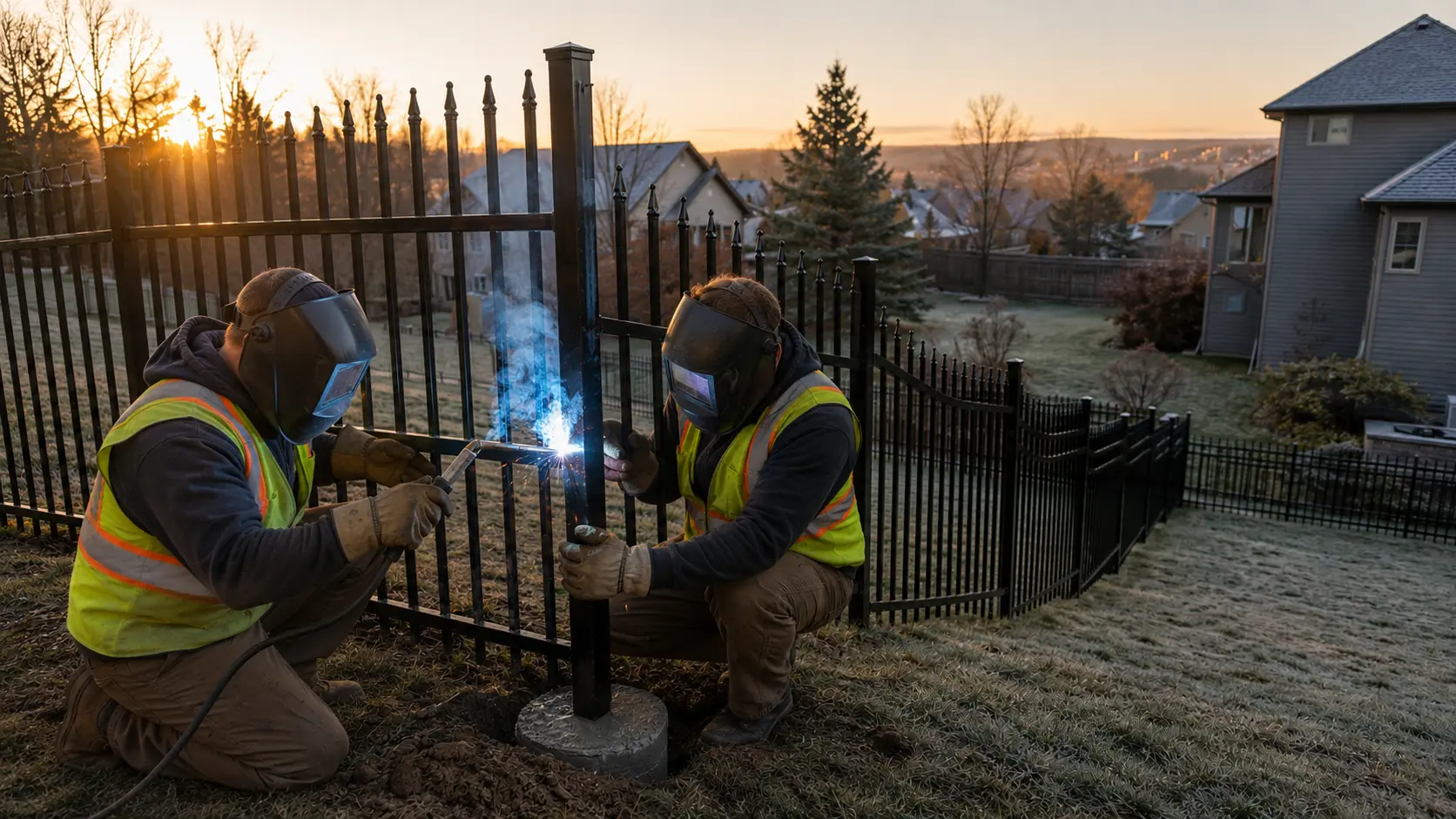
Let's be honest. Aluminum fencing has earned its reputation as one of the most reliable, low-maintenance perimeter solutions on the Canadian market. It doesn't rot like cedar. It won't rust out like mild steel. And when it's installed properly, a quality aluminum fence can hold up for decades without a single callback.
But here's the thing that doesn't get talked about enough: when aluminum fences fail, it is almost never the panel's fault. Nine times out of ten, the problem traces back to the install. And the worst part? Most of these mistakes are completely preventable if you know what to watch for before the first post goes into the ground.
Whether you're a seasoned fence contractor running five crews or a newer installer still building your client base, this list covers the seven most common installation errors we see across job sites in Ontario, Alberta, BC, and beyond. Some of these might seem basic. But if you've ever had to go back and fix a leaning fence line in Barrie after two freeze-thaw cycles, you know that "basic" doesn't always mean "obvious."
Mistake #1: Setting Posts Above the Frost Line
This is the single biggest reason aluminum fences lean or heave in Canada. Full stop.
Frost line depth varies dramatically across the country. In southern Ontario, you're looking at roughly 4 feet (1.2 metres). Move up to Ottawa or Montreal, and you're dealing with 5 to 6 feet. Out in Manitoba and Saskatchewan, frost can penetrate up to 8 feet into the ground. The National Building Code of Canada (NBC 2020) is clear: footings for permanent structures need to extend below the maximum frost penetration depth for your specific location.
Yet we still see posts set at 18 or 24 inches, especially on residential jobs where homeowners are watching the budget and contractors feel pressure to move fast. The math is simple. A post buried above the frost line will heave. The ground pushes it upward in winter, and it doesn't fully settle back in spring. After two or three seasons, you've got a post that's risen 2 to 3 inches above its original grade. The panels go crooked. The gate stops latching. And the phone starts ringing.
For residential aluminum fence installs, a minimum 3-foot burial depth with concrete is standard across most of southern Canada. If you're working north of the 401 corridor, go deeper. Always check your local frost line data before quoting the job, and build that depth into your pricing from the start.
Mistake #2: Getting the Racking vs. Stepping Decision Wrong on Slopes
If there's one topic that generates more confusion on contractor forums than any other, it's how to handle sloped terrain. The choice between racking and stepping is something every installer faces, and very few manufacturers explain it in a way that actually helps on the job site.
Here's the plain-language breakdown. Racking means angling the panel's horizontal rails so they follow the natural slope of the ground. The pickets stay vertical, the rails tilt, and the fence flows with the contour of the yard. This works beautifully on gentle to moderate slopes and gives you a clean, continuous top line with no gaps underneath.
Stepping, on the other hand, is the stair-step approach. Each panel stays perfectly level, but the posts are set at different heights to accommodate the grade change. You get a structured, architectural look, but you also end up with triangular gaps beneath each panel on the downhill side. Those gaps are a security concern, and they're the first thing homeowners notice (and complain about).
The rule of thumb: if your slope is gradual enough that a standard 6-foot panel can handle the rise, rack it. Most quality aluminum panels can rack up to 18 inches per section. For steeper grades, stepping becomes necessary, but plan for infill solutions to close those bottom gaps.
This is where product selection really matters. Medallion Fence's Hillcrest™ Series is specifically designed as a rackable residential line, meaning the panels are engineered from the factory to flex and follow uneven terrain without compromising picket spacing or structural integrity.
Mistake #3: Ignoring Municipal Bylaws and Setback Requirements
Every municipality in Canada has its own fence bylaws, and they vary more than most contractors realize. Height limits, setback distances from the property line, corner lot visibility triangles, pool enclosure codes... the list goes on. In Ottawa, for example, the maximum residential fence height is 7 feet without a permit. In Toronto, it's 2 metres in the backyard and 1 metre in the front. Some municipalities require you to face the "finished side" toward your neighbour.
Failing to check bylaws before the install can mean tearing down a completed fence and starting over, at your cost, not the client's. The safest approach is to pull the municipal fence bylaw PDF for every job, confirm property line locations (ideally with a recent survey), and document everything before you break ground. This protects your crew, your client, and your reputation.
Mistake #4: Skipping the Utility Locate
In Ontario, it's the law: you must call Ontario One Call (or your province's equivalent) before digging. In Alberta, it's Alberta One-Call. In BC, it's BC 1 Call. Every province has a service, and the call is free. Yet contractors still skip this step, especially on smaller residential jobs where it feels like unnecessary paperwork.
Hitting a buried gas line or fibre optic cable is not a minor inconvenience. It's a liability nightmare. Set up the locate request at least a week before the install date, and mark those lines with paint on the ground so your crew can see them clearly when they're augering post holes.
Mistake #5: Poor Post-to-Panel Connections
This mistake is subtle, and it often doesn't show up until six months or a year after the install. When contractors rush through the panel attachment process, or use generic brackets that aren't matched to the panel's rail profile, the connection points become the weakest link in the system.
Loose connections lead to panel sag, rattling in the wind, and eventually, structural failure at the joint. The fix is straightforward: use the manufacturer-specified brackets and fasteners, torque them to the right spec, and double-check every connection before you move to the next section.
This is one of the advantages of working with a system that's engineered as a complete package. Medallion Fence's Fairmont™ Series and Oxford™ Series are designed so that posts, rails, brackets, and pickets all work together as a matched system, which eliminates the guesswork and reduces the risk of mismatched components.
Mistake #6: Not Accounting for Gate Load and Swing Clearance
Gates take more abuse than any other part of a fence system. They swing, they sag, kids hang on them, snow piles up against them in January. And yet, on a surprising number of installs, gate posts are set to the same depth and spec as line posts.
Gate posts need to be beefier. Period. They carry more load, they absorb more lateral force, and they need deeper, wider concrete footings to stay plumb over time. On commercial jobs, this is non-negotiable. On residential jobs, it's the difference between a gate that works smoothly for 15 years and one that starts dragging on the driveway after the first winter.
Also, always account for swing clearance. Measure the grade on both sides of the gate opening, and make sure the gate clears the ground (or snow) at full swing. Canadian winters are not forgiving to gates that are hung too tight.
For high-traffic commercial and institutional applications, Medallion's Hawkstone™ Series is built with 2" x 2" rails and 3" x 3" minimum posts, giving you the structural heft to support heavy-duty gate hardware without flex or sag.
Mistake #7: Using the Wrong Grade of Product for the Application
Not all aluminum fence is created equal. A lightweight residential panel with 5/8" pickets might look fine on a spec sheet, but it has no business being installed on a commercial property, around a public pool enclosure, or along a high-traffic institutional perimeter.
Canadian homeowners are increasingly asking about this, too. Questions like "Will this fence hold up in Alberta wind?" or "Is this strong enough to keep my dog contained on a sloped lot?" are coming up constantly. The answer depends entirely on whether the right product grade was specified for the application.
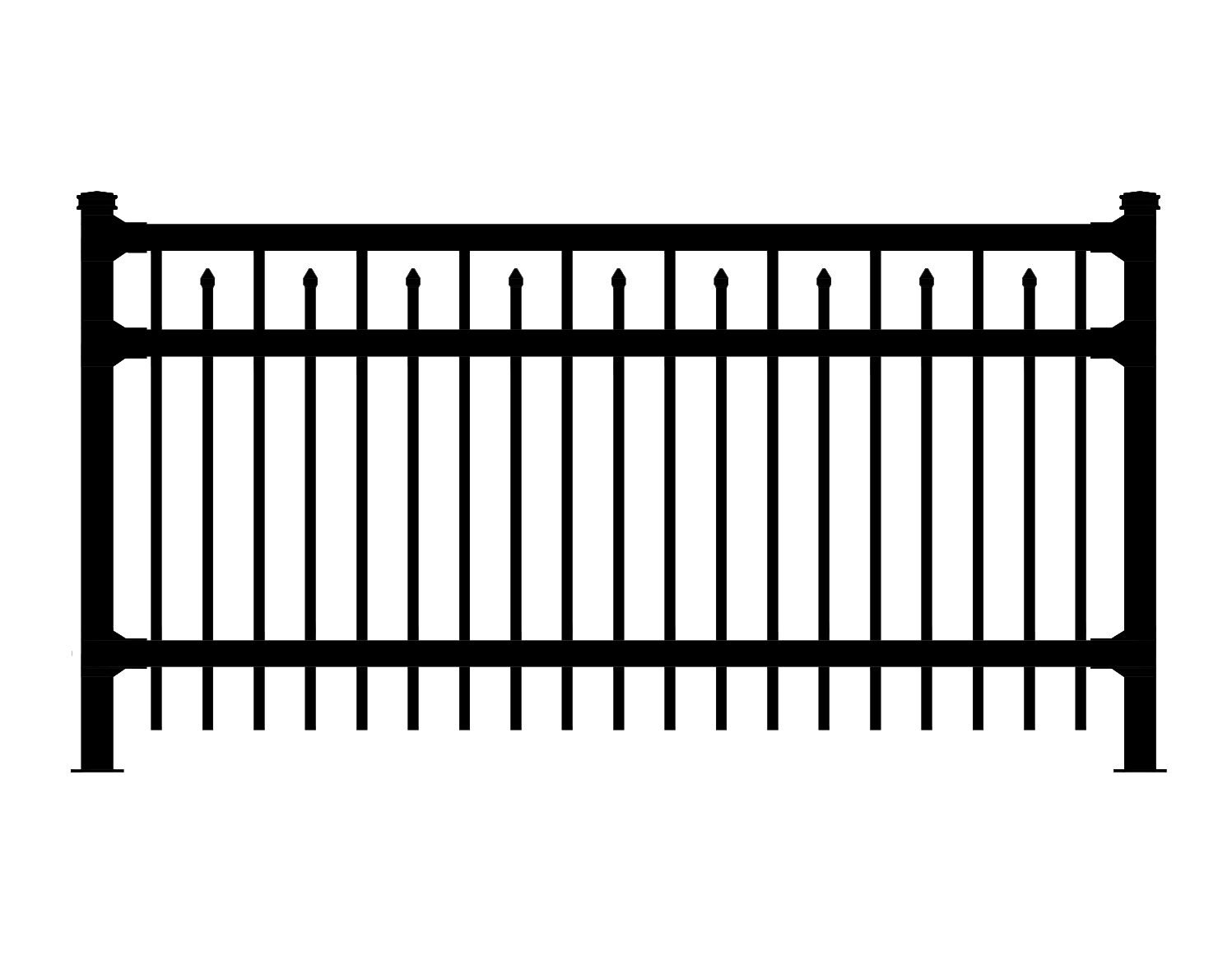
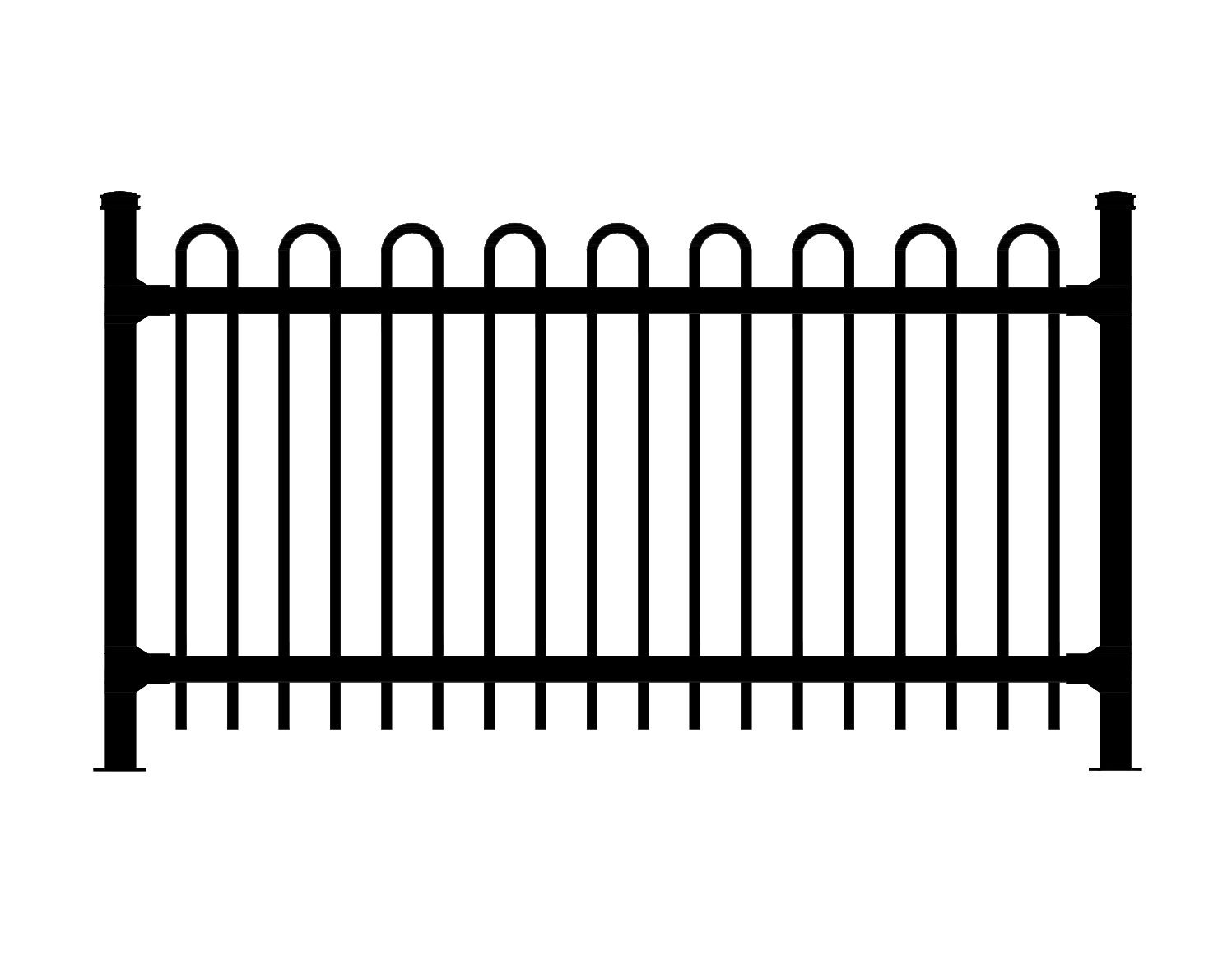
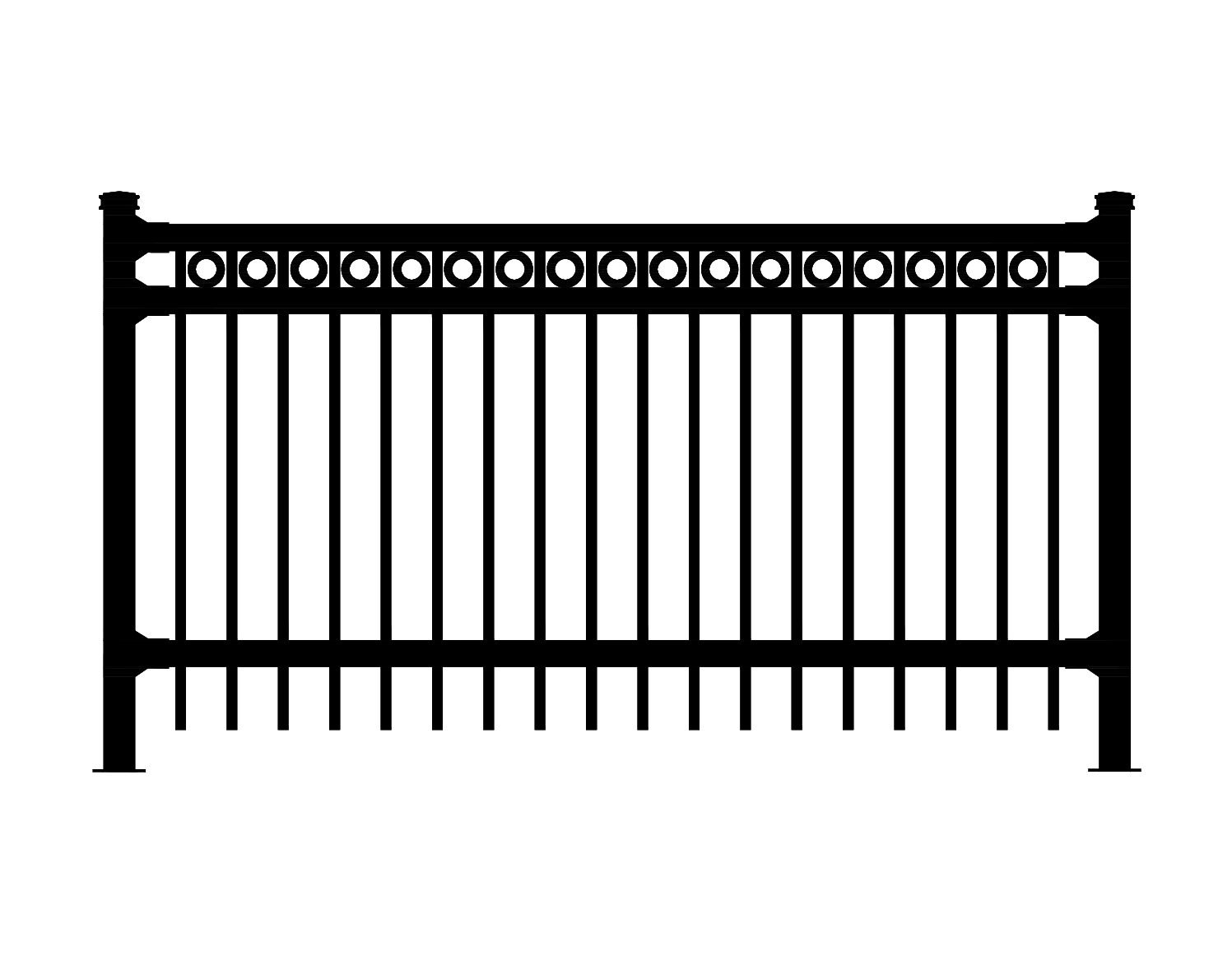
For residential properties, Medallion's Fairmont™ Series (1-1/4" x 1-1/4" rails, 5/8" x 5/8" pickets) and Wellington™ Series (3/4" x 3/4" pickets) offer the right balance of strength and curb appeal.
For commercial, industrial, and institutional jobs, the Oxford™ Series steps up with 1-1/2" x 1-1/2" rails and 1" x 1" pickets. And for high-security applications, the Hawkstone™ Series and Preston™ Series deliver the heaviest profiles in Medallion's lineup.
Matching the product grade to the application isn't just about structural performance. It also affects warranty coverage, code compliance, and your liability as the installer.
The Bottom Line for Canadian Fence Contractors
Every one of these mistakes comes down to the same root issue: cutting corners on planning. The actual panel-hanging part of an aluminum fence install is fast. A two-person crew can cover 100 to 150 linear feet per day on level ground once the posts are set. The work that separates a callback-free install from a warranty headache happens before the first auger hits the dirt.
Know your frost lines. Understand your slope. Check the bylaws. Locate the utilities. Spec the right product for the job. And use a system that's engineered and manufactured to work together from post to picket.
Medallion Fence has been manufacturing aluminum and steel fence systems in Canada for over 50 years, with Armour-Shield™ corrosion protection and a up to 25-year warranty backing every product line. When the system is built right and installed right, callbacks become the exception, not the expectation.
Explore the full product lineup at https://medallionfence.com/all-series/ or request a quote at https://medallionfence.com/request-a-quote/.
Build It Right From the Ground Up
Get the product specs, engineering details, and contractor pricing you need to eliminate callbacks and protect your reputation on every job.
Explore All Series Request a Quote