


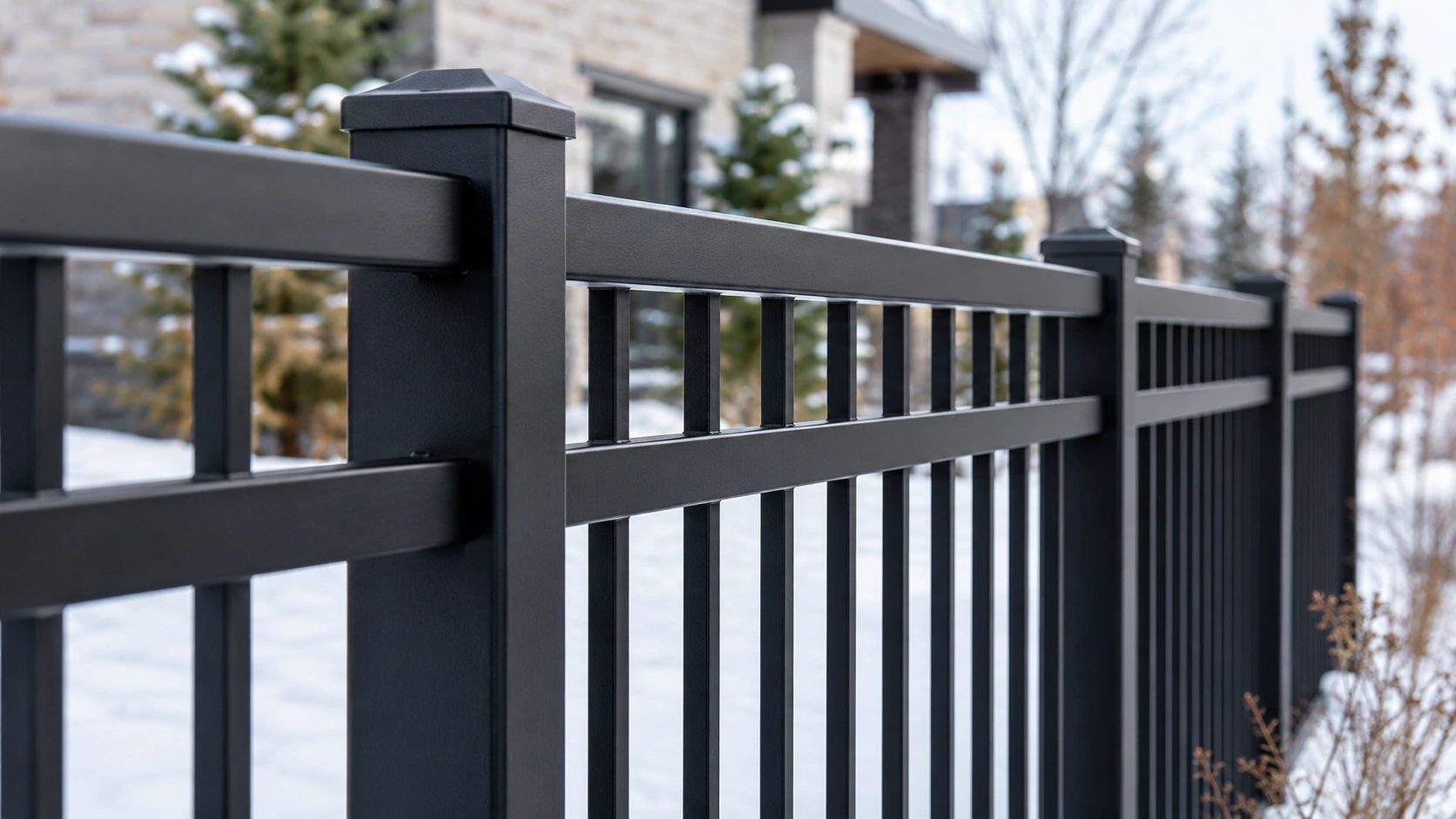
You just spent a good chunk of your budget on a new aluminum fence. It looks great in September. But what about after a brutal Ottawa winter? Or four straight years of Vancouver rain? Or those wild temperature swings in Calgary where it can go from minus 30 to plus 10 in two days flat? The finish on your fence is what stands between that beautiful curb appeal and a faded, chipping eyesore. And yet, most fence companies barely explain what kind of finish they use, let alone why it matters for Canadian weather specifically. Let's fix that. Here's a real, no-fluff breakdown of the three main finishing methods for aluminum fencing, what each one actually does, and which holds up best when Mother Nature throws everything she's got at your property.
Understanding What Each Finish Actually Is
Before we get into performance, let's quickly cover the basics. These three methods work in fundamentally different ways, and that matters more than most homeowners realize.
Wet Paint
Wet paint is exactly what it sounds like. A liquid coating gets sprayed onto the aluminum, and then it dries or cures. It is the oldest method and still widely used because it is cheap and available in virtually any colour. But "cheap and available" is not the same as "durable and long-lasting." Wet paint sits on top of the metal. It does not bond into it. That is an important distinction we will come back to.
Anodizing
Anodizing is a completely different animal. It is an electrochemical process where the aluminum gets submerged in an acid electrolyte bath and an electrical current is passed through it. This forces the surface of the metal itself to grow a thick oxide layer. Unlike paint, this layer is not sitting on top of the aluminum. It is part of the aluminum. That gives anodized finishes incredible scratch resistance and corrosion protection. The trade-off? Limited colour options and higher cost, especially for large fence runs. Anodized aluminum tends to have a metallic, natural look rather than the glossy colours most Canadian homeowners prefer.
Powder Coating
Powder coating sits in between these two when it comes to process, but arguably at the top when it comes to real-world fence performance. Finely ground particles of pigment and resin get electrostatically charged and sprayed onto the metal, then baked in a curing oven at high temperature. The result is a thick, uniform coating that bonds to the surface at a molecular level. It will not peel like paint, it will not chip under normal impact, and it holds colour far better over time.
How Canadian Winters Actually Destroy Fence Finishes
This is where it gets real, and where most American-written fence guides completely miss the mark for Canadian buyers.
Our climate does not just test finishes with rain and sun. We put them through freeze-thaw cycling that most coatings were never designed for. In southern Ontario alone, you can see 40 to 60 freeze-thaw cycles in a single winter. Each one of those cycles forces microscopic expansion and contraction of the metal and any coating on it. If the finish is not flexible enough, or if it is just sitting on top without a real bond, those micro-cracks accumulate fast. Within two or three winters, you start seeing bubbling, flaking, and the early stages of corrosion creeping in underneath.
Wet paint is the first to fail in this scenario. Because it sits on the surface as a film, it cannot flex with the aluminum during those temperature swings. Once a crack forms, moisture gets underneath, freezes, expands, and lifts more paint away from the surface. It is a cascading failure that accelerates with every passing season. Most wet-painted aluminum fences in places like Winnipeg or Edmonton start showing visible degradation within three to five years.
Anodizing handles freeze-thaw better because that oxide layer is physically part of the metal, so it expands and contracts in unison with the aluminum beneath it. However, anodizing has its own problems in Canadian conditions. Road salt splash from nearby streets and de-icing chemicals can cause pitting in anodized surfaces over time, particularly in urban and suburban settings where your fence line sits close to a road or driveway. And because anodized finishes are typically thinner than powder coatings (measured in microns), deep scratches from shovels, snowblowers, or ice can penetrate right through to bare metal.
Powder coating, when done properly, is the clear winner for Canadian applications. A quality powder coat applied at 2 to 3 mils thickness (that is 50 to 75 microns) has the flexibility to handle freeze-thaw cycling, the thickness to absorb impacts from winter maintenance equipment, and UV-stable pigments that resist the summer sun fading that hits hard in provinces like Alberta and Saskatchewan where you get intense summer UV at high altitude.
The AAMA Standard Nobody Talks About
Here is something your fence installer probably has not explained. Not all powder coatings are the same. The industry standard for measuring powder coat performance is set by the American Architectural Manufacturers Association, and there are three tiers that matter: AAMA 2603, 2604, and 2605.
AAMA 2603 is the basic standard. Fine for interior use or mild exterior conditions, but not what you want on a fence that has to survive a Canadian winter. AAMA 2604 uses super-durable polyester formulations and is rated based on five years of real-world Florida exposure testing. This is the standard most reputable fence manufacturers target. AAMA 2605 is the top tier, using fluorocarbon-based resins (PVDF) that offer a 10-year commercial performance guarantee and virtually zero fading.
For most residential applications across Canada, AAMA 2604 hits the sweet spot of performance and value. Medallion Fence, for example, uses an AAMA 2604-compliant finish on their Alu-Tuff™ aluminum system, which combines a marine-grade aluminum alloy base with chromate conversion pretreatment before the powder topcoat goes on. That pretreatment step is critical because it creates a chemical bond layer between the raw aluminum and the powder coat, which is what gives the finish its staying power through all those freeze-thaw cycles.
For their steel products, Medallion uses the Armour-Shield™ system, which layers hot-dip galvanizing, zinc phosphate conversion coating, and a UV-stable polyester powder topcoat. That multi-layer approach is particularly important for steel because unlike aluminum, steel will rust aggressively once any barrier coating is compromised.
Oxford™ Series (Industrial / Commercial / Institutional)
Fairmont™ Series (Residential / Light Commercial)
What About Colour Fading? The Question Every Homeowner Asks but Gets No Straight Answer On
This one comes up constantly, and for good reason. You pick out a gorgeous gloss black or deep green fence, and three years later it looks washed out. What happened?
UV radiation breaks down pigment molecules over time. That is just physics. But the rate at which it happens depends entirely on the coating system and the pigment quality. Standard wet paint can lose noticeable colour intensity within one to two years of direct sun exposure. Anodized finishes fade slowly but can develop a chalky appearance after several years. A properly formulated AAMA 2604 powder coat, on the other hand, is rated to retain colour with less than 5 Delta E units of change after five full years of continuous Florida sun exposure. Given that most Canadian locations receive significantly less annual UV than Florida, that same coating will perform even longer here.
Medallion offers their powder-coated aluminum fencing in standard colours including Gloss Black, Mini Text Black, Gloss Brown, Gloss Green, Gloss White, and Antique Silver, all applied using their in-house coating process with multi-point quality inspection.
The Sloped Terrain Question That Catches Everyone Off Guard
Here is something that rarely gets mentioned alongside finish quality, but it should. If your property has any kind of slope to it (and let's be honest, a huge percentage of Canadian properties do), how your fence is installed on that grade directly impacts how well the finish holds up long-term.
There are two approaches: racking and stepping. Racking means the fence rails are angled to follow the slope of the ground, keeping the pickets vertical while the panel tilts along the terrain. Stepping means each panel stays perfectly level and horizontal, but at each post, the fence "steps" down to a new height, creating a stair-step look with gaps at the bottom.
Why does this matter for your finish? Because racking puts additional mechanical stress on joints and fastener points. If the fence system was not engineered for racking, you get stress cracking at those connection points, and guess where the finish fails first? Right there at those cracks. Cheap fences with poor powder coat adhesion will show rust streaks running down from racked joints within just a couple of winters.
This is one of the reasons Medallion engineers their fence systems as complete systems rather than assembling off-the-shelf components. The Wellington™ Series, for example, uses 3/4" x 3/4" pickets with 1-1/4" x 1-1/4" rails designed to handle both racking and stepping installations without compromising the structural integrity at connection points, which means the powder coat finish stays intact where it matters most.
Wellington™ Series (Residential Estate / Light Commercial)
Questions Canadian Homeowners Keep Asking (That Nobody Answers Well)
Can I touch up powder coating if it gets scratched?
Yes, but it is not like touching up paint on a car. You need a matching powder coat touch-up pen or spray, and the repair will never be as durable as the original baked-on finish. Prevention through a quality initial coat is always better than repair.
Does road salt damage aluminum fence finishes?
Salt alone will not corrode aluminum the way it destroys steel. But salt deposits sitting on a powder-coated surface can trap moisture and accelerate localized wear on the coating. A quick rinse with a garden hose in the spring after the last snowmelt goes a long way.
Will my fence finish hold up near a pool?
Chlorine-heavy pool water splashing against your fence will degrade wet paint quickly. Anodized finishes hold up better but can still pit over time. A quality powder coat with proper pretreatment handles pool-adjacent conditions well, which is why Medallion's Alu-Tuff™ system uses marine-grade aluminum as its base.
Hillcrest™ Series (Residential)
The Bottom Line
If you are installing aluminum fencing anywhere in Canada, powder coating is the finish you want. Not just any powder coat, though. Look for AAMA 2604 compliance at minimum, proper pretreatment (chromate or zinc phosphate conversion), and a manufacturer who controls the entire process in-house.
Wet paint is a budget option that will cost you more in maintenance and replacement down the road. Anodizing is excellent for specific industrial applications but impractical and limited for most residential fence projects. And a properly applied powder coat, on a well-engineered fence system built to handle our winters, our salt, our UV, and our sloped lots? That is the finish that is still going to look good a decade from now.
Featured from the Hawkstone™ Series
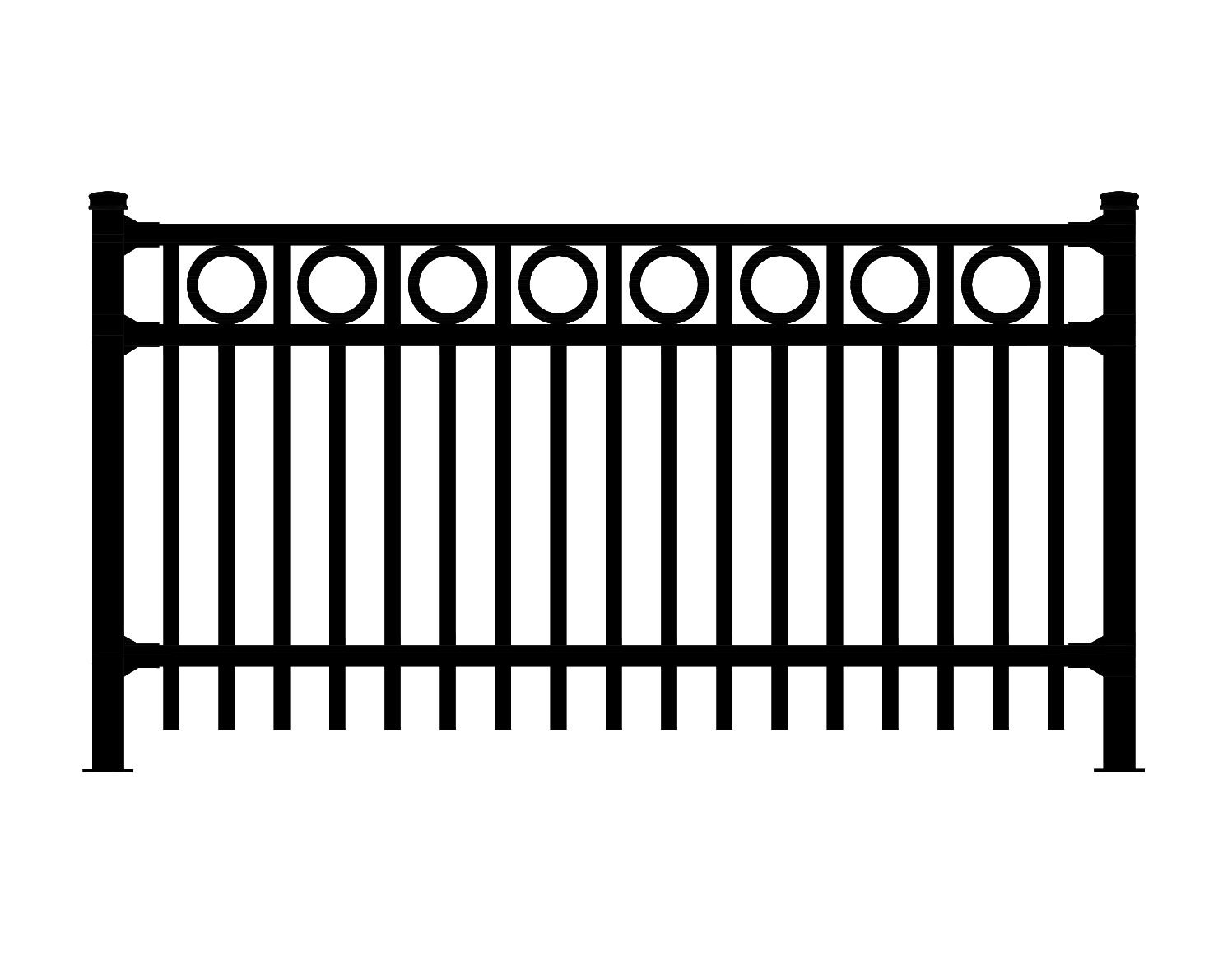
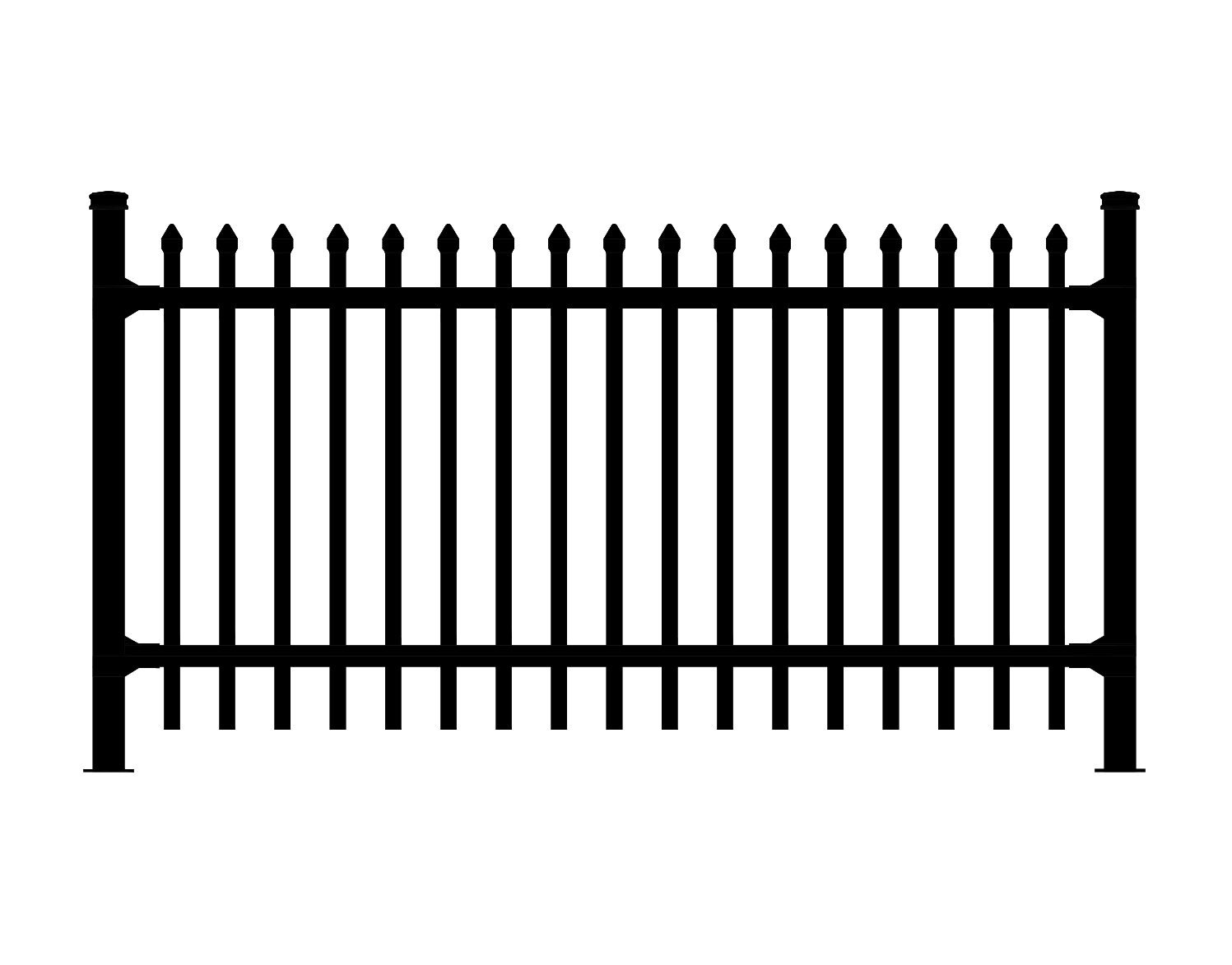
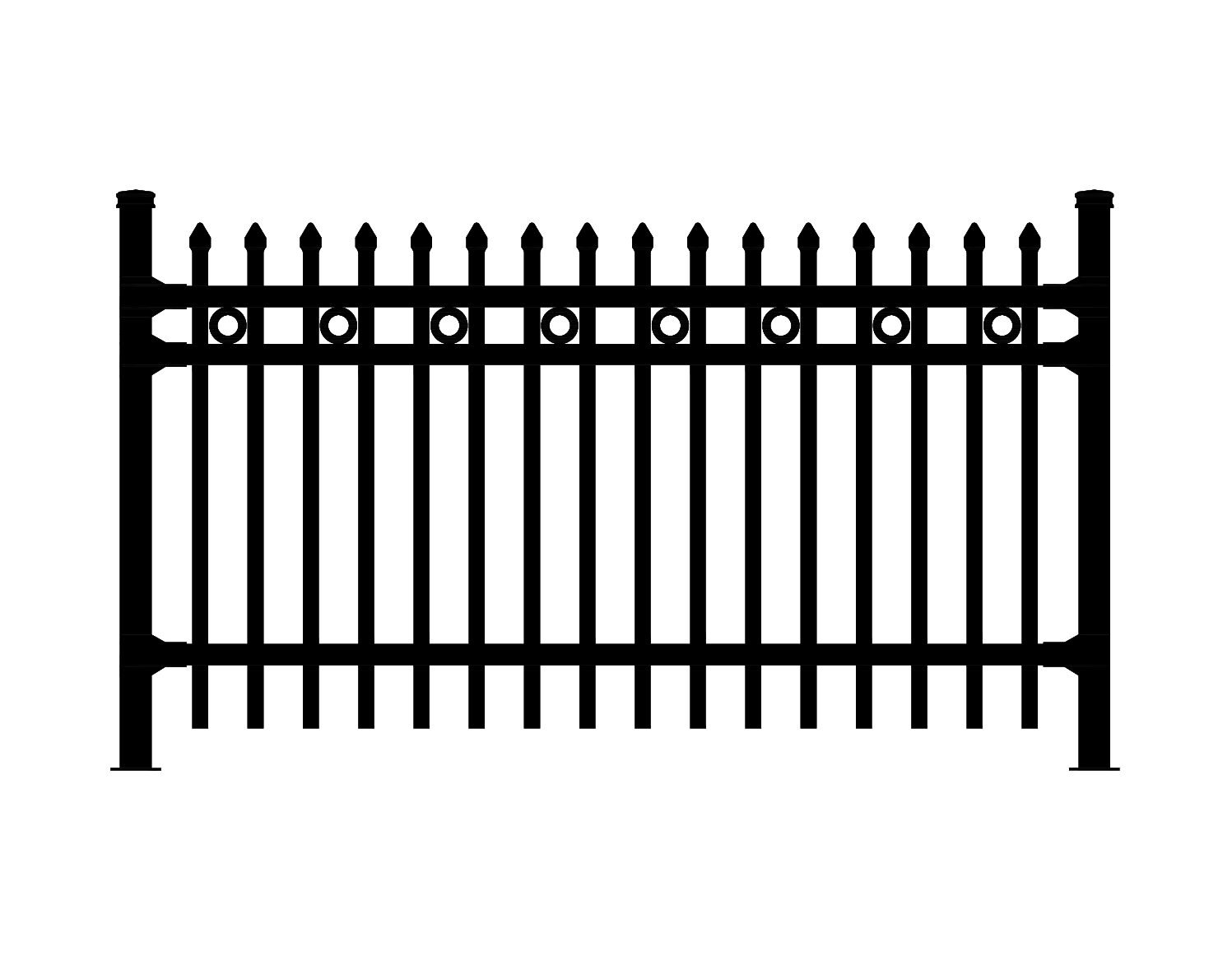
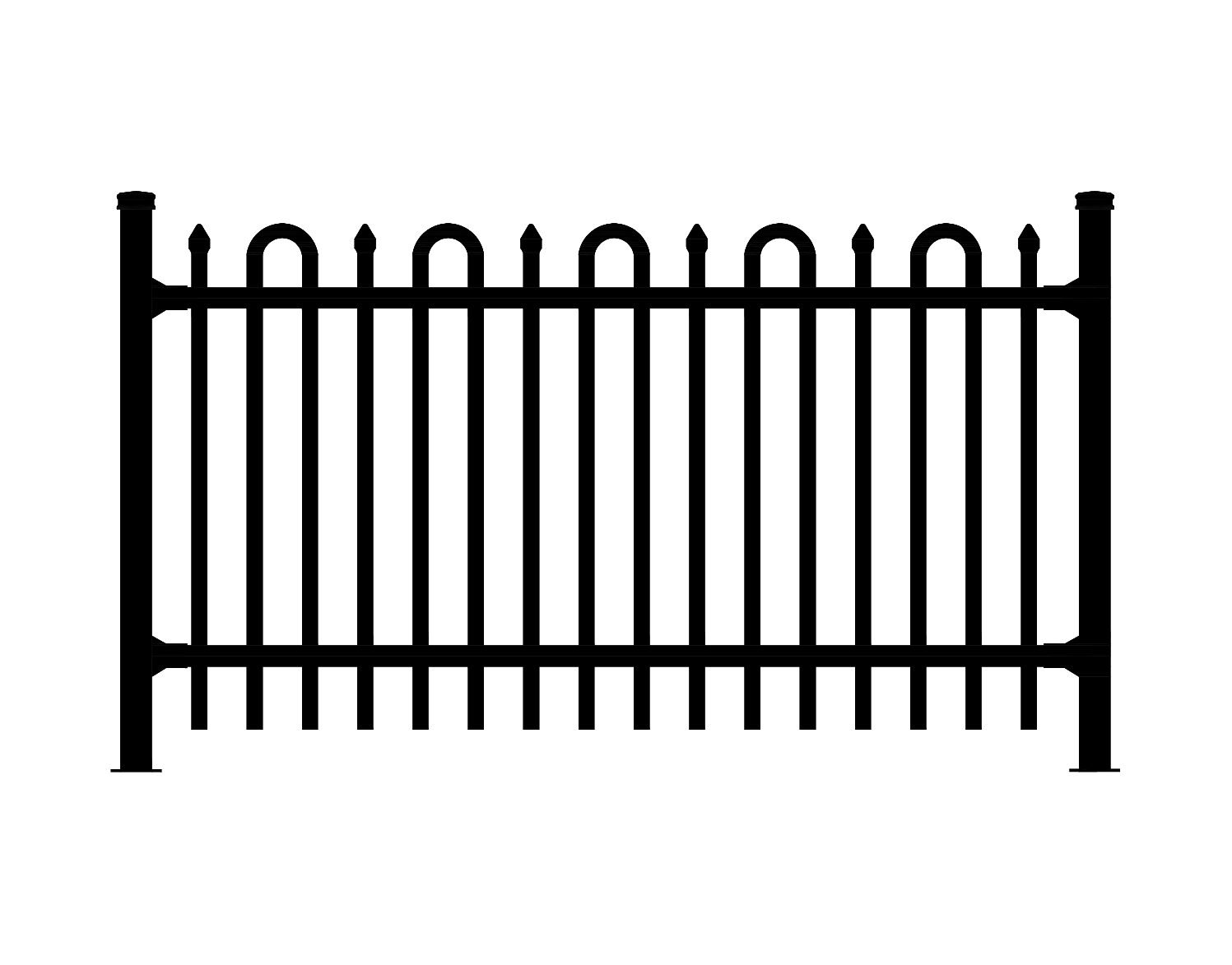
Built for Canadian Conditions
Medallion Fence designs and manufactures all of their aluminum and steel fencing systems in Maple, Ontario, with over 50 years of innovation behind them and a limited Lifetime Warranty backing every product. If you want to see the full range of series, styles, and colour options, call 905-832-2922 to talk to their team directly.
Explore Hawkstone™ Series