


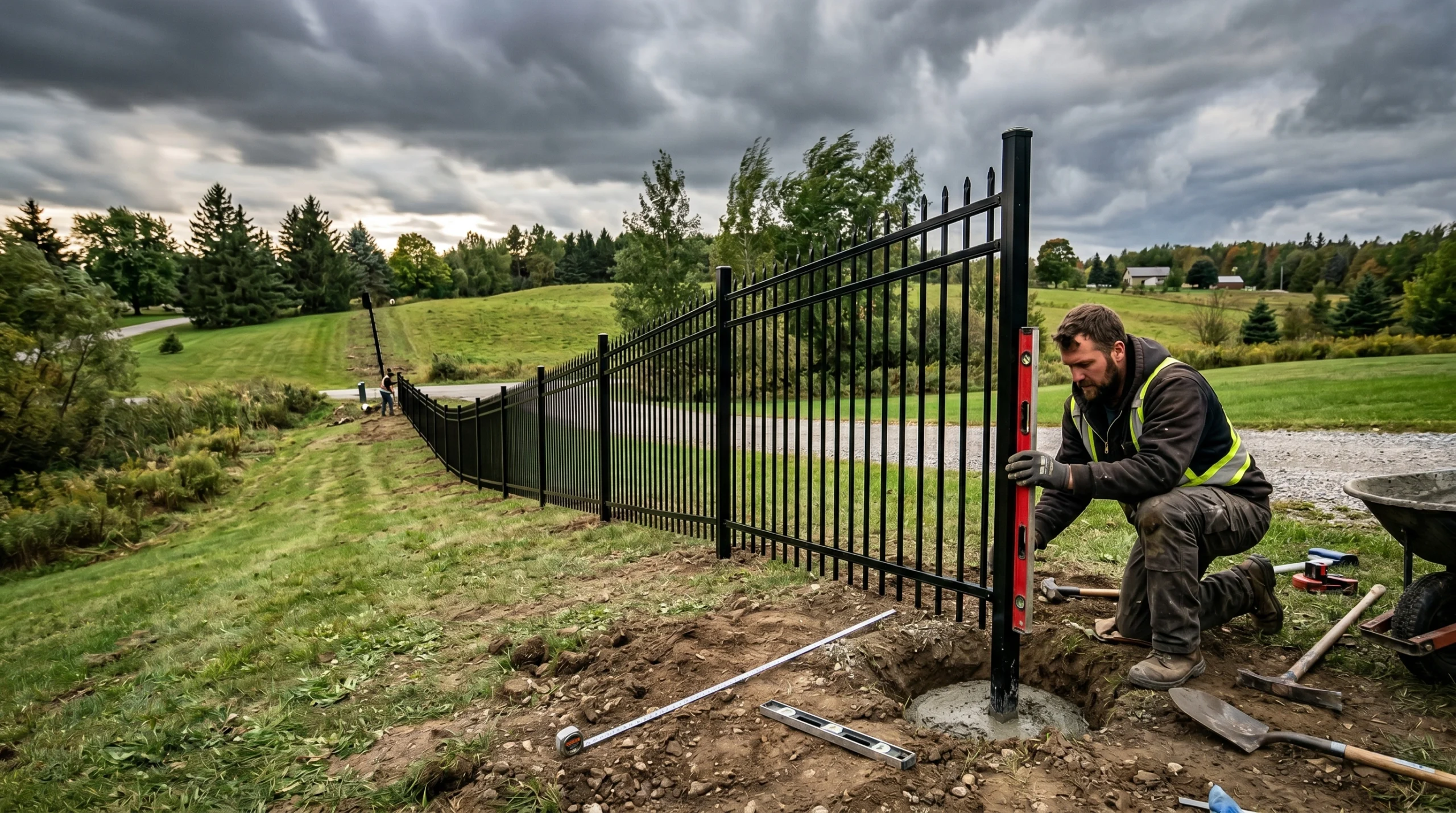
If you have been installing fences in Canada for any length of time, you already know that post spacing is not just about aesthetics or material savings. It is the structural backbone of every project you deliver. Get it wrong, and you are back on site six months later with a leaning fence, an angry client, and a reputation hit you did not need.
The tricky part? There is no single "correct" answer for post spacing across the country. A residential install in the Fraser Valley faces completely different pressures than a commercial perimeter fence on an exposed prairie site outside Regina. Wind loads change. Frost depths change. Municipal bylaws change. And the product you choose has to work within all of those variables at once.
So let us break this down the way contractors actually think about it: wind first, then security, then code, and finally the sloped terrain headache that nobody talks about enough.
Wind Load: The Force That Breaks Bad Installs
Wind is the number one structural enemy of any fence. And in Canada, we deal with some serious wind exposure, from coastal BC gusts to the open-field conditions across Alberta, Saskatchewan, and Manitoba where there is nothing to break the wind for kilometres.
Here is the engineering reality. Wind pressure against a fence increases with the square of the wind speed. That means a jump from 80 km/h to 120 km/h does not just increase force by 50 percent. It roughly doubles it. And fence porosity plays a massive role. Ornamental aluminum and steel fences with open picket designs allow wind to pass through, which dramatically reduces the load on each post compared to a solid privacy panel that acts like a sail.
For ornamental fencing, a standard post spacing of 6 to 8 feet (roughly 1.8 to 2.4 metres) works well in most sheltered residential settings. But in high-exposure commercial environments, especially anything above 6 feet tall, you need to tighten that spacing to 6 feet or less. Some installers in southern Alberta routinely use 5-foot spacing on tall commercial runs because the sustained wind loads on those exposed lots simply demand it.
The post profile itself matters just as much as the spacing. A 2" x 2" residential post handles things very differently than a 3" x 3" post rated for industrial applications. For commercial and institutional projects with heavier wind exposure, the Medallion Fence Oxford™ Series uses 1-1/2" x 1-1/2" rails and a minimum 2-1/2" x 2-1/2" post, which gives you a much beefier foundation to work with in exposed conditions.
For even higher wind and security demands, the Hawkstone™ Series steps it up further with 2" x 2" rails and a minimum 3" x 3" post. That is the kind of spec you want on industrial sites, water treatment plants, and institutional properties where both wind resistance and physical security are non-negotiable.
Security: When Post Spacing Becomes a Deterrent
On commercial and institutional projects, post spacing is not just structural. It is part of the security design itself. Tighter spacing means shorter panel spans, which means less flex in the system and fewer weak points for anyone trying to push through, pry apart, or climb over.
For high-security applications like correctional facilities, power substations, and government buildings, you will typically see post spacing locked in at 6 feet maximum, paired with heavy-gauge pickets and reinforced rail connections. The Preston™ Series from Medallion Fence is designed exactly for this overlap between structural performance and security. With its 2-1/2" x 1-1/2" rail profile, 1" x 1" pickets, and a minimum 3" x 3" post, it bridges the gap between commercial-grade durability and the kind of anti-intrusion resistance that spec writers look for on institutional jobs.
Something a lot of contractors overlook is that closer post spacing also reduces the leverage an intruder can apply to individual panels. A longer unsupported span flexes more, and flex creates opportunity. If you are bidding on anything that touches CPTED (Crime Prevention Through Environmental Design) principles, tighter spacing should be part of your proposal.
Code Compliance: What Canadian Contractors Actually Need to Know
Here is where things get layered. Canada does not have one single national fence code. Instead, you are working within a patchwork of the National Building Code (NBC), provincial building codes like the Ontario Building Code (OBC), and then the municipal bylaws layered on top of everything.
The general rule for fence post depth across most of southern Ontario is 1.2 metres (4 feet), which aligns with the local frost line. But the frost line is not uniform across the country. In Vancouver and the Lower Mainland, you can get away with 0.6 metres (2 feet). In the prairie provinces, frost depth can reach 1.5 to 2.1 metres (5 to 7 feet), which means your posts need to go significantly deeper, or you need an engineered footing solution. Montreal sits around 1.4 metres (4.5 feet). Atlantic Canada varies between 1.2 and 1.5 metres depending on the specific municipality.
Most residential fences under 2 metres (about 6.5 feet) do not require a building permit in Ontario. But the footing still needs to meet frost depth requirements, and many municipalities, including Toronto, Ottawa, and Mississauga, enforce their own additional bylaws on top of the OBC. Always check with the local building department before breaking ground. It takes five minutes and saves you from a compliance headache later.
For commercial perimeter fencing, the rules are stricter. Fences adjacent to drop-offs greater than 30 inches may be regulated as guards, not just fences, which triggers a whole different set of load requirements. Pool enclosure fencing has its own separate code requirements for height, spacing, and self-closing gate hardware. And any fence on a construction site is subject to provincial occupational health and safety regulations on top of everything else.
The Sloped Terrain Problem: Racking vs. Stepping
If you have ever Googled "how to install fence on a slope," you know this topic generates more confusion than almost anything else in the fencing trade. And yet most manufacturers barely mention it. So let us clear it up.
You have two options when the grade changes: racking or stepping.
Racking
Racking means the rails are mounted at an angle so they follow the slope of the ground. The posts stay plumb and vertical, but the panel tilts with the terrain. This gives you a smooth, continuous fence line with no gaps underneath, which is exactly what clients want for pet containment and clean aesthetics. Racking works best on gentle to moderate slopes, generally anything under about 15 to 20 degrees of grade change. Standard panels can typically rack up to about 16 inches over a 6-foot span. Double-punched panels can handle up to 28 inches.
The Medallion Fence Hillcrest™ Series is specifically designed as a rackable residential panel. It uses 5/8" x 5/8" pickets with 1-1/4" x 1-1/4" rails and a 2" x 2" post minimum. Because the panel is engineered to rack, you do not have to fight the material to get it to follow the grade. It just does what it is supposed to do, which saves you time on site and gives the client a much cleaner finished product.
Stepping
Stepping, on the other hand, keeps each panel perfectly level and staggers the height from section to section, creating a stair-step pattern down the slope. This method is better suited for steeper grades where racking would stretch the panel geometry too far. The downside is that stepping creates triangular gaps underneath each panel, which can be a problem for pet containment and can look inconsistent if the grade is not uniform.
The practical advice most experienced installers will give you: rack wherever you can, and step only where you must. On properties with mixed terrain, you can combine both methods by transitioning at a post where the slope steepens. Start the run with racked panels on the gentler section, switch to stepping where the grade drops off, and transition back to racking when the ground levels out again.
For flat residential properties where slope is not an issue but you still want strong rail geometry and a clean look, the Fairmont™ Series and the Wellington™ Series are solid go-to options. The Fairmont™ uses 5/8" x 5/8" pickets and is graded for residential and light commercial work. The Wellington™ steps up to 3/4" x 3/4" pickets for an estate residential look with a bit more heft.
Wellington™ Series Product Link
Putting It All Together
Choosing the right post spacing is not a single decision. It is a calculation that factors in wind exposure, security requirements, frost depth, local bylaws, and terrain. The best contractors treat every site as its own engineering problem and spec the product accordingly.
If you are working with a manufacturer that does not offer clear technical guidance on post sizing, rail profiles, and racking capabilities, you are guessing. And guessing is how callbacks happen.
Medallion Fence designs and manufactures their systems right here in Canada, with over 50 years of innovation behind them and Armour-Shield corrosion protection across their product lines. Whether you need a rackable residential panel for a rolling backyard in Barrie or a high-security industrial system for a utility site in Calgary, the engineering is already done. You just need to match the right series to the right site conditions.
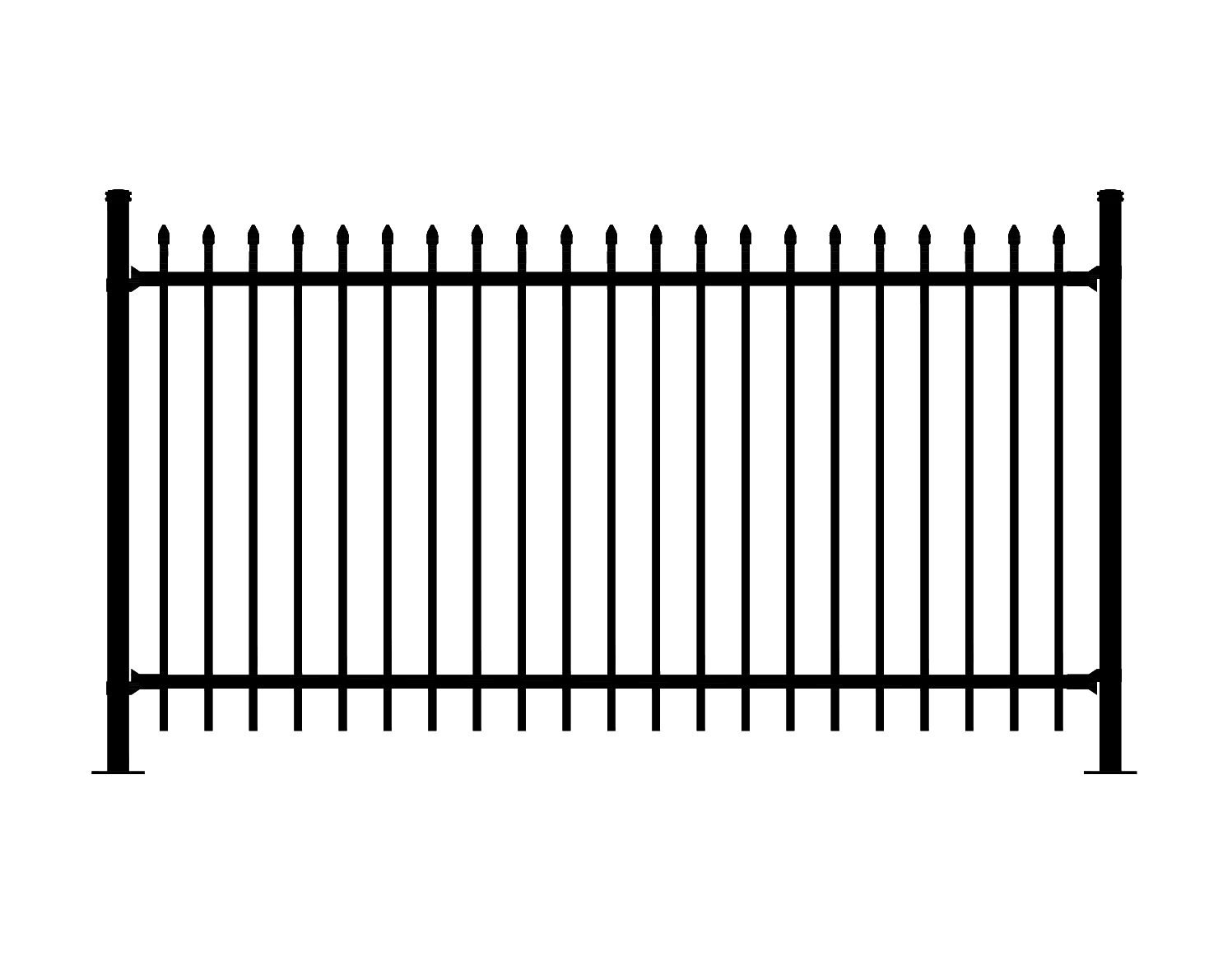
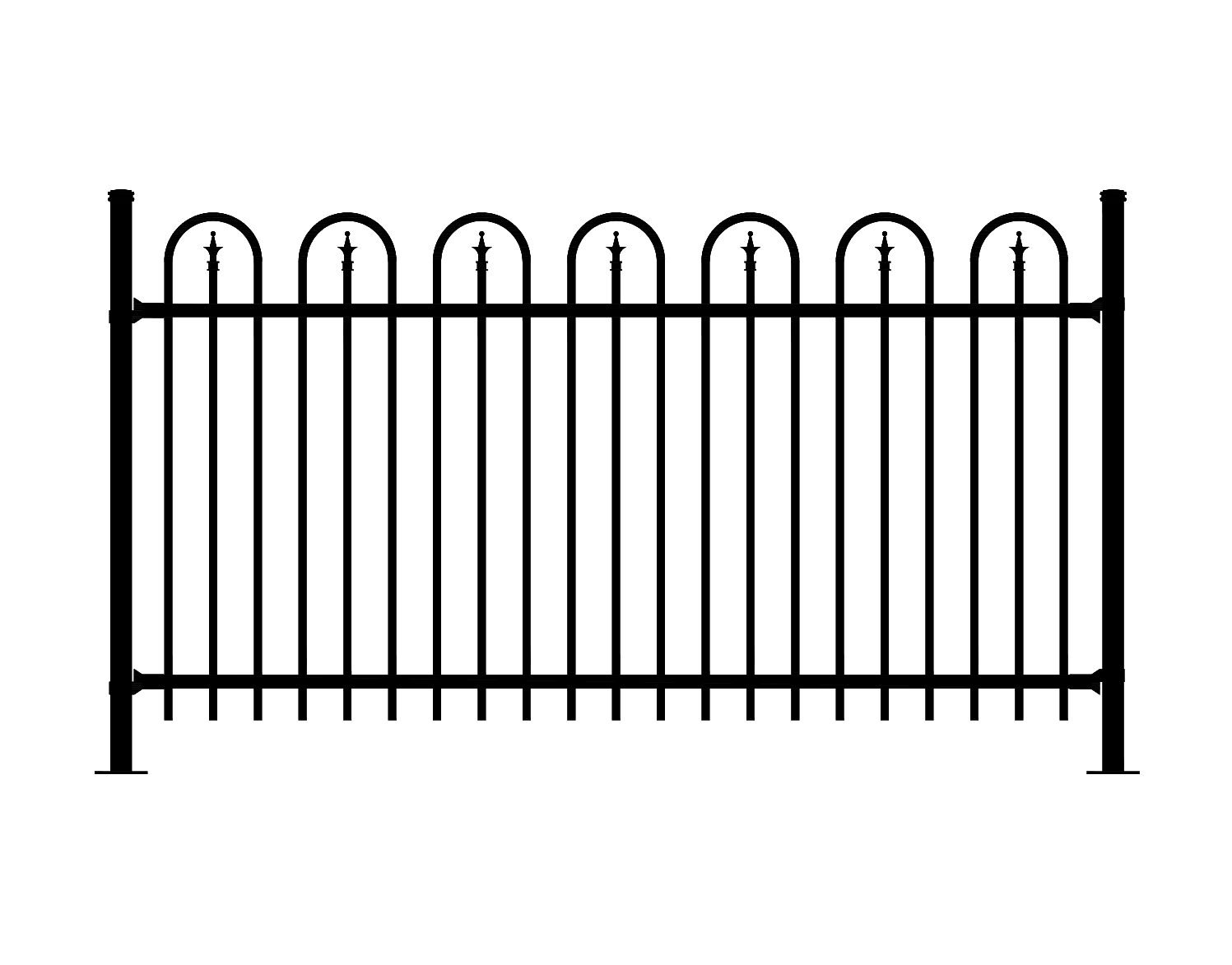
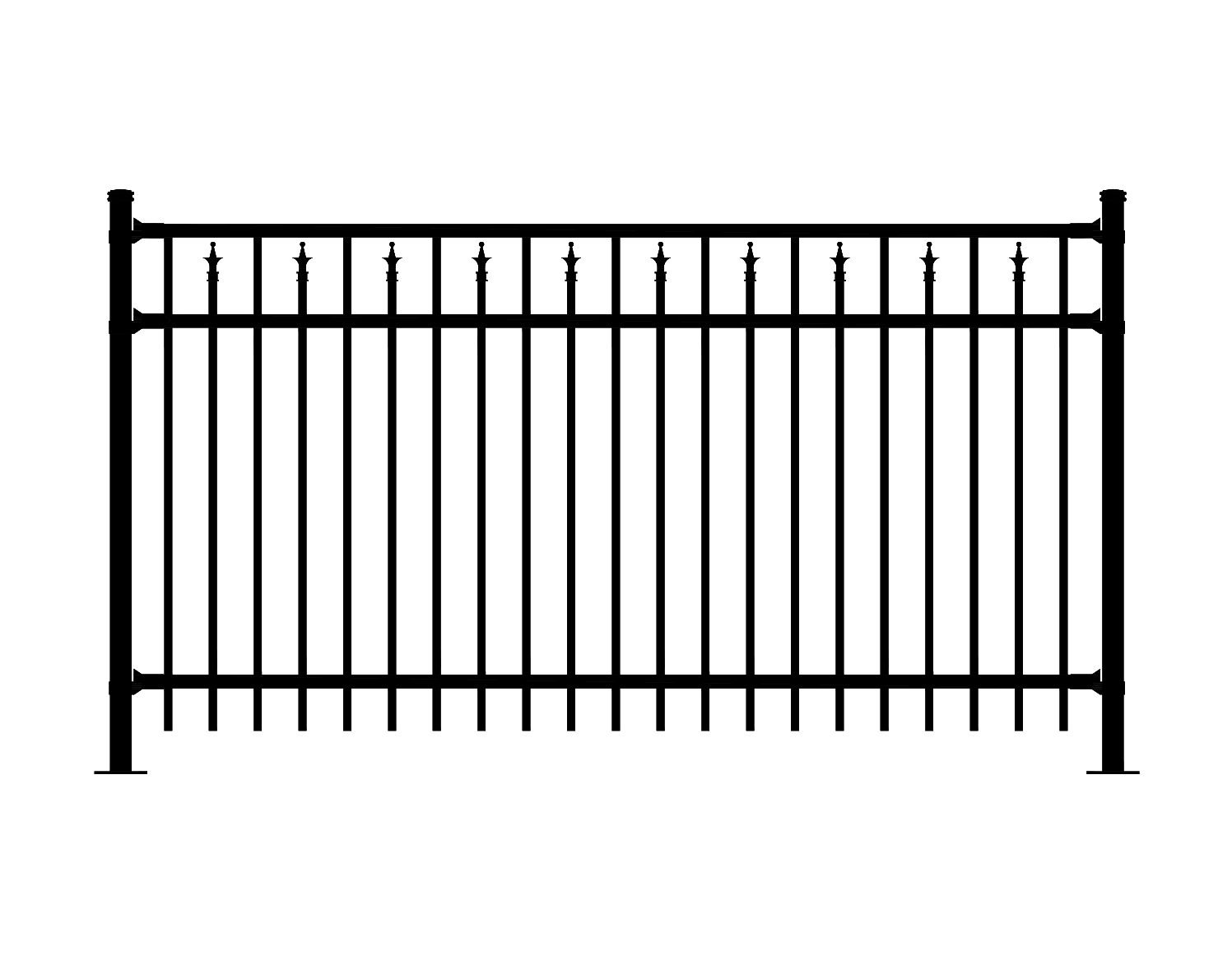
Need Project-Specific Support?
For more technical specs, DWG files, and PDF drawings on any of the series mentioned above, visit https://medallionfence.com/all-series/ or contact the Medallion team directly for project-specific support.
Explore All Series