


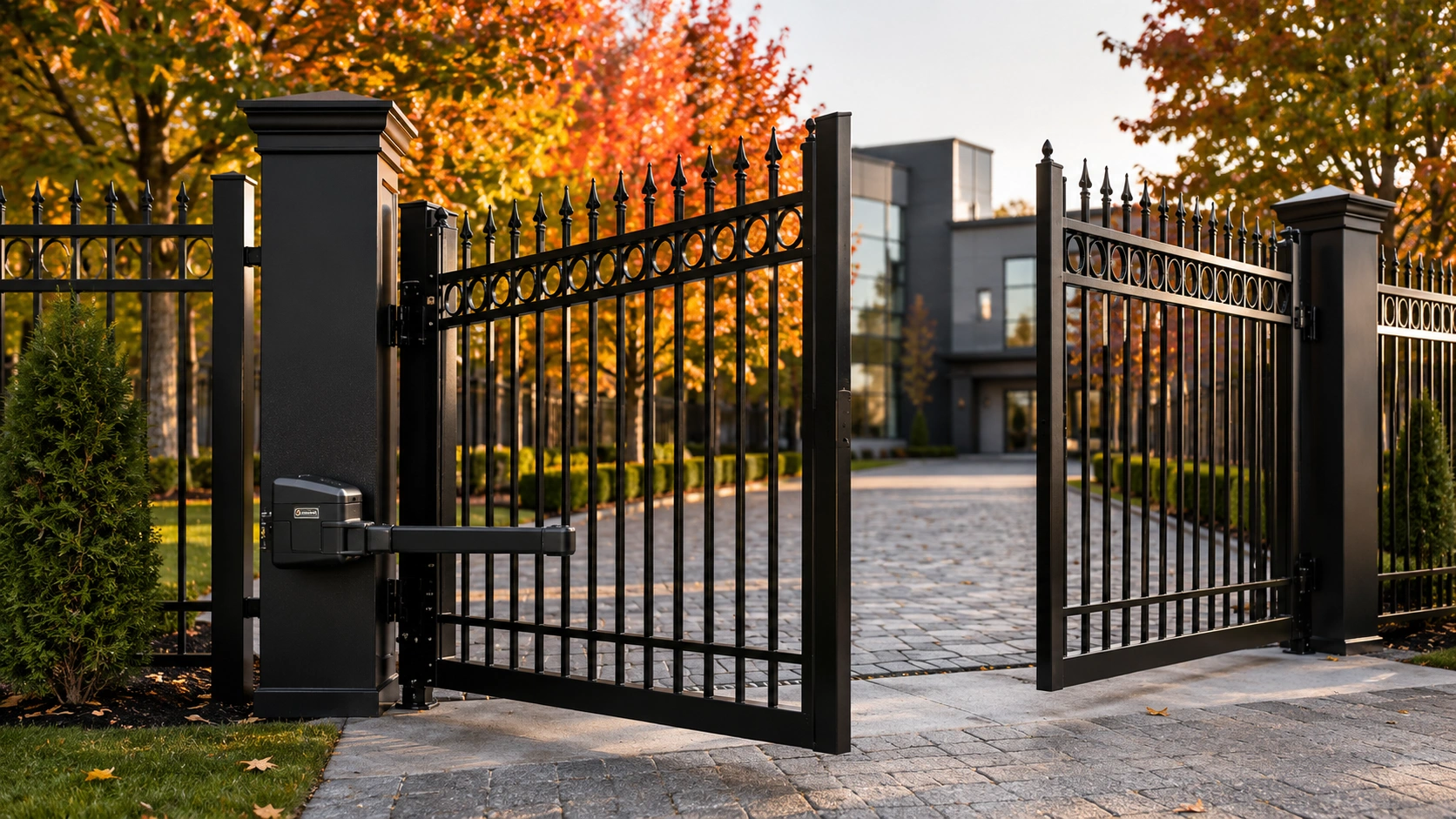
If you have been installing fences and gates across Canada for any length of time, you already know the gate itself is only half the conversation. The real question clients ask, whether they are a property manager in Mississauga or a ranch owner outside Calgary, is almost always the same: "Can we automate it?"
And that is where things get interesting. Choosing a gate operator for a swing gate is not the same as picking out a garage door opener. The material of the gate, the weight of the leaf, the climate you are working in, and even the slope of the driveway all play a role. Get it wrong, and you are looking at callbacks, warranty headaches, and unhappy clients. Get it right, and you have delivered a system that runs quietly for years with minimal upkeep.
So let us break this down the way a contractor, architect, or commercial specifier actually needs to think about it.
Understanding the Three Main Types of Swing Gate Operators
Before you even look at brands or models, you need to understand what is available in the market. Swing gate operators generally fall into three categories: linear arm (ram-style) operators, articulated arm operators, and underground operators.
Linear Arm Operators
Linear arm operators are probably the most common type you will see on residential and light commercial jobs. They mount on the gate post or column, and a screw-driven or hydraulic ram extends and retracts to push or pull the gate open. They are compact, relatively easy to install, and visually clean. If the gate leaf is under 500 lbs and under 14 feet wide, a mechanical linear arm operator is usually your best bet for residential projects.
Articulated Arm Operators
Articulated arm operators use a folding arm mechanism that attaches to the face of the gate. These work well for gates mounted on wide pillars or stone columns, because the articulated arm can wrap around the column without the need to recess the operator into the pillar itself. They tend to be electromechanical only, meaning there is no hydraulic version available in this configuration.
Underground Operators
Underground operators are exactly what they sound like. The motor sits below grade in a foundation box, and only a small arm is visible at the bottom of the gate leaf. Architects love these because they are virtually invisible. However, they come with a real catch in Canada. Drainage is critical. If that foundation box floods with meltwater in March or fills with ice in January, you have a serious and expensive problem on your hands. Underground operators work beautifully in milder climates, but in most Canadian provinces, they require extra engineering, proper drainage planning, and ongoing seasonal maintenance.
Hydraulic vs. Electromechanical: Which Drive Type Makes Sense?
This is the question that separates a good installation from a great one.
Electromechanical operators use a worm gear driven by an electric motor. They are lighter, quieter, and typically less expensive. They also run on low voltage in most cases, which means solar compatibility and built-in battery backup are often standard. For a residential driveway gate or a light commercial entrance that sees maybe 20 to 30 cycles per day, electromechanical is the way to go.
Hydraulic operators, on the other hand, use pressurized fluid pushed through a valve system to move the gate. They are significantly more powerful, and they handle heavy gates and high cycle counts with less strain on the motor. If you are specifying a gate for a condo complex, a hospital, a warehouse, or any site that sees 60 or more cycles per day, hydraulic is the safer choice. They also have a non-locking feature that gives the gate some "give" if a vehicle bumps into it while closed, which protects the seals and internal components from sudden impact damage.
Arctic-Rated Oil: A Canadian Must-Have
Here is something most articles do not mention: hydraulic operators need arctic-rated oil in Canadian installations. Standard hydraulic fluid thickens in extreme cold, which slows down the operator or causes it to stall entirely. If you are installing anywhere north of the GTA, or frankly anywhere in the Prairies or Northern Ontario, make sure the oil is rated for at least -30°C. Some operators offer heater kits that mount inside the housing to keep the fluid and battery at operating temperature, and honestly, in most Canadian applications, that heater should be considered standard rather than optional.
Gate Weight, Width, and Material: Why These Numbers Matter More Than You Think
Every operator has a rated capacity, and it is tempting to just match the gate weight to the spec sheet and call it a day. But that is not how it works in the field.
Wind load is a factor that gets overlooked constantly. A 6-foot-tall aluminum gate with pickets has a very different wind profile than a solid steel panel gate. In areas like Southern Alberta, the Fraser Valley, or the Atlantic coast, sustained winds can add hundreds of pounds of force to a gate leaf. When you are sizing an operator, you should always factor in wind load on top of the actual gate weight.
Oxford™ Series
For aluminum swing gates, the lighter weight is a real advantage. You can use a lower-powered, lower-cost operator and still get excellent performance and longevity. Medallion Fence's Oxford™ Series, for instance, is built at an industrial and commercial grade with 1-1/2" x 1-1/2" rails and 1" x 1" pickets, and it is available in both aluminum and steel. The aluminum option gives you the structural integrity for a commercial swing gate while keeping the leaf weight low enough for a mid-range operator.
Hawkstone™ Series
For high-security applications where steel is required, the Hawkstone™ Series delivers industrial-grade strength with 2" x 2" rails and 1" x 1" pickets, rated for high-security environments. A gate built on the Hawkstone platform is going to be heavier, so you would want to step up to a hydraulic operator rated well above the actual gate weight to account for wind load and long-term wear.
Preston™ Series
For projects that need something in between, the Preston™ Series offers 2-1/2" x 1-1/2" rails with 3" x 3" post minimums, suitable for residential, industrial, commercial, and institutional settings.
The Canadian Winter Question Nobody Talks About
Here is the part of gate automation that does not get enough attention, and it is the part that matters most to anyone working in this country.
Cold weather affects every component in a gate operator system. Batteries lose a significant chunk of their capacity below -10°C. Circuit boards expand and contract with temperature swings, which can loosen connections over time. Lubricant on hinges, pins, and internal gears thickens and becomes sluggish.
And then there is ice. Frost buildup overnight can block sensors and photo eyes. Snow drifts can physically block the swing arc. Freezing rain can coat the gate leaf and add weight that the operator was not sized for.
The contractors who do well in this market are the ones who plan for winter during the installation, not after the first service call. That means using cold-rated silicone lubricants instead of standard grease. It means mounting photo eyes and sensors at heights where snow accumulation will not block them. It means specifying operators with battery heaters in any region where temperatures regularly drop below -15°C. And it means having a frank conversation with the property owner about clearing the swing path after a snowfall.
Custom Gate Configurations and Automation Compatibility
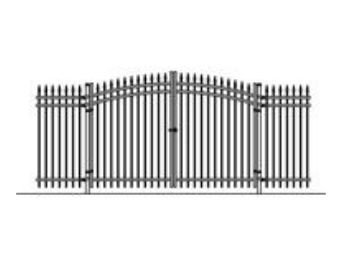
Double swing gates and arched gate designs add another layer of complexity to operator selection. Mirror image double gates, for example, require two operators that are synchronized to open and close in sequence. If the operators are not properly timed, the gates can collide or bind.
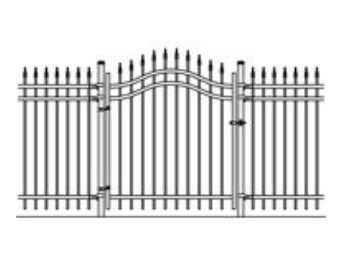
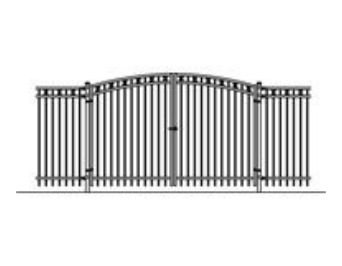
Medallion Fence offers a full range of Custom Gates including arched passage gates, mirror image double gates, and wave-style configurations. When specifying automation for these custom configurations, work with the gate manufacturer early in the process to confirm hinge placement, post dimensions, and clearance requirements before selecting an operator.
Access Control Integration: Thinking Beyond the Opener
A gate operator is just the motor. The access control system is what makes it smart. Keypads, RFID card readers, vehicle detection loops, intercoms, and mobile app integration are all options, and the operator you choose needs to support the access control method your client wants.
For commercial and institutional projects, you will also need to consider emergency access. Fire codes in most Canadian municipalities require that automated gates either fail open during a power outage or have a manual override that fire crews can access. This is not optional. If you are installing a gate on a property that requires fire department access, confirm the fail-safe mode of the operator before you spec it.
Bringing It All Together
The right gate operator depends on four things: the weight and size of the gate, the cycle count the site demands, the climate conditions it will face, and the access control features the client needs. There is no single operator that fits every project, and that is exactly why this decision matters.
If you are working with aluminum or steel ornamental gates, start with the gate itself. Medallion Fence designs and manufactures their entire product line in Canada, with Armour-Shield corrosion protection and a 25-year warranty. Their systems are engineered to work with standard operator mounting configurations, which means fewer field modifications and cleaner installations.
Check out our Gate Options
For more information on Medallion Fence's gate and fencing systems, contact our team at info@medallionfence.com / 905-832-2922 for pricing, lead times, and technical support.
Ready to Specify Your Next Gate?
Explore Medallion Fence's full range of custom gates, ornamental aluminum and steel systems, and get expert support for your automation project.
View Custom Gate Options