


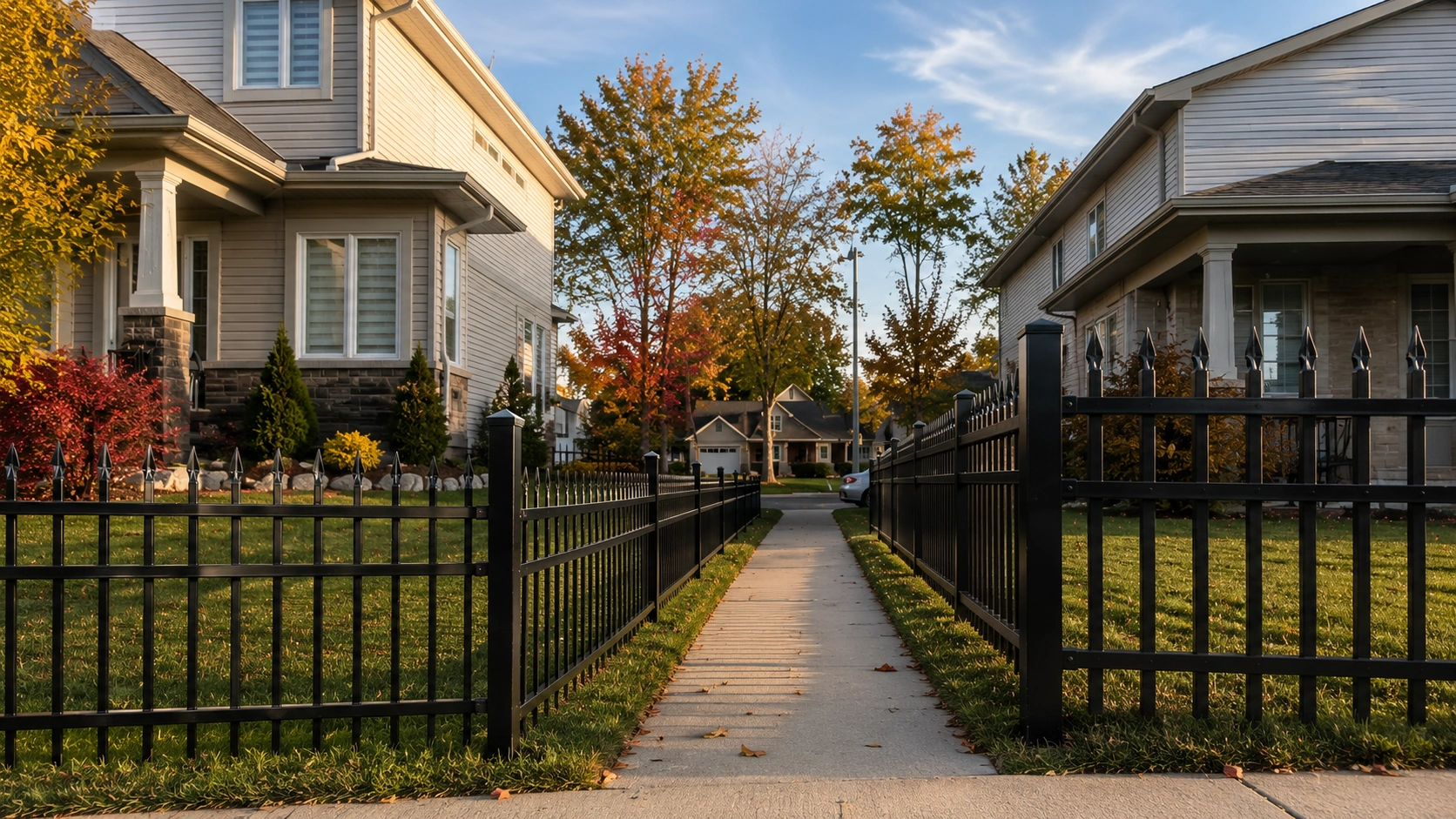
If you have been thinking about installing a new fence around your property in Canada, chances are you have already come across the aluminum vs. steel debate. It is one of the most common conversations we hear from homeowners in the GTA, architects specifying perimeter systems for institutional projects, and contractors pricing out subdivision builds across Ontario and beyond.
And honestly? It is a conversation that deserves more nuance than most online guides give it.
Both materials can look nearly identical once they are powder coated and installed. Both are used in ornamental fencing. Both can meet Canadian building code requirements. So what actually separates them, and how do you decide which one belongs on your property?
Let us get into it.
The Basics: What You Are Actually Comparing
Aluminum Fencing
When we talk about aluminum fencing, we are talking about panels and posts made from extruded marine-grade aluminum alloy tubing. The alloy (typically 6000-series aluminum) offers a strong strength-to-weight ratio while being naturally resistant to oxidation. That means it does not rust. Period. Not in five years, not in twenty-five.
Steel Fencing
Steel fencing, on the other hand, is built from carbon steel tubing. Steel is denser, heavier, and carries a higher tensile strength than aluminum. It can handle greater impact loads and lateral force, which makes it the go-to material for high-security perimeter applications. But steel will corrode if it is not properly protected, which is why quality manufacturers apply multi-layer finishing systems like Galvalume coating (an alloy of 55% aluminum, 43.4% zinc, and 1.6% silicon that combines the barrier corrosion protection of aluminum with the sacrificial protection of zinc) and ZAM G40 coating (a zinc-aluminum-magnesium alloy containing 91% zinc, 6% aluminum, and 3% magnesium that forms a dense, self-healing protective film over the steel surface, including cut edges and scratch points), followed by UV-stable powder coating.
At Medallion Fence, for example, steel panels use the proprietary Armour-Shield corrosion protection system, while aluminum panels are finished with the Alu-Tuff system. Both are designed specifically to withstand the freeze-thaw cycling, road salt exposure, and UV degradation that Canadian properties deal with year after year.
The Canadian Climate Factor That Nobody Talks About
Here is something that rarely comes up in aluminum vs. steel articles, even though it matters a lot to anyone living in this country: thermal expansion and contraction.
Canada's temperature swings are extreme. In many parts of Ontario, you can see summer highs above 35 degrees Celsius and winter lows below minus 25. That is a 60-degree swing, and it happens every single year.
Aluminum has a higher coefficient of thermal expansion than steel. In plain language, aluminum panels will expand and contract slightly more across seasonal temperature changes. For well-engineered fence systems with proper post spacing and panel-to-post connection details, this is a non-issue. The movement is small and the system accommodates it. But for cheaply made aluminum fencing with tight tolerances and rigid mechanical fasteners, it can cause joint stress, loosening, and squeaking over time.
Steel, with a lower expansion rate, tends to stay dimensionally tighter through those seasonal swings. This is one of the reasons many architects and engineers still prefer steel for long, continuous fence runs on commercial and institutional sites where panel alignment over hundreds of metres is critical.
If you want to dig deeper into how different materials handle Canadian weather specifically, we covered that topic thoroughly in our blog post: What Is the Best Fence Material for Canadian Weather?
Strength and Security: Where Steel Earns Its Reputation
Let us talk numbers for a moment, because this is where contractors and architects will want specifics.
Steel has a yield strength that is roughly two to three times higher than aluminum, depending on the alloy grade. What that means in practice is that a steel picket of the same cross-section as an aluminum picket will resist bending force significantly better. This matters in applications where the fence is expected to serve as a genuine security barrier, not just a visual boundary.
For industrial perimeters, utility substations, school campuses with controlled access points, data centres, and government facilities, steel is almost always the specified material. Medallion's Hawkstone Series is built for exactly this kind of application, with heavy-gauge steel construction and welded joints designed to withstand sustained lateral loads.
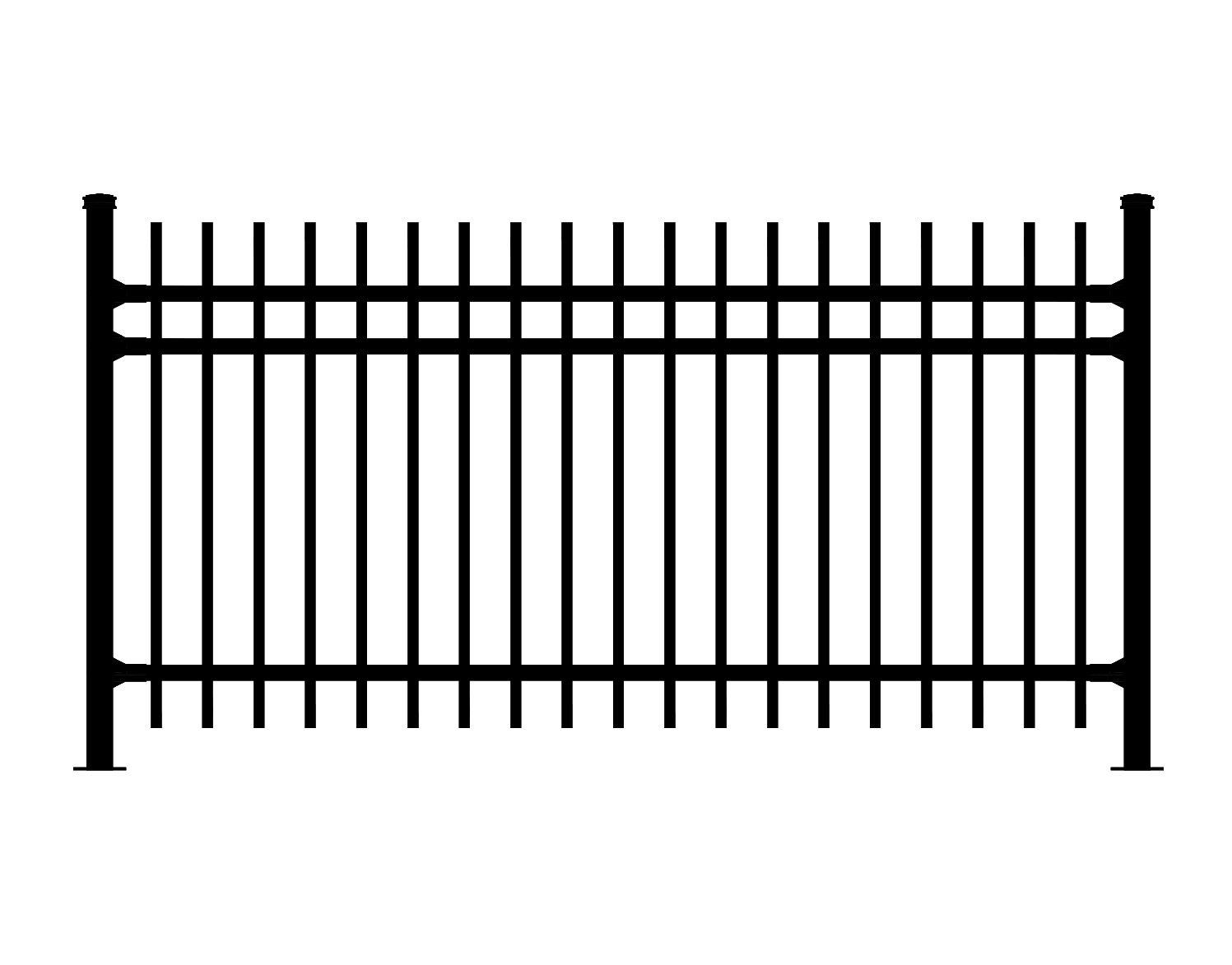
If your project calls for anti-climb configurations, integrated access control hardware, or compatibility with automated slide gates, steel gives you the structural backbone to support all of that without oversizing your posts and rails.
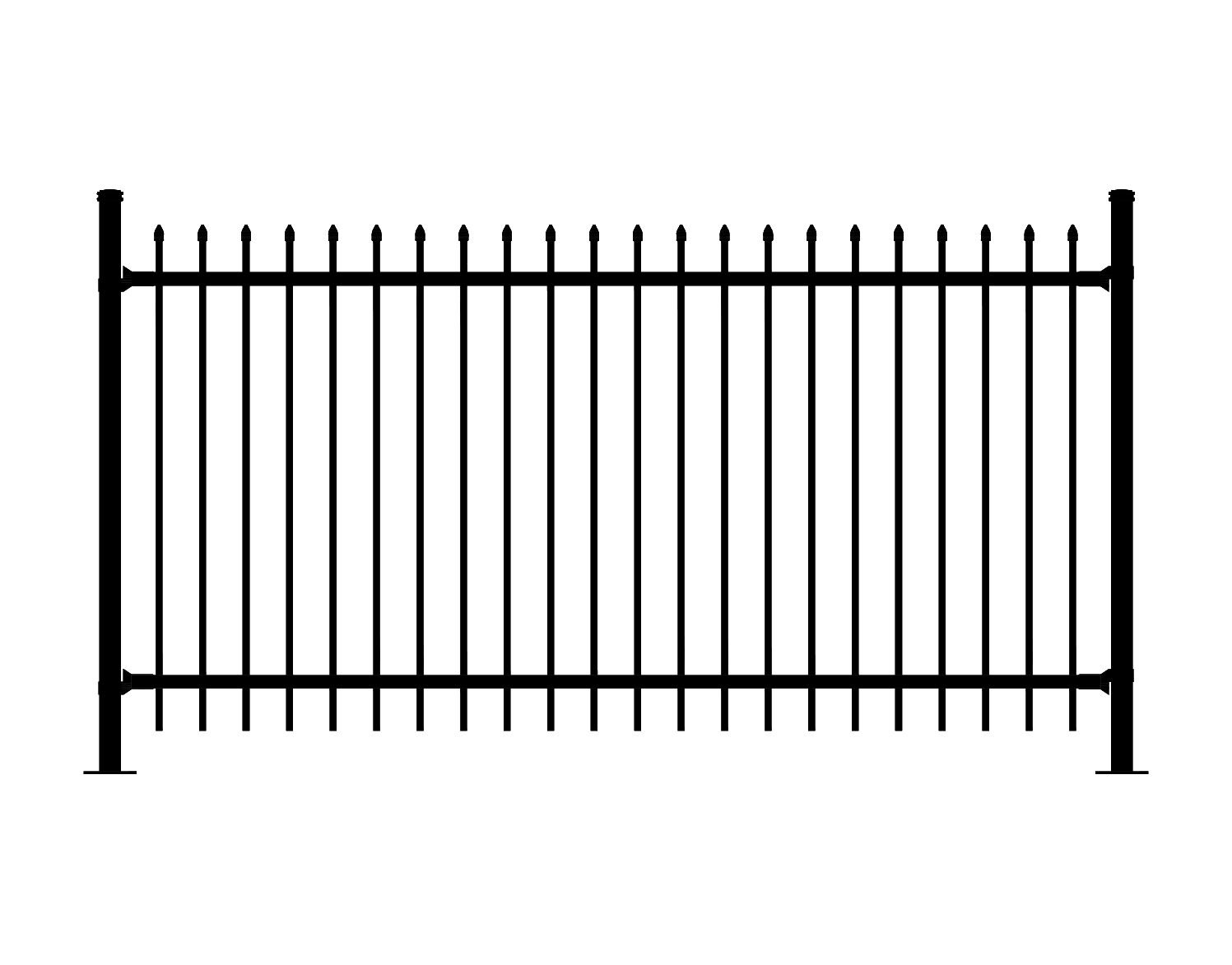
That said, aluminum is not weak. Modern ornamental aluminum fencing systems like Medallion's Fairmont Series use fully welded construction with solid aluminum tubing. These are not the flimsy bolt-together kits you find at big-box stores. They are legitimate perimeter systems rated for residential and light commercial use. For most single-family homes, townhouse complexes, pool enclosures, and estate properties, aluminum offers more than enough structural integrity.
Corrosion Resistance: Where Aluminum Wins, No Contest
If there is one area where aluminum has a clear, undeniable advantage over steel, it is corrosion resistance.
Aluminum forms a natural oxide layer on its surface that protects it from moisture, salt, and atmospheric corrosion. Even without any coating at all, aluminum will not rust. Add a quality powder coat finish on top, and you have a fence that will look the same in year fifteen as it did the day it was installed.
Steel, by nature, rusts. Bare steel exposed to Canadian rain, snow, road salt, and humidity will start showing surface oxidation within months. That is why the finishing process matters so much. A properly galvanized and powder-coated steel fence can absolutely last twenty years or more. But the quality of that finishing system is everything. If the coating gets chipped, scratched, or compromised at any point, moisture gets in and corrosion begins.
This is why Medallion's Armour-Shield system for steel fencing includes multiple protective layers, not just a single coat of paint. It is also why the company offers a 20-year warranty on steel fencing and a 25-year warranty on aluminum.
For properties near highways where road salt spray is a constant, waterfront homes, pool surrounds with chlorinated splash exposure, or any location in the Niagara region, coastal British Columbia, or the Atlantic provinces where moisture and salt are facts of life, aluminum is the more practical long-term material.
Cost: The Real Conversation
Here is where things get interesting, and where a lot of Canadian consumers feel frustrated because they cannot get a straight answer.
The truth is that aluminum fencing typically costs about 20 percent more than comparable steel fencing at the point of purchase. Aluminum is a more expensive raw material per kilogram, and while it requires less intensive finishing than steel, that savings does not fully close the gap. Steel benefits from lower base material cost, even after factoring in the multi-layer corrosion protection process required to protect it.
Where the real cost difference shows up is over the life of the fence.
Aluminum fencing has almost zero maintenance cost. Wash it with soap and water once a year if you feel like it. That is about it. No repainting, no rust treatment, no touch-up kits.
Steel fencing, if the coating is damaged, needs prompt attention. Ignoring a chip or scratch on a steel fence in a wet climate is how a small cosmetic issue turns into a structural problem over time.
For homeowners who do not want to think about their fence for the next two decades, aluminum is the lower total cost of ownership. For commercial and institutional clients who have maintenance staff on-site and need the extra strength steel provides, the maintenance trade-off is usually acceptable.
Aesthetics and Design Flexibility
Both aluminum and steel can be manufactured into the same ornamental profiles and styles. Flat-top, spear-top, double-rail, single-rail, staggered-height pickets, decorative rings, finials... all of it is available in both materials.
Medallion's fence series are a great example of this. All Medallion products are available in both aluminum and steel, so whether you are looking at the Wellington Series with its 3/4-inch pickets and estate-grade styling, the residential Fairmont Series, or the heavier Oxford and Hawkstone lines, you get the same ornamental profiles and design options in whichever material suits your project.
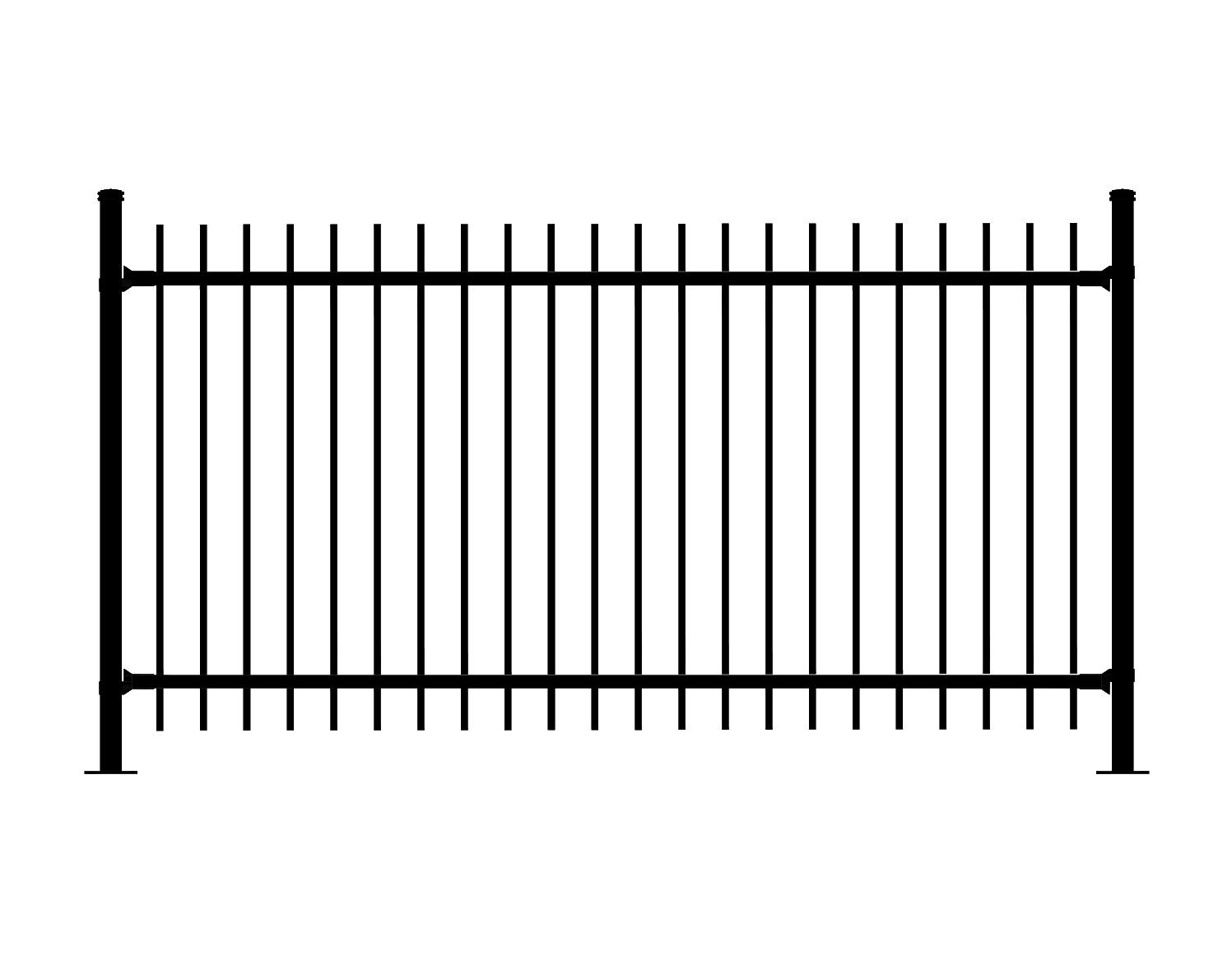
For commercial projects that need a heavier-gauge aesthetic, the Oxford Series offers industrial and institutional grade construction with 1-inch or 3/4-inch pickets and a minimum 2-1/2 inch post, again in both aluminum and steel variants.
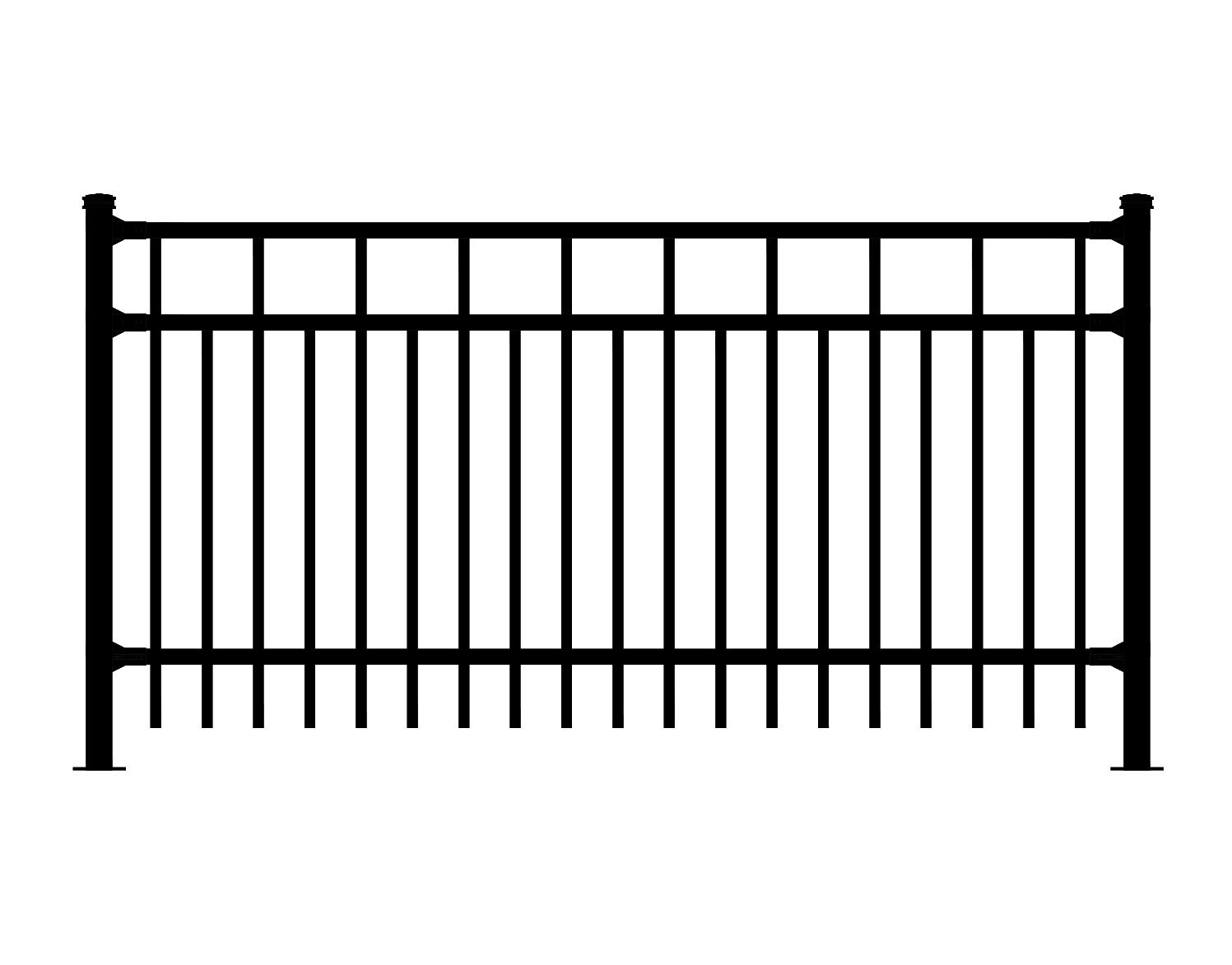
Colour options are the same for both materials since the final appearance is determined by the powder coat, not the substrate. So from a purely visual standpoint, most people cannot tell the difference between an aluminum and steel ornamental fence once it is installed.
Questions Canadian Consumers Keep Asking (That Most Blogs Ignore)
Over the years, we have heard a lot of questions from Canadian homeowners and professionals that rarely get answered in typical fencing guides. Here are a few of the most common ones.
Does aluminum fencing meet Ontario pool enclosure code requirements?
Yes. The Ontario Building Code (OBC) requires pool fences to be a minimum of 1.2 metres high with specific picket spacing to prevent child access. Both aluminum and steel ornamental fencing can be configured to meet these requirements. The key is specifying the correct style and height at the time of order. For more details on navigating the code side of things, check out our guide: Understanding Canadian Building Code Requirements for Perimeter Fencing
Will a snowplow hitting my fence destroy it?
This comes up more than you would think, especially in subdivisions where municipal plows clear streets close to property lines. Steel will handle incidental impact better than aluminum due to its higher yield strength. If your fence line runs close to a roadway or a shared laneway where plowing happens, steel is the safer bet. Aluminum will dent or deform more easily on impact, though it will not corrode at the damage point the way steel can.
Can I install aluminum or steel fencing on a slope?
Both materials can be racked (angled) to follow grade changes, but the maximum racking angle depends on the panel style and the manufacturer's engineering. Medallion's Hillcrest Series is specifically designed as a rackable residential panel, engineered from the factory to flex and follow sloped terrain while maintaining consistent picket spacing. The Hillcrest Series is available in steel only and comes in a limited range of styles, so it is purpose-built for slope applications rather than serving as a general-purpose line.
Is aluminum fencing strong enough for a property with large dogs?
For most residential situations, yes. Aluminum ornamental fencing with properly spaced pickets and a secure bottom rail will contain large dogs without any issues. If you are dealing with a particularly determined animal, look into the Pet Guard Series which adds a puppy-proof bottom rail configuration.
So, Which One Should You Choose?
There is no single right answer here, and anyone who tells you otherwise is oversimplifying it.
So, Which One Should You Choose?
If your priorities are low maintenance, corrosion resistance, and clean residential aesthetics, aluminum is the way to go. It is lighter, easier to install, will never rust, and carries a longer warranty.
If your project demands higher impact resistance, maximum security, and the structural capacity to support gates, access hardware, and long continuous runs on commercial or institutional sites, steel is the better material.
And for architects and specifiers working on projects where both performance and design matter, the good news is that we offer most of our fence profiles in both materials. That means you can spec steel for the high-traffic front perimeter and aluminum for the decorative courtyard enclosure, or for applications where panel sizes are large and the weight of steel would become a concern. Aluminum is a significantly lighter material, and because Medallion uses heavy wall thickness on its aluminum panels, you still get strong structural performance without the bulk. This makes aluminum a practical choice when panels need to be oversized but still manageable to handle and install, all within the same design language. For guidance on how to approach that kind of specification, our blog on Specifying Commercial Fence Systems: A Comprehensive Guide for Architects is worth a read.
Final Thought
The aluminum vs. steel decision is not about picking a winner. It is about matching the material to the job. A fence is one of the few building components that has to perform structurally, hold up against Canadian weather, meet code, and look good doing it, all at the same time, for decades.
Get Expert Guidance
Take the time to get it right. Talk to your contractor, review the spec sheets, and if you need help narrowing it down, reach out to Medallion Fence directly for project-specific guidance.
Request a Quote