


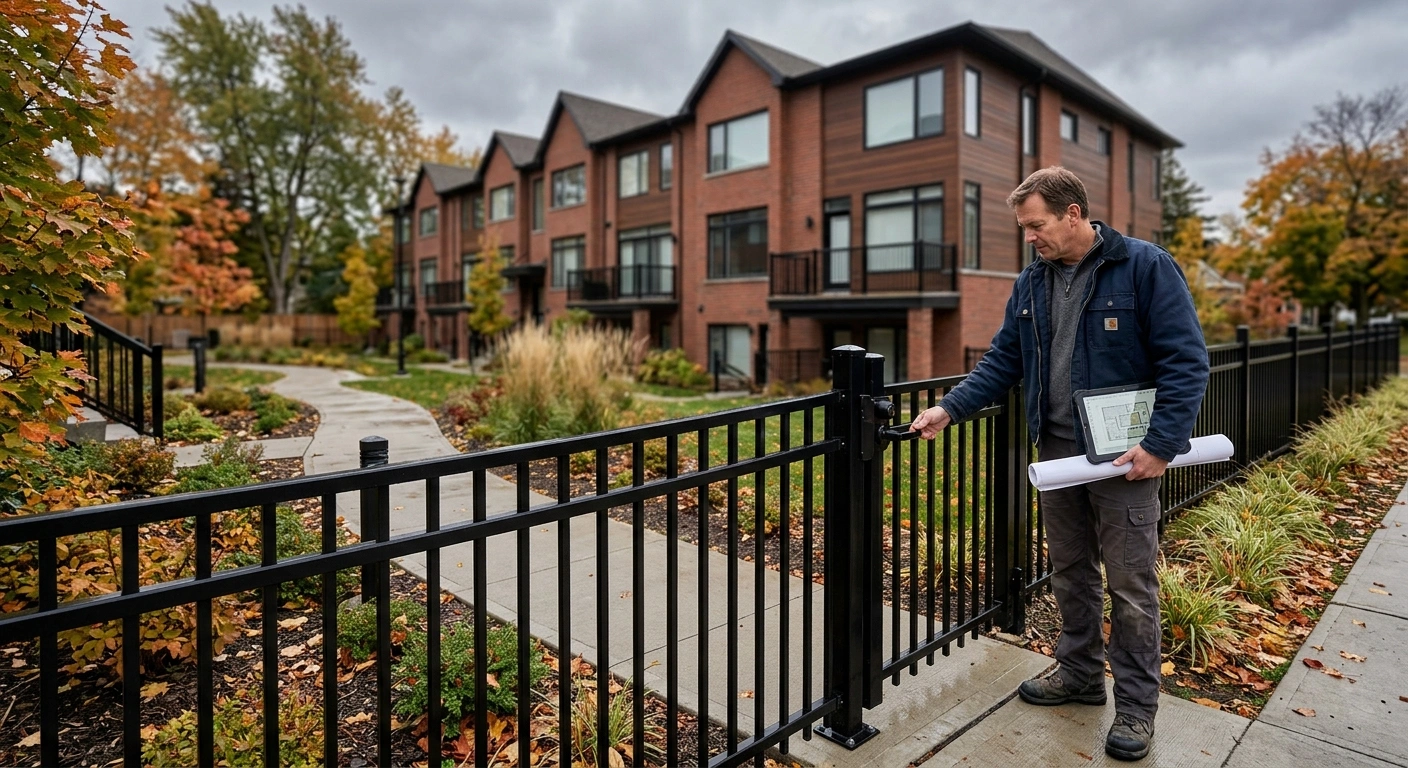
If you have spent any time working on townhouse complexes, stacked condos, or mid-rise residential developments across Canada, you already know that fencing is never just fencing. It is part of the site plan, part of the security strategy, part of the aesthetic language you are building for the entire project, and in many cases, part of a compliance puzzle that varies wildly from one municipality to the next.
And yet, fence and gate specification is one of those line items that too often gets pushed to the tail end of the design process. By that point, budgets are tight, the landscape plan is nearly locked, and the fencing ends up being a compromise rather than a deliberate design decision.
This article is for the architects, landscape designers, and general contractors who want to get ahead of that pattern. We will dig into the real considerations behind specifying fence and gate systems for multi-unit residential projects in Canada, including a few questions that come up constantly on job sites but rarely get addressed in the specification literature.
Why Multi-Unit Residential Fencing Deserves Its Own Conversation
A single-family home needs a fence for privacy, maybe a bit of curb appeal. A multi-unit residential project needs a fencing system. That distinction matters.
When you are designing for a 40-unit townhouse development or a 120-unit stacked condo complex, the fence is no longer one homeowner's decision. It has to satisfy the developer's vision, meet municipal bylaws, create consistent visual language across the entire streetscape, provide meaningful security for shared amenities like pools and playgrounds, accommodate maintenance access for property management, and hold up under the kind of wear that comes with dozens or hundreds of residents using the same perimeter day after day.
That is a different engineering problem than picking out a nice-looking fence for a backyard.
The Canadian Code Landscape: What Catches People Off Guard
One of the most common questions we hear from design professionals working on their first multi-unit project in a new municipality is some version of: "Wait, the height restriction is different here?"
And the answer is almost always yes. Canada does not have a single national fence code. The National Building Code of Canada (NBC) provides a foundation, but the rules that actually govern your fence installation come from a combination of provincial building codes and municipal bylaws that vary city to city, and sometimes neighbourhood to neighbourhood.
In Toronto, for example, Chapter 447 of the Fence Bylaw sets specific height limits based on yard orientation, adjacent property type, and proximity to public highways. A side or backyard fence bordering a multi-residential property or public walkway can go up to 2.5 metres, while a front yard fence near a public highway is capped at 1.2 metres within 2.4 metres of the lot line. In Alberta, municipalities like Strathcona County set maximums at 2.0 metres for fences that do not extend beyond the front face of the building and 1.0 metres for those that do. Corner lots carry their own restrictions.
For architects working across multiple provinces, this patchwork means that you cannot simply copy a fence specification from a project in Mississauga and apply it to a job in Calgary. Every project needs a fresh bylaw review. And for fences that serve as guards near grade changes, retaining walls, or elevated walkways, the NBC requirements around fall protection come into play on top of the local bylaw, which means two layers of compliance to coordinate.
Choosing Between Aluminum and Steel: It Is Not Just About Price
The aluminum versus steel question comes up early and often in multi-unit residential projects, and it is rarely as straightforward as people expect.
Aluminum fencing, like the kind manufactured with an Alu-Tuff™ finish, is lighter, naturally corrosion-resistant, and easier to handle during installation. For projects in coastal British Columbia or anywhere near road salt exposure in Ontario and Quebec, aluminum holds up exceptionally well over time without requiring painting or rust treatment.
Steel, on the other hand, delivers higher impact resistance and a heavier structural profile. When you need fencing that can withstand higher traffic zones, parking structure perimeters, or loading dock separation, steel with a multi-layer corrosion protection system like Armour-Shield™ provides the structural performance the application demands.
For most multi-unit residential projects, the answer often ends up being both. Aluminum for the residential perimeter sections where weight, ease of installation, and long-term maintenance savings matter most. Steel for the high-traffic, high-security zones where impact resistance is the priority.
Oxford™ Series
Commercial / InstitutionalMedallion Fence Oxford™ Series is purpose-built for commercial and institutional applications with 1-1/2" x 1-1/2" rails and a minimum 2-1/2" x 2-1/2" post, making it well suited for multi-unit perimeter runs that need to meet both security and aesthetic standards.
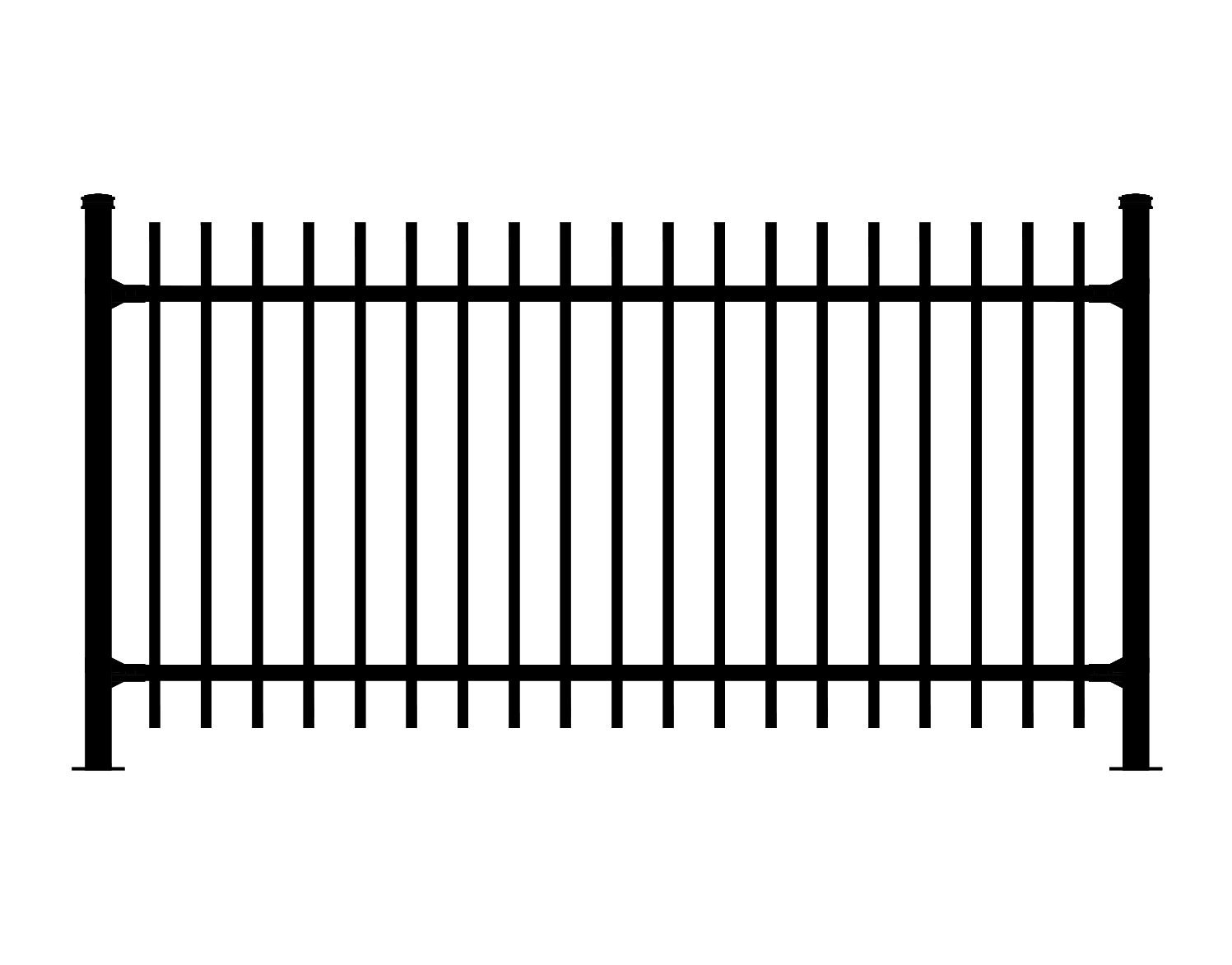
Wellington™ Series
Estate / Light CommercialFor the residential-facing portions of a project where a slightly lighter profile is appropriate, the Medallion Fence Wellington™ Series offers estate-grade aesthetics with 3/4" x 3/4" pickets and a residential estate to light commercial rating.
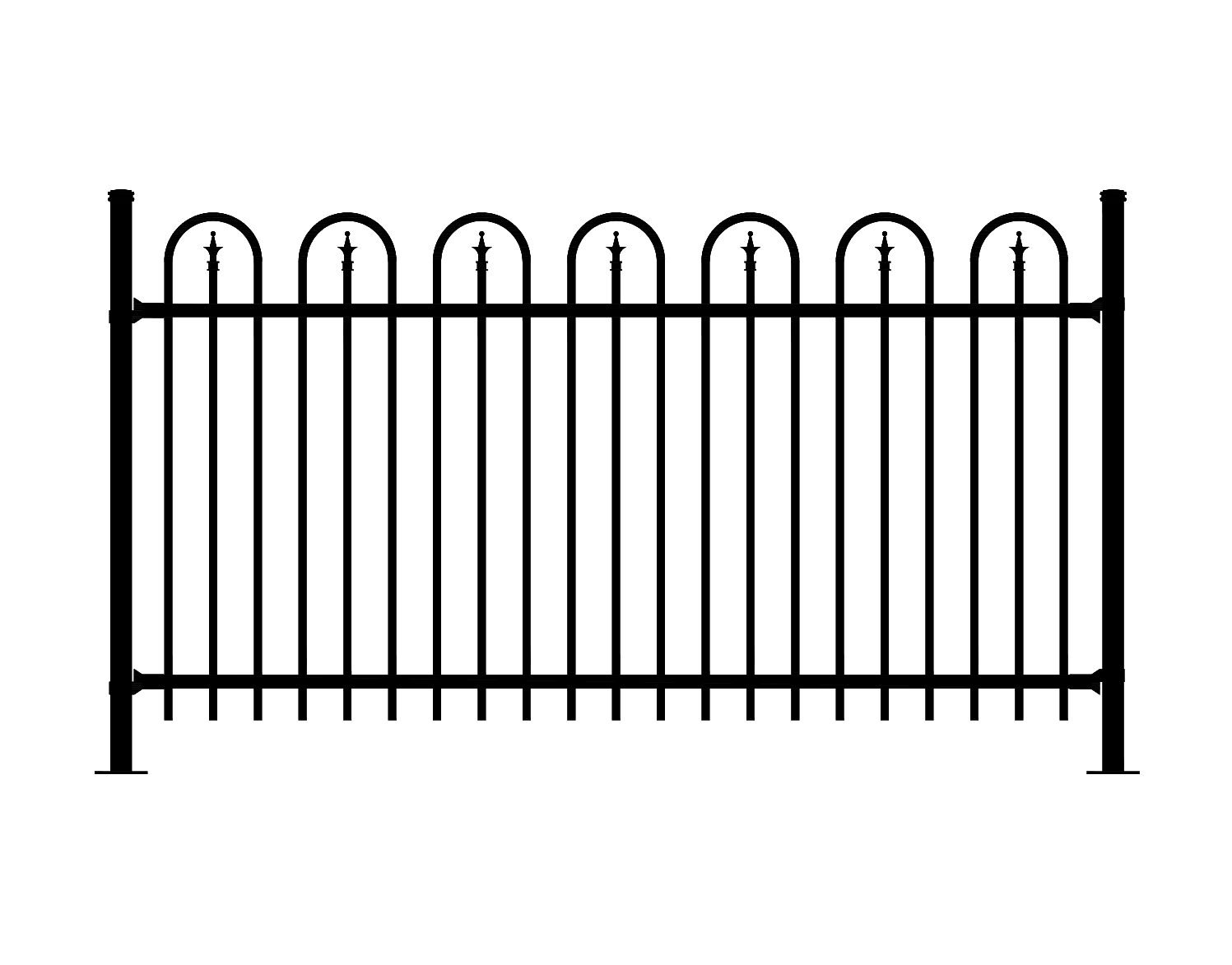
Gate Design: The Detail That Can Make or Break a Project
Gates on multi-unit residential sites get more daily use than almost any other piece of site furniture. Pedestrian passage gates at amenity areas, double drive gates at service entrances, and vehicular slide gates at parking access points all need to be specified with durability, operational frequency, and visual continuity in mind.
One of the biggest mistakes we see in multi-unit projects is specifying a gate as an afterthought, using generic hardware that does not match the fence series or tolerances that do not account for post deflection over time. When a gate starts sagging or binding within two years of occupancy, it reflects poorly on the entire project.
Custom Gates
Medallion Fence Custom Gates are engineered to match their fence panel counterparts, available in arched passage, mirror image double, and wave configurations for both walk and drive applications.
Accessibility and Barrier-Free Requirements
This is one of the topics that gets asked about constantly but rarely addressed in fence and gate guides. Under the current Ontario Building Code, multi-unit residential buildings with more than a handful of units trigger accessibility requirements for shared entrances and paths of travel. Nova Scotia's updated building code requires barrier-free units in buildings with more than three residential suites.
What does this mean for fencing and gates? It means that every pedestrian gate on a barrier-free path of travel needs to meet minimum clear width requirements, operate without requiring tight grasping or twisting motions, and be positioned on surfaces that maintain accessible grades. If your gate hardware forces a resident in a wheelchair to reach across their body to operate a latch, you have a compliance issue.
Specify self-closing gate hardware with lever-style latches, and confirm that the gate swing direction does not create a barrier on the accessible route. These are details that get missed in the field if they are not clearly called out in the specification.
The Freeze-Thaw Problem Nobody Talks About
Canadian winters are brutal on fencing systems, and multi-unit residential projects face an amplified version of the problem. More linear footage means more posts, and more posts means more opportunities for frost heave to push things out of alignment.
The solution starts at the foundation. Post footings need to extend below the local frost line, which ranges from roughly 1.2 metres in southern Ontario to well over 2.0 metres in parts of the Prairies and northern regions. Fully welded fence panels handle the cyclical expansion and contraction of freeze-thaw far better than bolted or roll-formed alternatives, because welded joints do not loosen the way mechanical fasteners do over repeated thermal cycles.
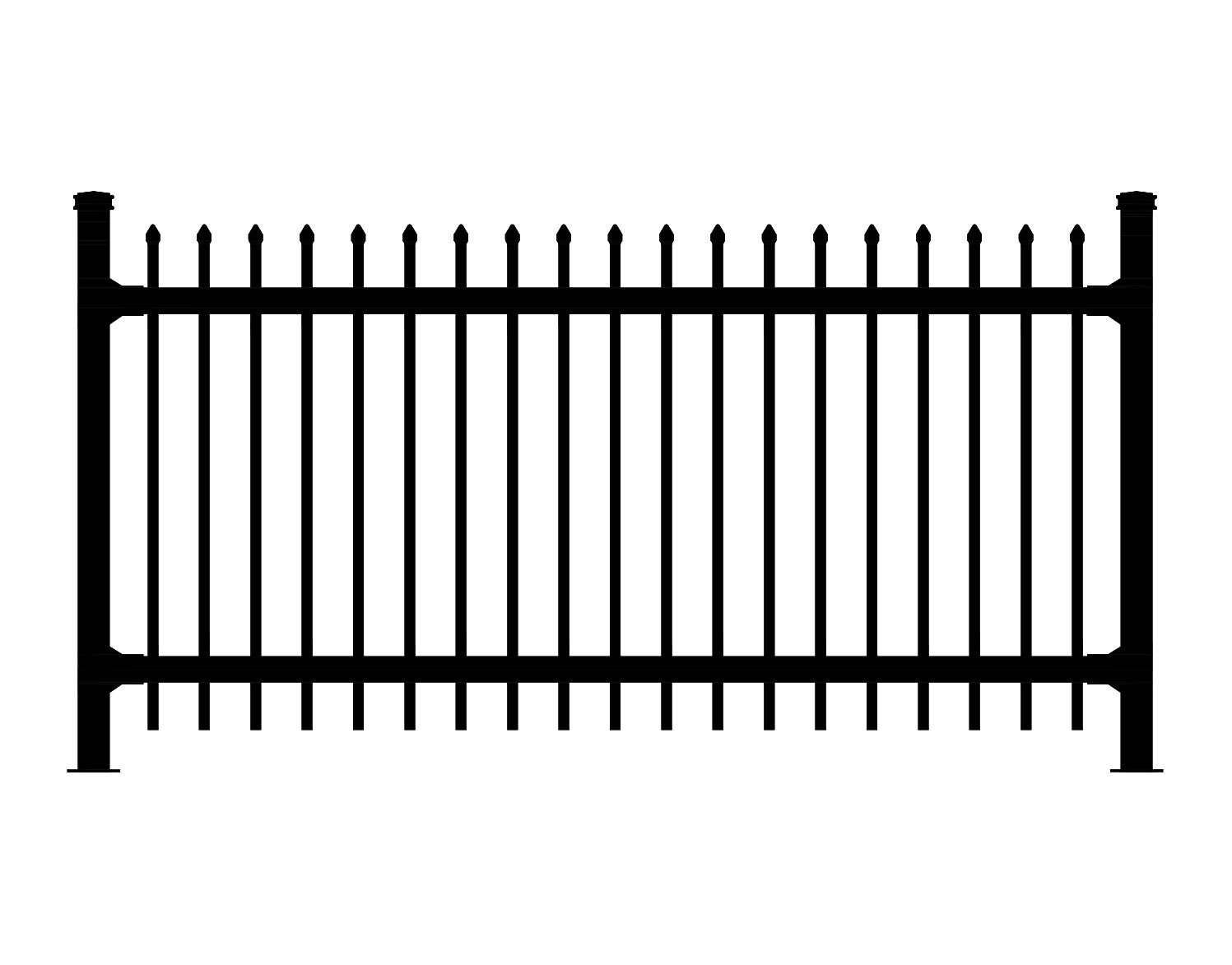
Preston™ Series
Fully WeldedMedallion Fence Preston™ Series panels are fully welded from solid tubing, which gives them the joint integrity needed to maintain alignment through the seasonal movement that Canadian climates demand.
Maintenance Planning: Thinking in Decades, Not Years
Multi-unit residential projects are built to be managed by condo boards and property management companies, not individual homeowners. That changes the maintenance calculus entirely.
A fence system that needs repainting every five years across 800 linear metres of perimeter will cost a condo corporation tens of thousands of dollars per cycle. Multiply that over a 25-year building lifecycle, and you are looking at a significant operating expense that could have been avoided with the right initial specification.
Factory-applied powder coat finishes that resist UV degradation, salt, and moisture eliminate the need for cyclical repainting. This is not a small detail. For property managers budgeting reserve funds, the difference between a fence that needs periodic refinishing and one that only requires an annual wash with soap and water is material.
Fairmont™ Series
Residential / Light CommercialThe Medallion Fence Fairmont™ Series, designed for residential and light commercial applications, comes with a factory-applied powder coat finish and is backed by a 25-year warranty on aluminum systems, giving condo boards and property managers the kind of lifecycle certainty they need for long-term reserve fund planning.
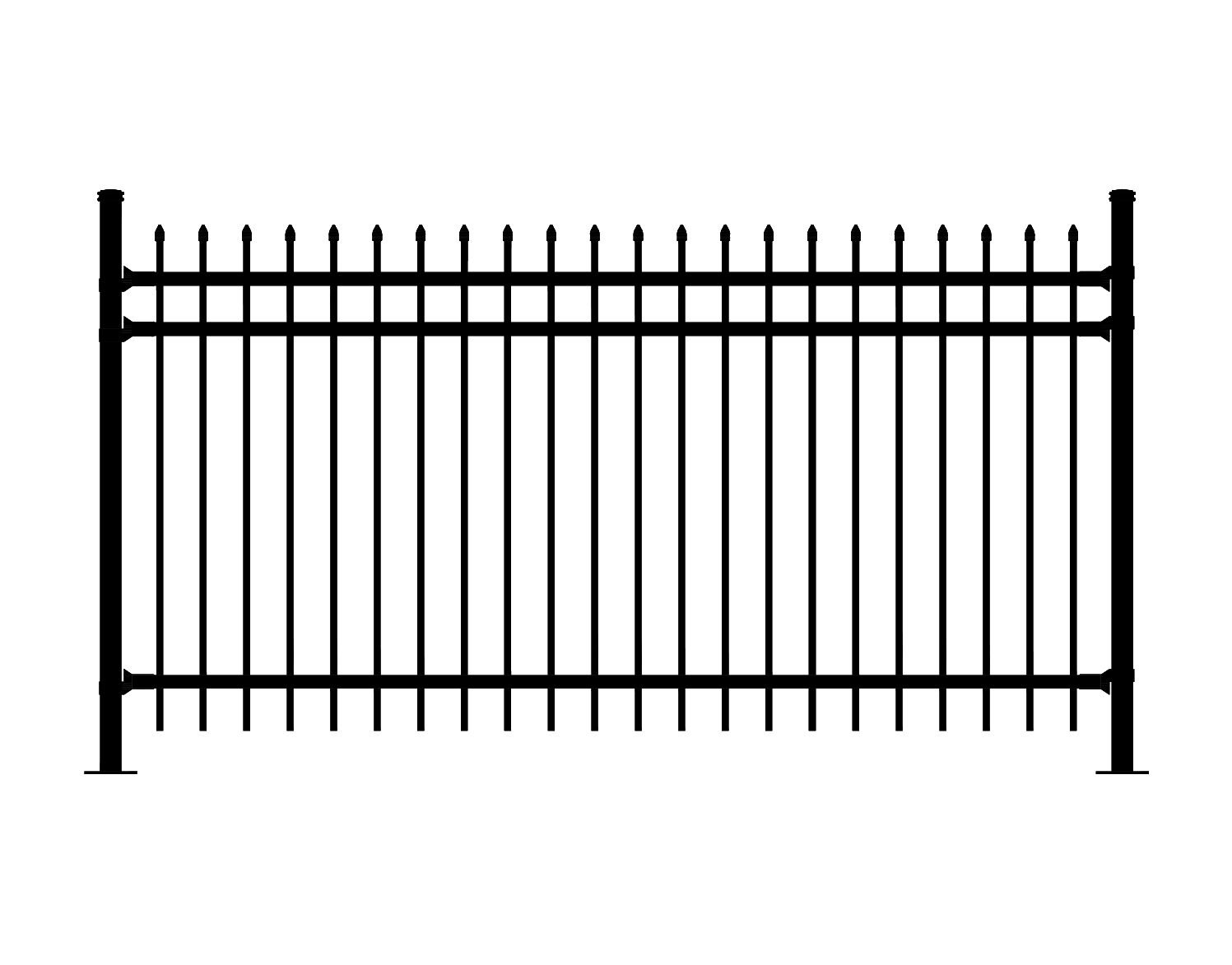
Visual Consistency Across the Streetscape
In a multi-unit residential development, the fence is one of the most visible elements of the project from the street. Inconsistent colour, mismatched picket spacing, or panels that do not align cleanly between sections will undermine the architectural intent of the entire site plan.
This is where working with a single manufacturer for the complete fence and gate package pays off. When every panel, post, gate, and decorative element comes from the same production line, you get consistent colour matching, uniform tolerances, and hardware that is designed to integrate rather than approximate.
Medallion Fence manufactures all products in-house at their facility in Maple, Ontario, from CNC punching and welding through to powder coating and multi-point inspection. That level of vertical integration means the Cavalier-DR gate you spec for the amenity area entrance will be an exact visual match to the Oxford™ panels running along the property line, because they came off the same coating line.
The Bottom Line for Design Professionals
Fence and gate specification on multi-unit residential projects is not glamorous work. It does not win design awards or end up in magazine spreads. But it is the kind of detail that separates a well-executed project from one that generates maintenance headaches and compliance issues for years after occupancy.
Get the bylaw review done early. Spec the right material for each zone of the project. Think about accessibility from the start. Plan for freeze-thaw. And work with a manufacturer that can deliver consistent quality across the entire perimeter package.
For architects, contractors, and landscape designers working on multi-unit residential projects anywhere in Canada, Medallion Fence offers the product range, the technical documentation (including DWG and PDF spec sheets for every series), and the manufacturing consistency to support projects from specification through installation.
Ready to Start Specifying?
Visit Medallion Fence to explore the full product range, download DWG and PDF spec sheets, or request a quote directly from our team.