


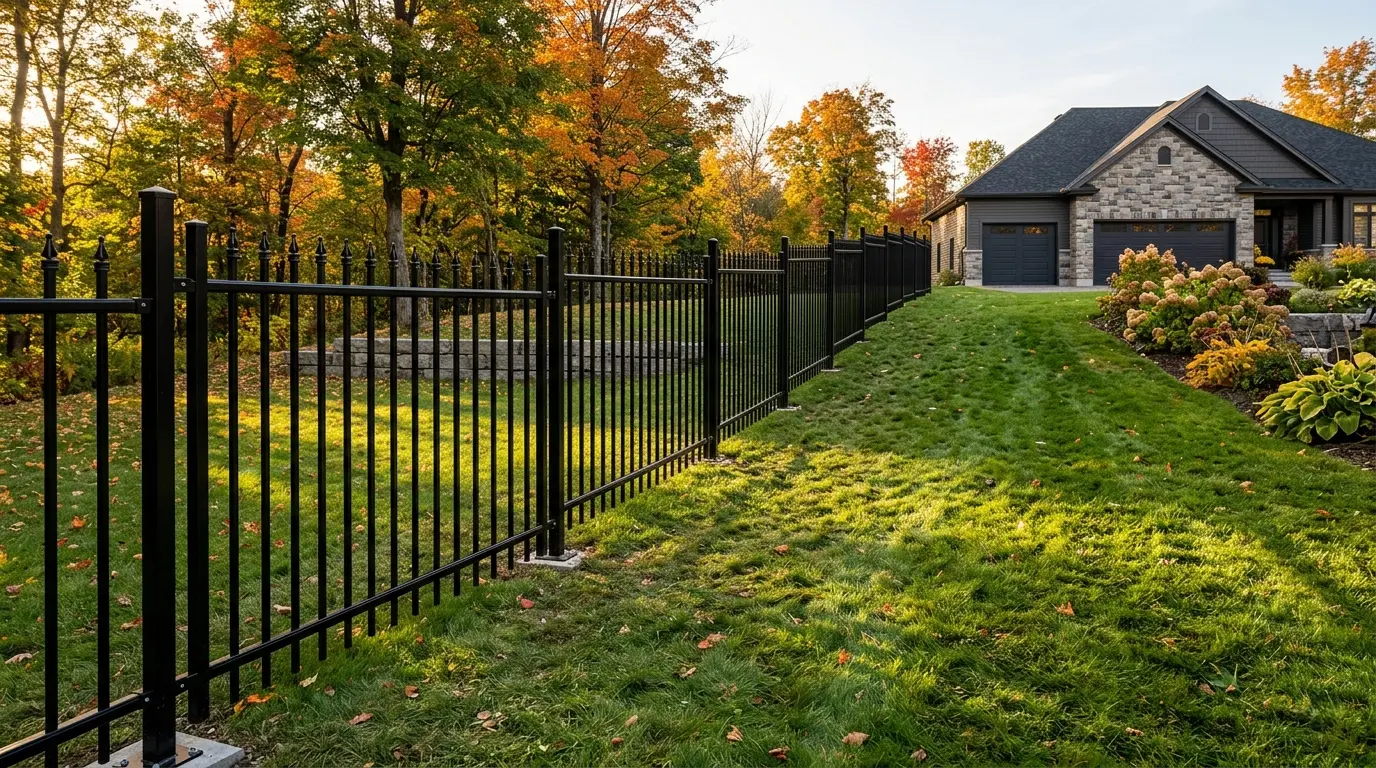
If you have been installing fences across Canada for any length of time, you already know this truth: flat lots are the exception, not the rule. From the rolling subdivisions outside Ottawa to the steep hillside properties in the BC Interior, sloped terrain is something you deal with on nearly every other job. And yet, it remains one of the most frustrating parts of the trade. Not because the work itself is impossible, but because so many manufacturers leave you guessing about how their panels actually perform on a grade. This guide is written for the installer who has already done a few hill jobs and wants to get sharper at them, and for the newer contractor who keeps Googling "how to install aluminum fence on a slope" and finding vague, unhelpful answers. We are going to break down the two primary methods, talk through the real-world decision points, and explain why the product you choose matters just as much as the technique you use.
The Two Methods: Racking vs. Stepping
Every sloped fence installation comes down to one fundamental choice. You are either going to rack your panels or step them. Both approaches work, but they solve different problems and they look completely different when the job is done.
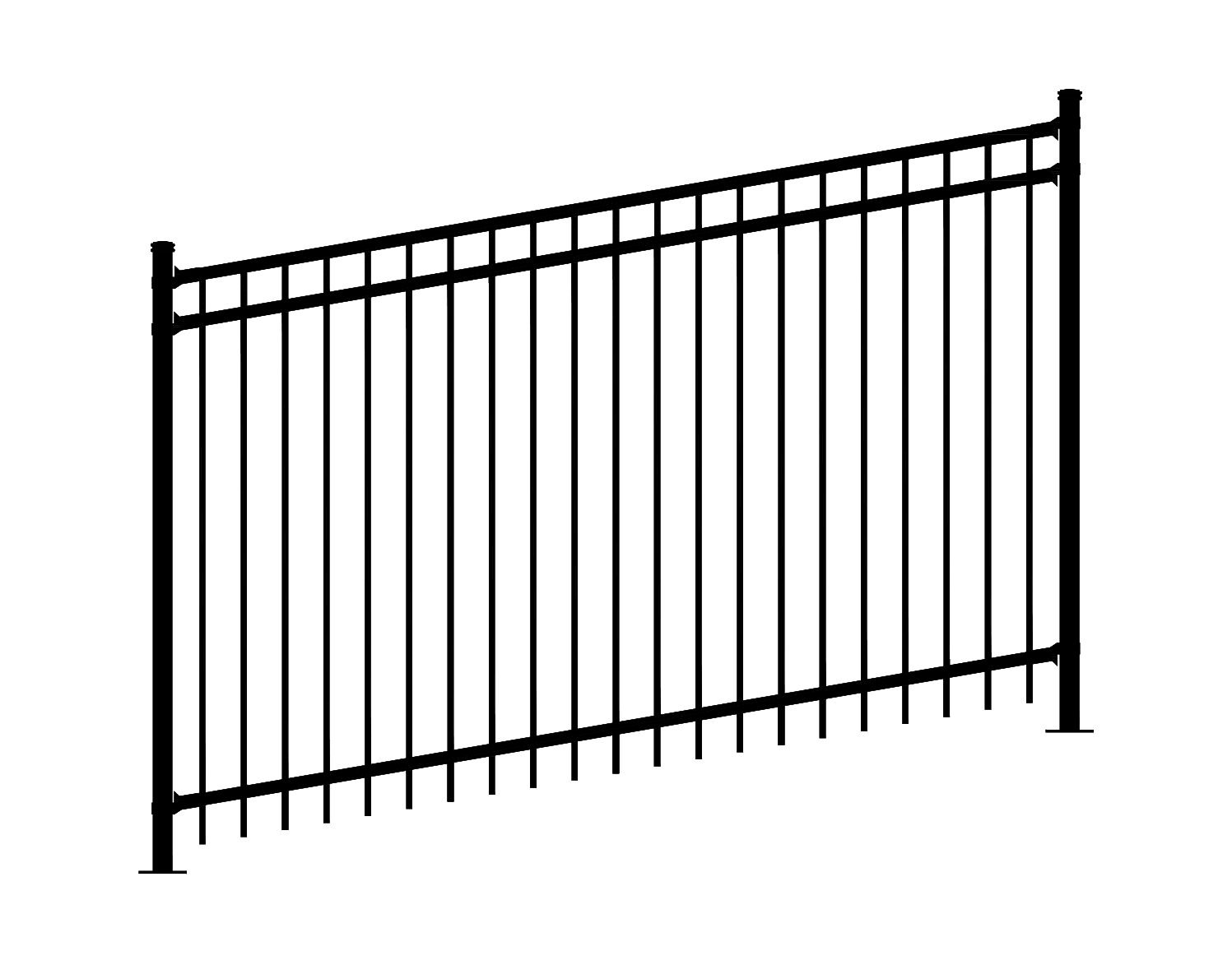
Racking (sometimes called "swivelling" or "angling") means the rails follow the slope of the ground. The pickets stay vertical while the top and bottom rails angle to match the grade. The result is a smooth, continuous fence line that flows with the terrain. It looks clean. Homeowners love it. And on gentle to moderate slopes, it is the preferred approach for residential work.
Stepping (also called "stair-stepping") means each panel stays level, and you adjust the post height so each section drops down like a staircase. You end up with a gap between the bottom rail and the ground at the high side of each panel. This method is the standard for steeper grades and is extremely common on commercial and institutional projects where code compliance and consistent panel height matter more than aesthetics.
Here is the part that most manufacturers do not explain clearly: not every aluminum fence panel can rack. Racking requires the pickets to move independently within the rail. If the panel is welded solid at every joint, you are not racking it without a cutting torch, and at that point, you have voided the warranty and created a liability. This is why product selection is so critical before you even start digging post holes.
When to Rack
The general rule most experienced installers follow is that racking works well on slopes up to about 30 to 35 degrees, depending on the panel design. Beyond that angle, you start to see picket spacing open up at the bottom and compress at the top, which looks awkward and can create gaps that fail municipal inspection for pool enclosures or child safety barriers.
For residential jobs on moderate grades, racking is almost always the better call. Canadian homeowners consistently prefer the look. When you stair-step a fence across a front yard in a Barrie subdivision or a Niagara escarpment property, the homeowner is going to notice those triangular gaps under each panel. And they are going to ask you about it. Racking avoids that conversation entirely.
Hillcrest™ Series
Medallion Fence's Hillcrest™ Series is purpose-built for exactly this scenario. It is a rackable residential panel with 5/8" x 5/8" pickets and 1-1/4" x 1-1/4" rails, designed to follow ground contours without the need for field modification.
Click here to see the products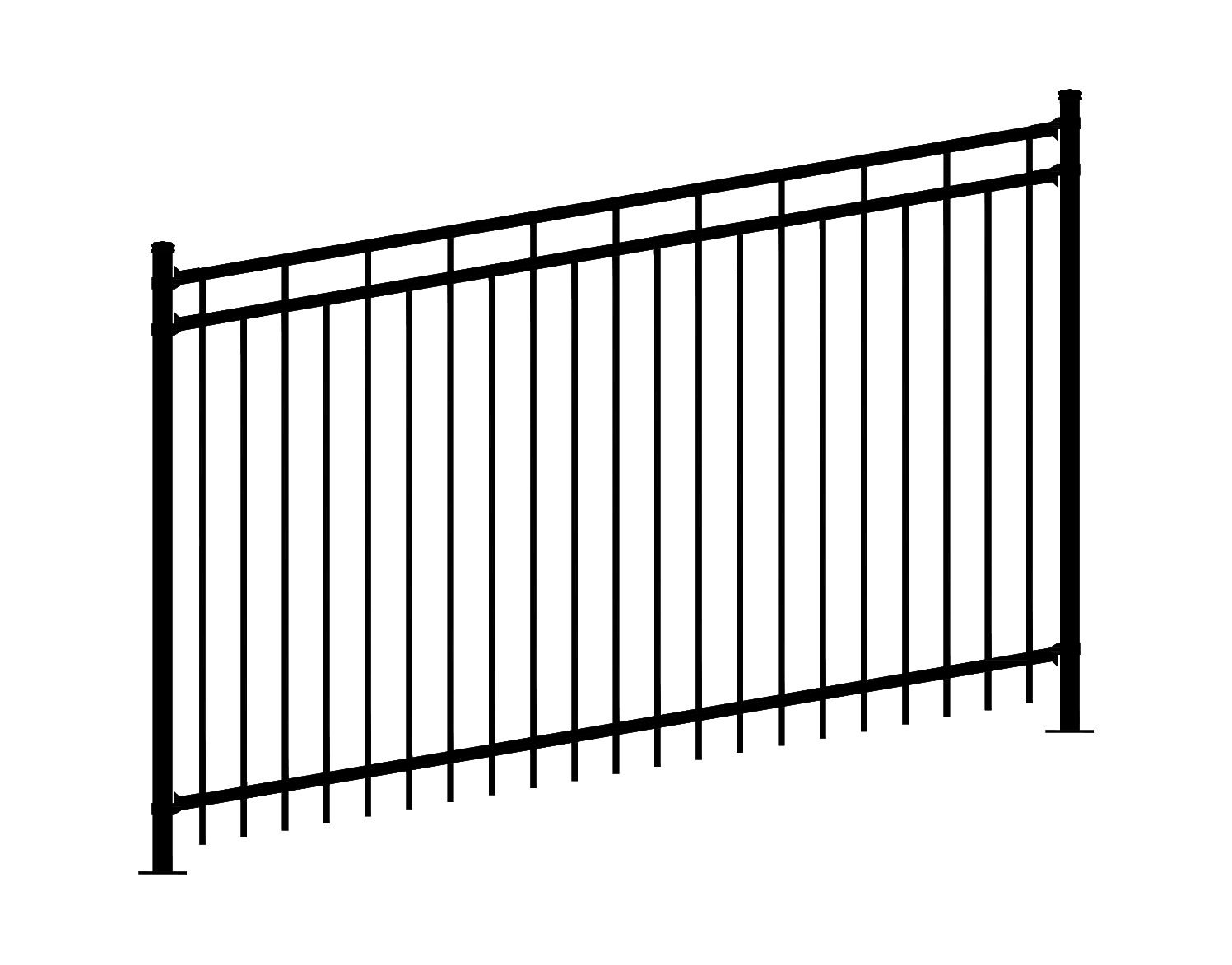
Alden
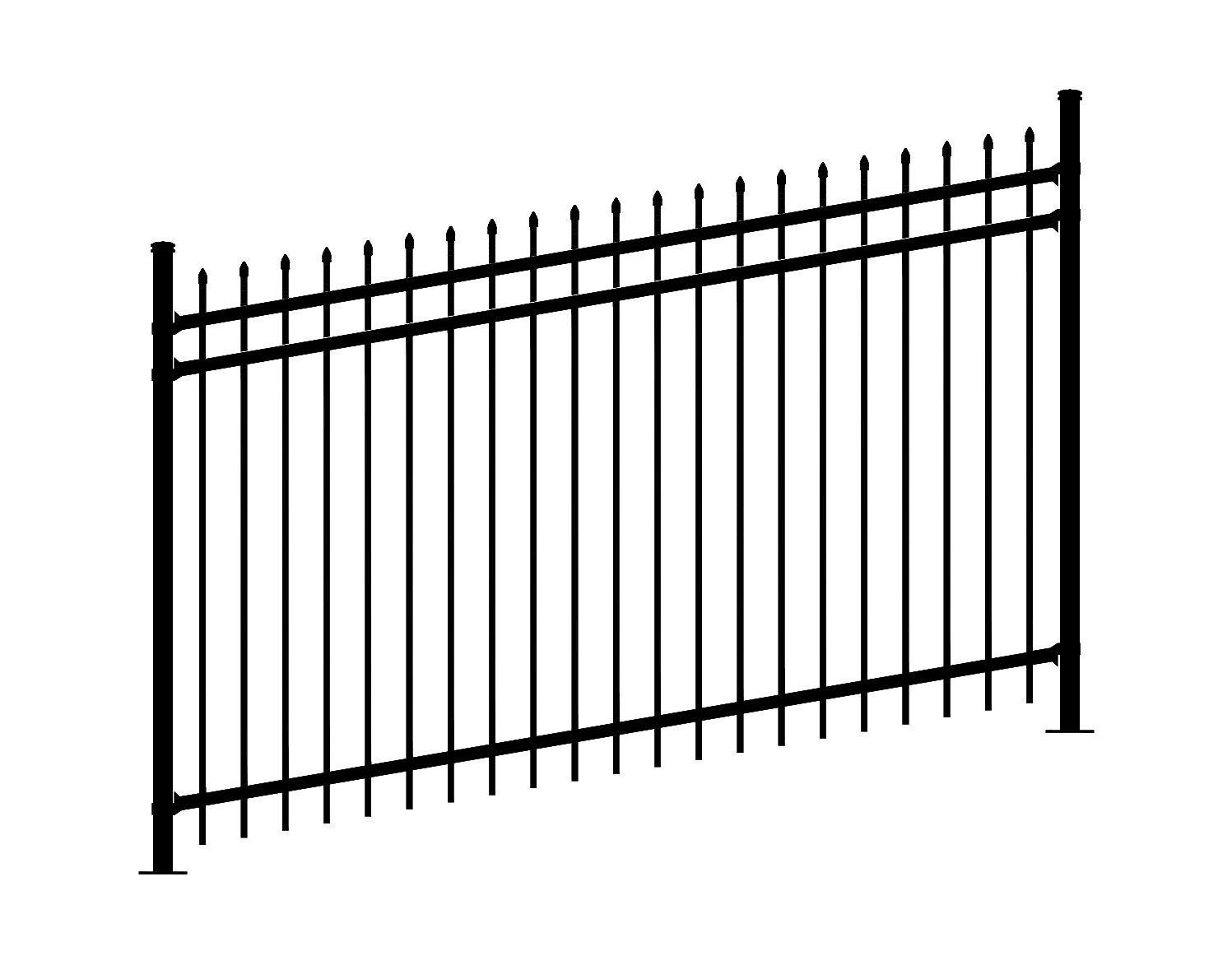
Aristocat
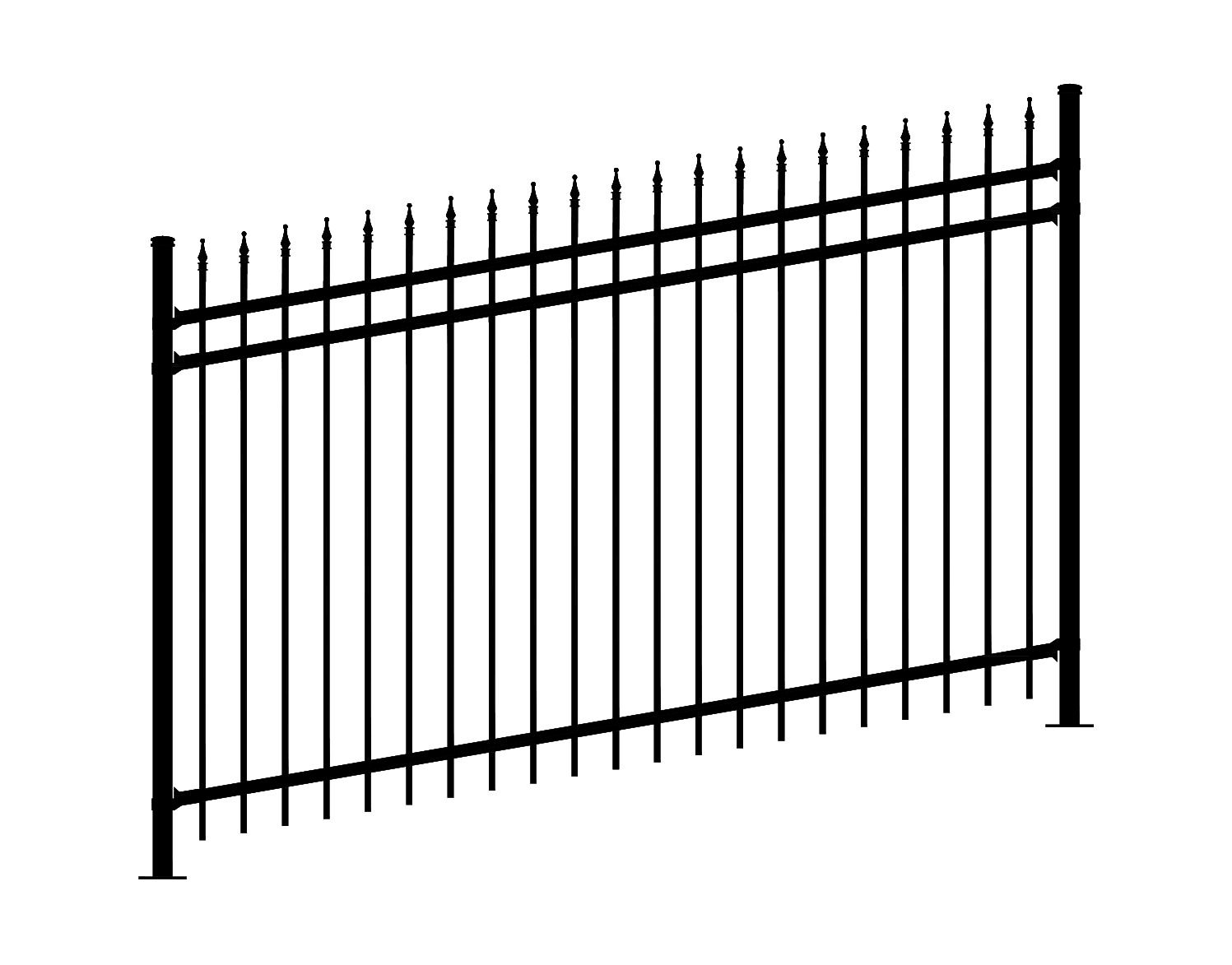
Cavalier
Stanton
If you have ever tried to rack a panel that was not designed for it, you know the difference immediately. A true rackable panel lets the pickets pivot smoothly within the rail channel. No binding, no cracking of the finish, no stress fractures at the joints six months after installation.
When to Step
Stepping makes sense on steeper terrain, on commercial sites where consistent panel height is a specification requirement, and on jobs where the local building code mandates a specific maximum gap between the bottom rail and grade. In Ontario, for example, pool fence enclosures under the Ontario Building Code require that the gap beneath the fence not exceed 100mm. On a steep stepped installation, you may need to use additional bottom rails, puppy panels, or adjust your post spacing to stay compliant.
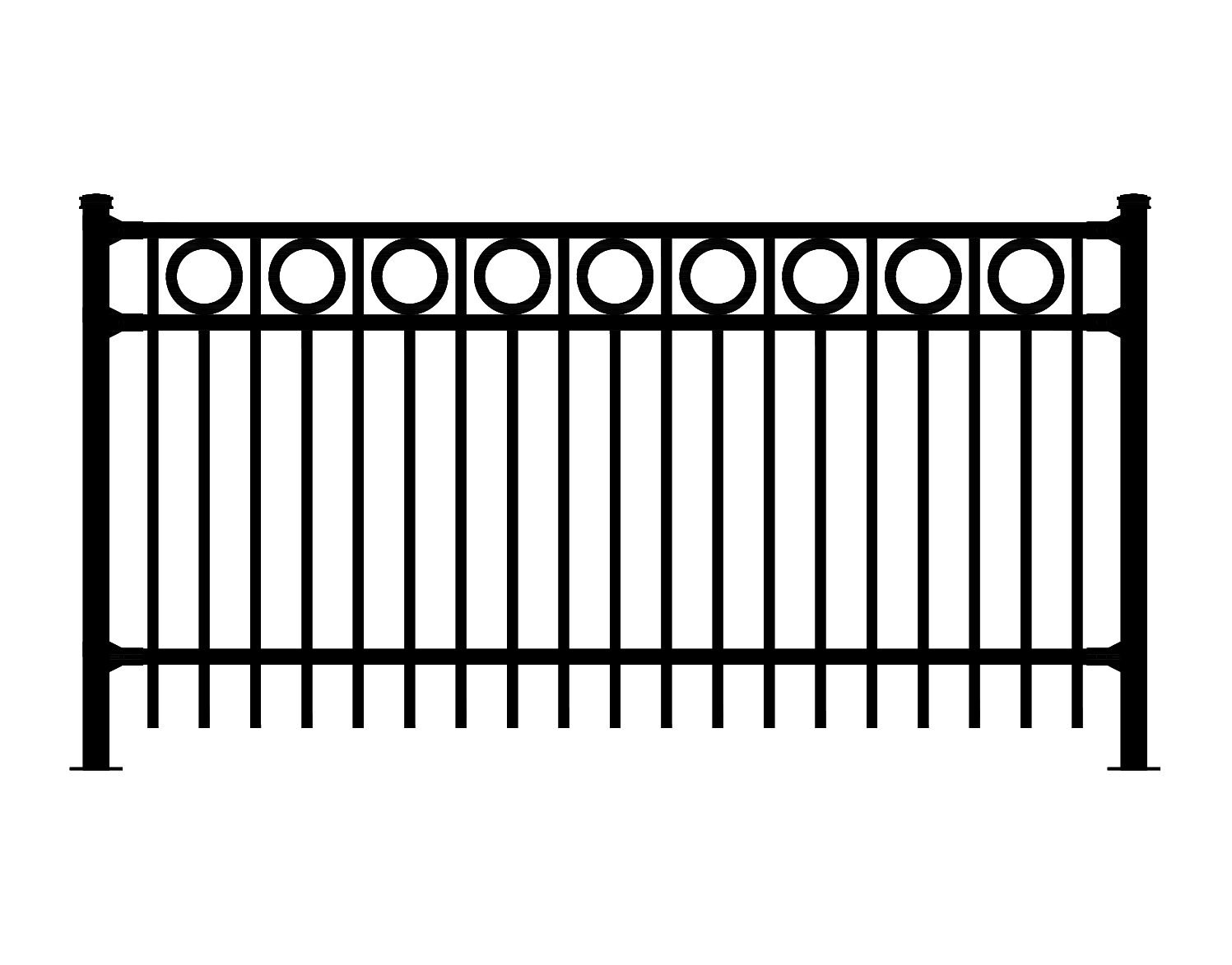
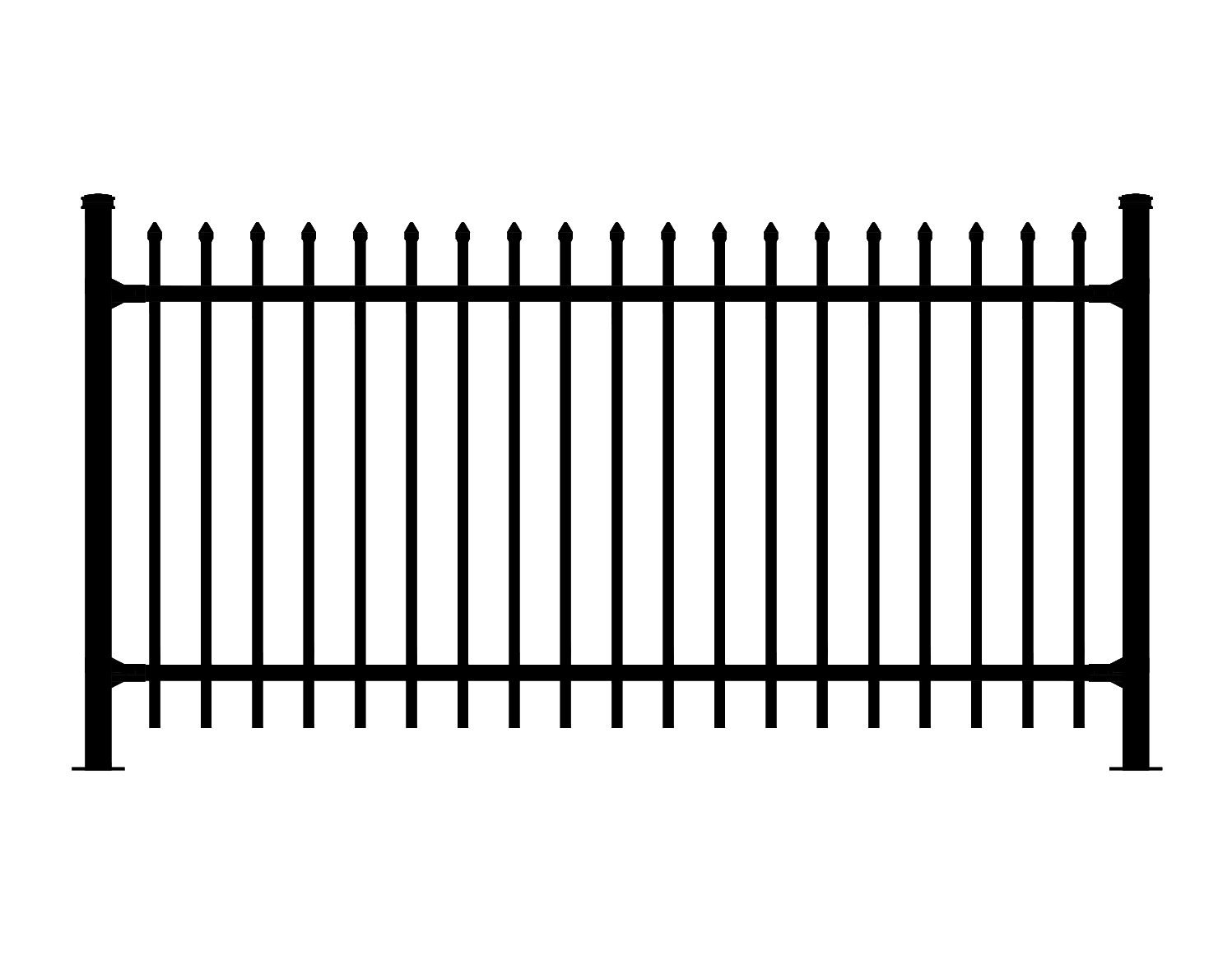
For commercial and institutional work on slopes, heavier-grade panels handle stepping better because the larger post dimensions give you more adjustment room. The Oxford™ Series from Medallion, with its 1-1/2" x 1-1/2" rails and 2-1/2" x 2-1/2" minimum post size, is built for this kind of application. The beefier post and rail structure means you can set posts at varying heights without compromising the rigidity of the overall fence line.
Oxford™ Series
Click here to see the products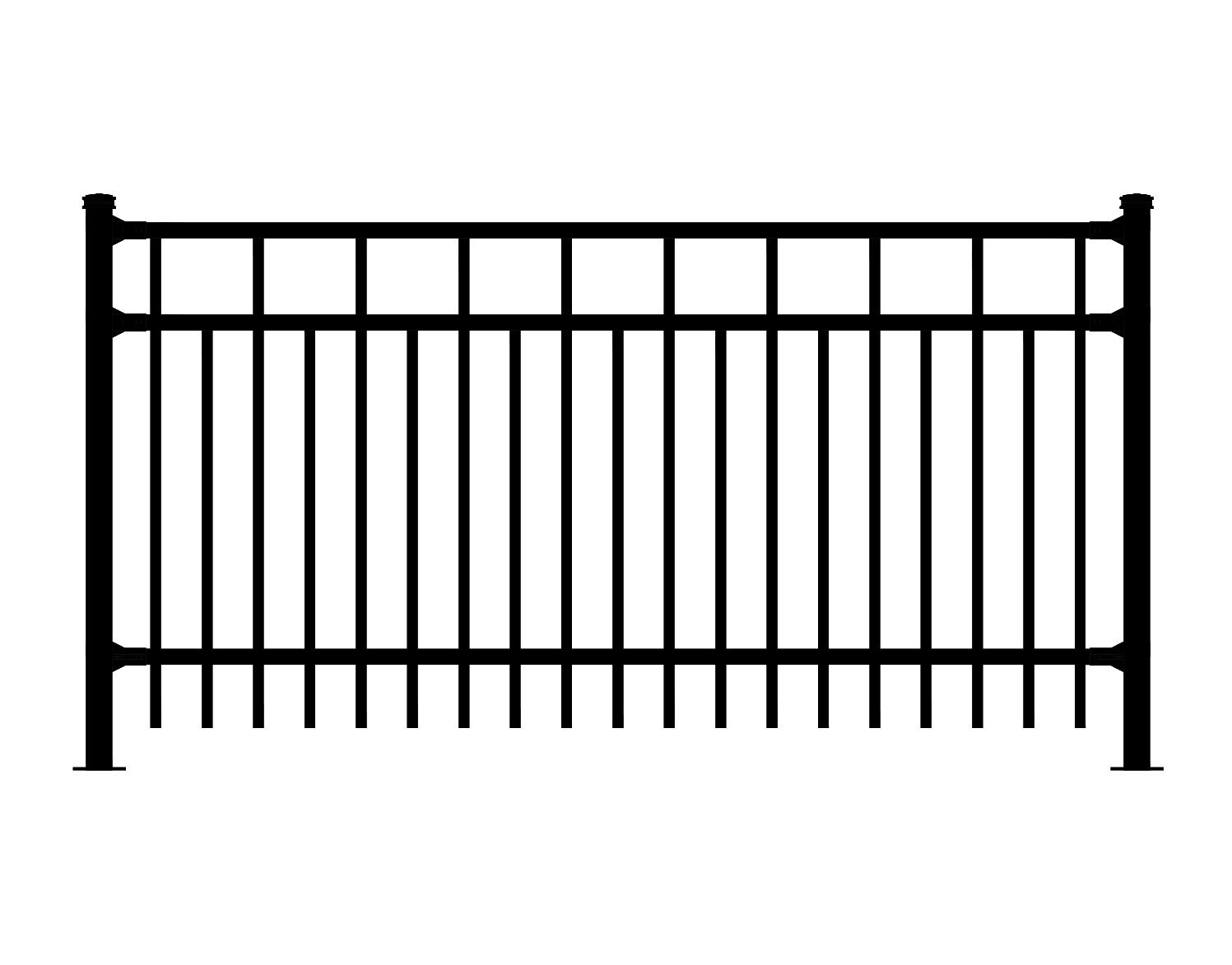
Alden
Alden-R
Aristocrat
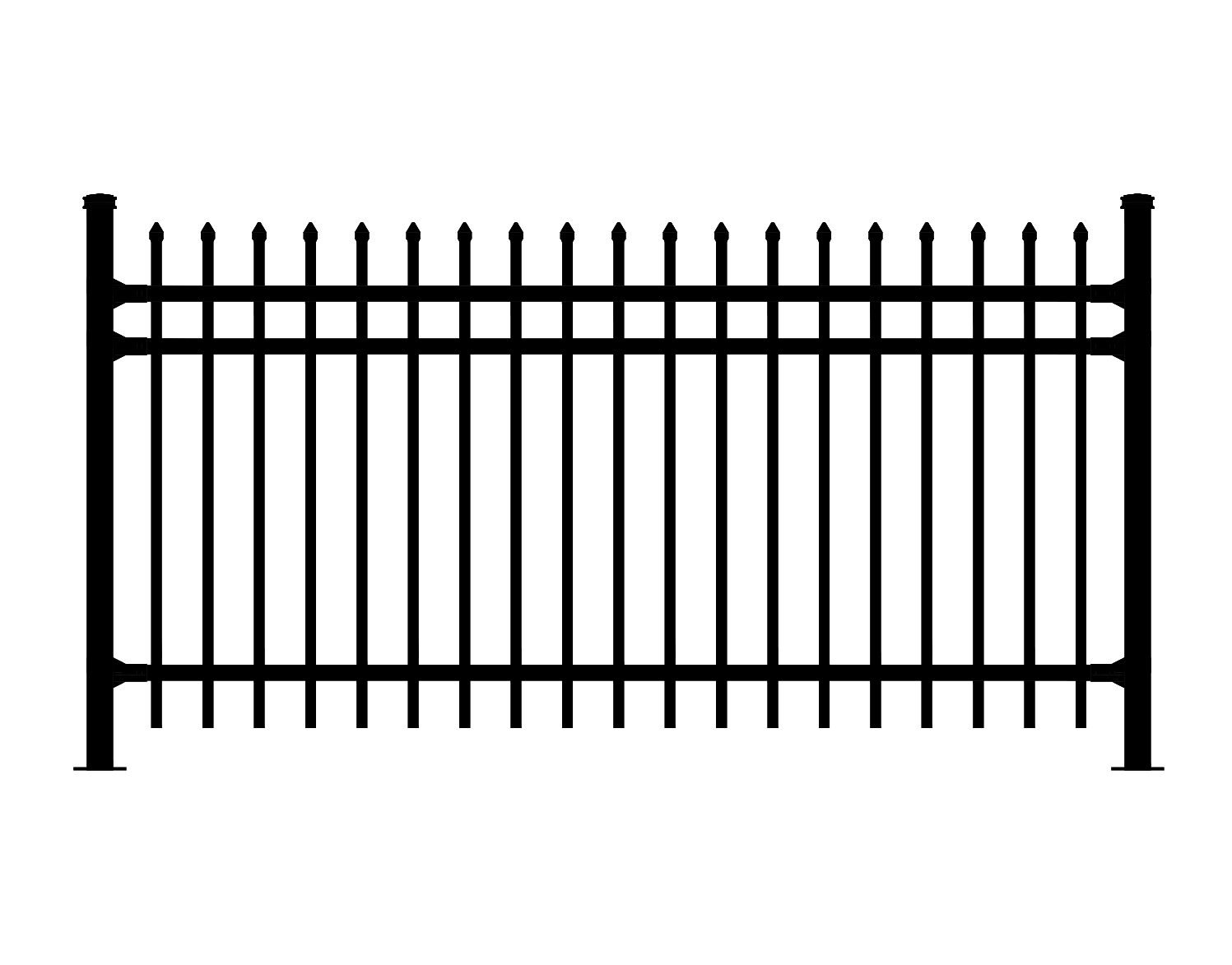
Aristocrat-DR
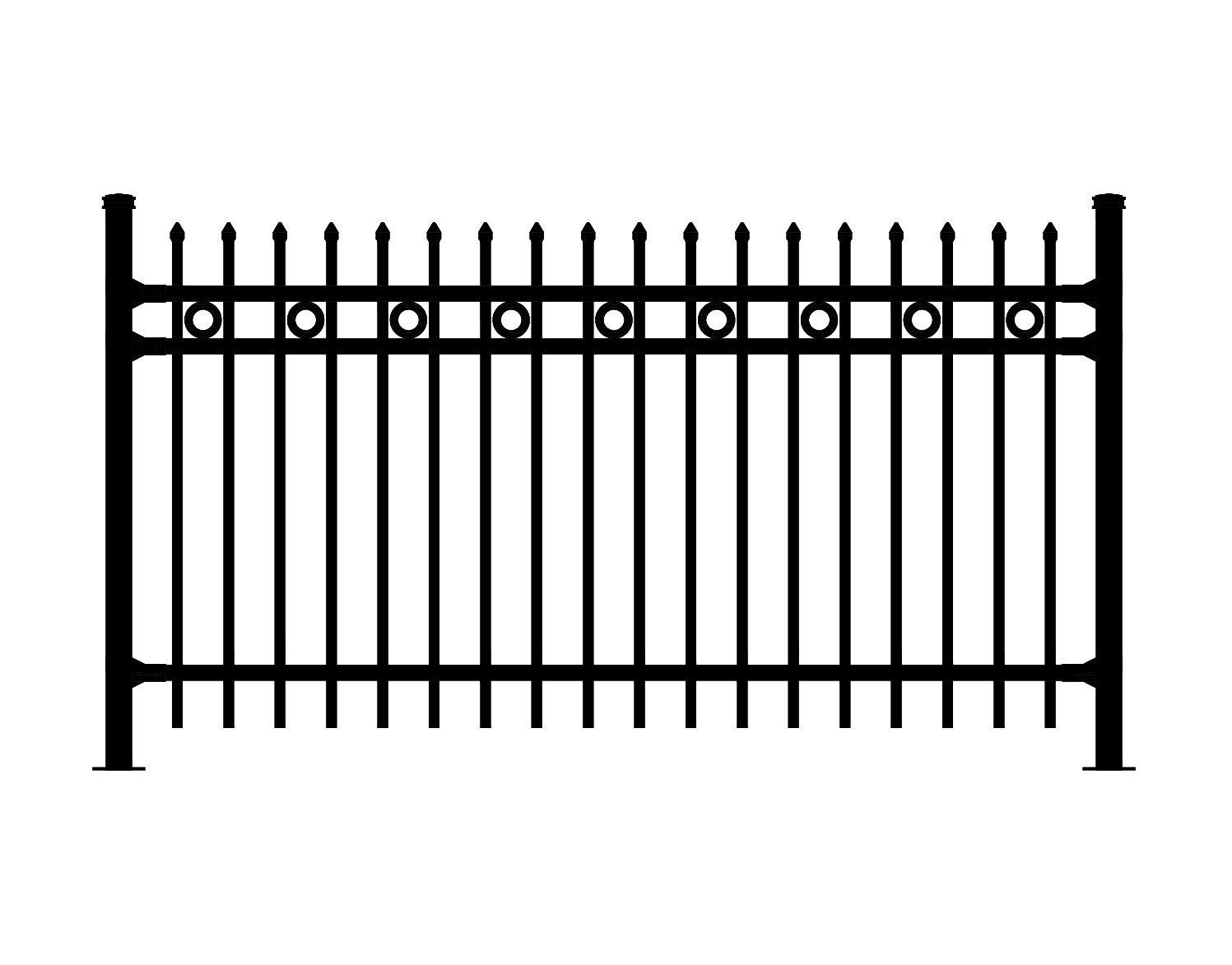
Aristocrat-DR-REO
The Post Layout Question Nobody Talks About
Here is where a lot of contractors get tripped up, and it is a topic that rarely shows up in manufacturer brochures. On a sloped site, your post spacing changes. On flat ground, you measure 6 or 8 feet on-centre depending on your panel width and you are done. On a slope, you are measuring along the hypotenuse, not the horizontal distance. If you lay out your posts based on horizontal measurement, your panels will be too short. If you measure along the actual ground surface, you end up with consistent spacing but potentially tighter tolerances at each post.
The fix is straightforward but takes discipline: measure your horizontal run, measure your vertical drop, and calculate the actual panel-to-panel distance along the slope. For most residential grades, the difference is small enough that a rackable panel absorbs it. On steeper commercial sites, you will want to verify your measurements twice and consider ordering a couple of cut-to-fit panels for the transitions.
Canadian-Specific Concerns That Affect Every Slope Job
Frost heave is the invisible enemy on sloped installations in Canada. Water runs downhill, collects at the base of your post holes, and when it freezes, it pushes your posts up and out of alignment. This is especially brutal in the clay-heavy soils you find across southern Ontario and the Red River Valley in Manitoba. On flat ground, frost heave is annoying. On a slope, it can twist an entire fence line out of plane in a single winter.
The standard best practice is to set your posts below the frost line, which is typically 4 feet in most of southern Canada and can be deeper in northern regions. On a slope, the downhill side of your post hole is effectively shallower than the uphill side. Some contractors compensate by digging deeper on the downhill posts. Others add a gravel base for drainage. Both approaches work, but you need to pick one and apply it consistently across the job.
Salt and road spray are another factor that comes up often in Canadian installations, particularly on properties that border municipal roads. Aluminum handles this far better than steel or iron. Medallion's Armour-Shield™ corrosion protection is engineered specifically for Canadian climate conditions, which is a significant advantage on any property where the fence line sits near a plowed road.
Fairmont™ Series
For residential slope work where curb appeal is a priority, the Fairmont™ Series offers that classic ornamental look with solid residential-grade construction. With 5/8" x 5/8" pickets and 1-1/4" x 1-1/4" rails, it handles stepped installations cleanly on moderate to steep grades.
Click here to see the products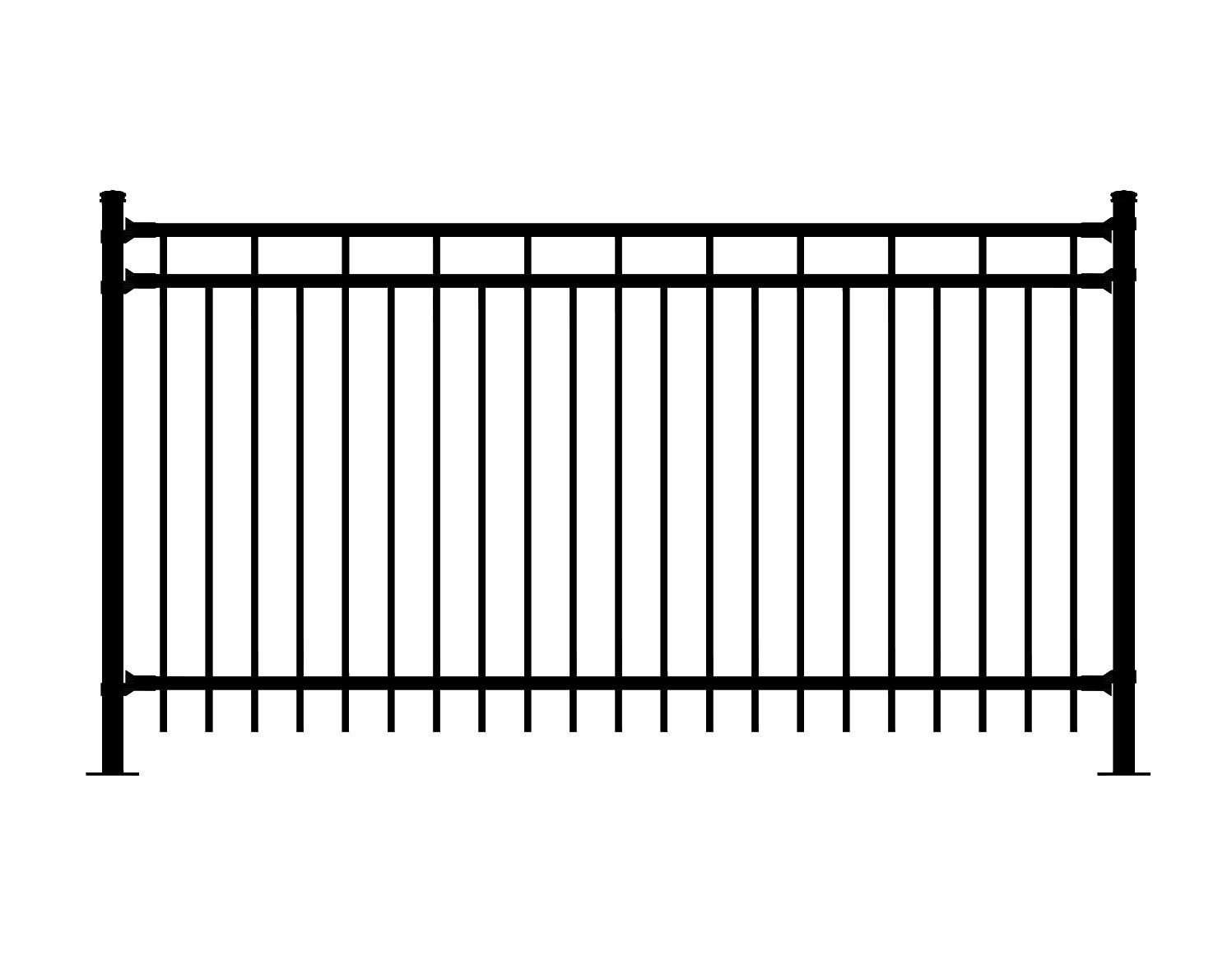
Alden
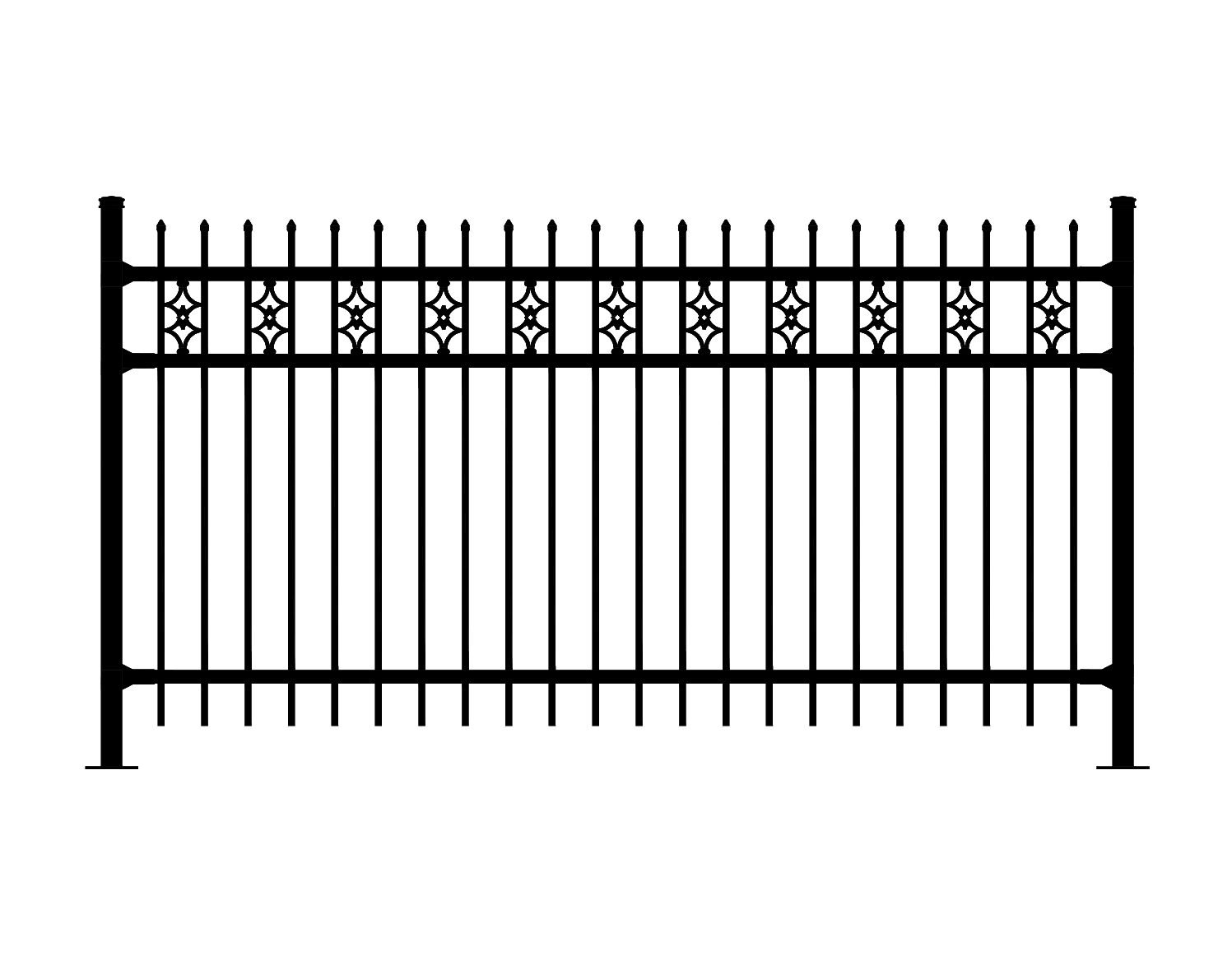
Aristrocat-DR-DDEO
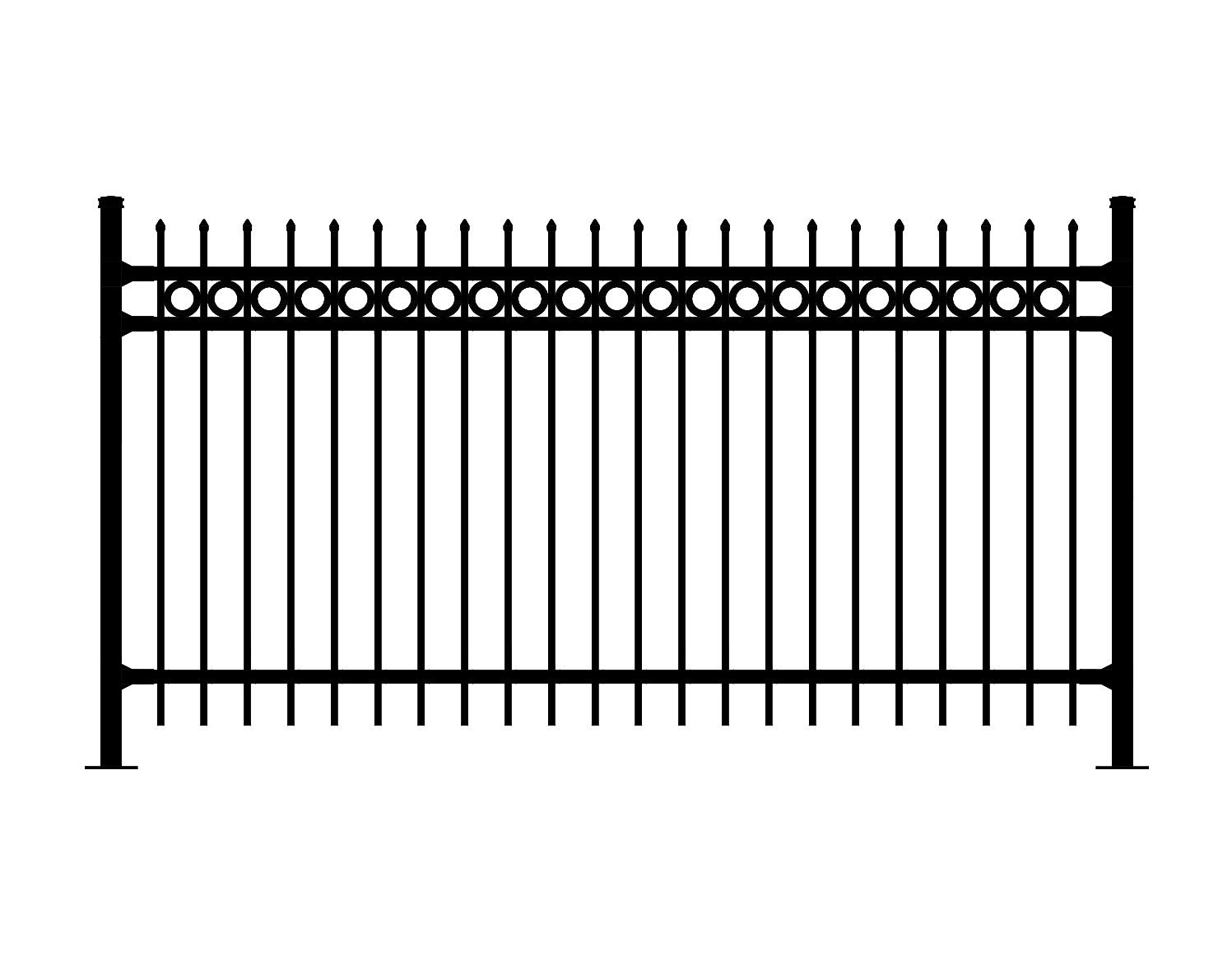
Aristrocat-DR-REP
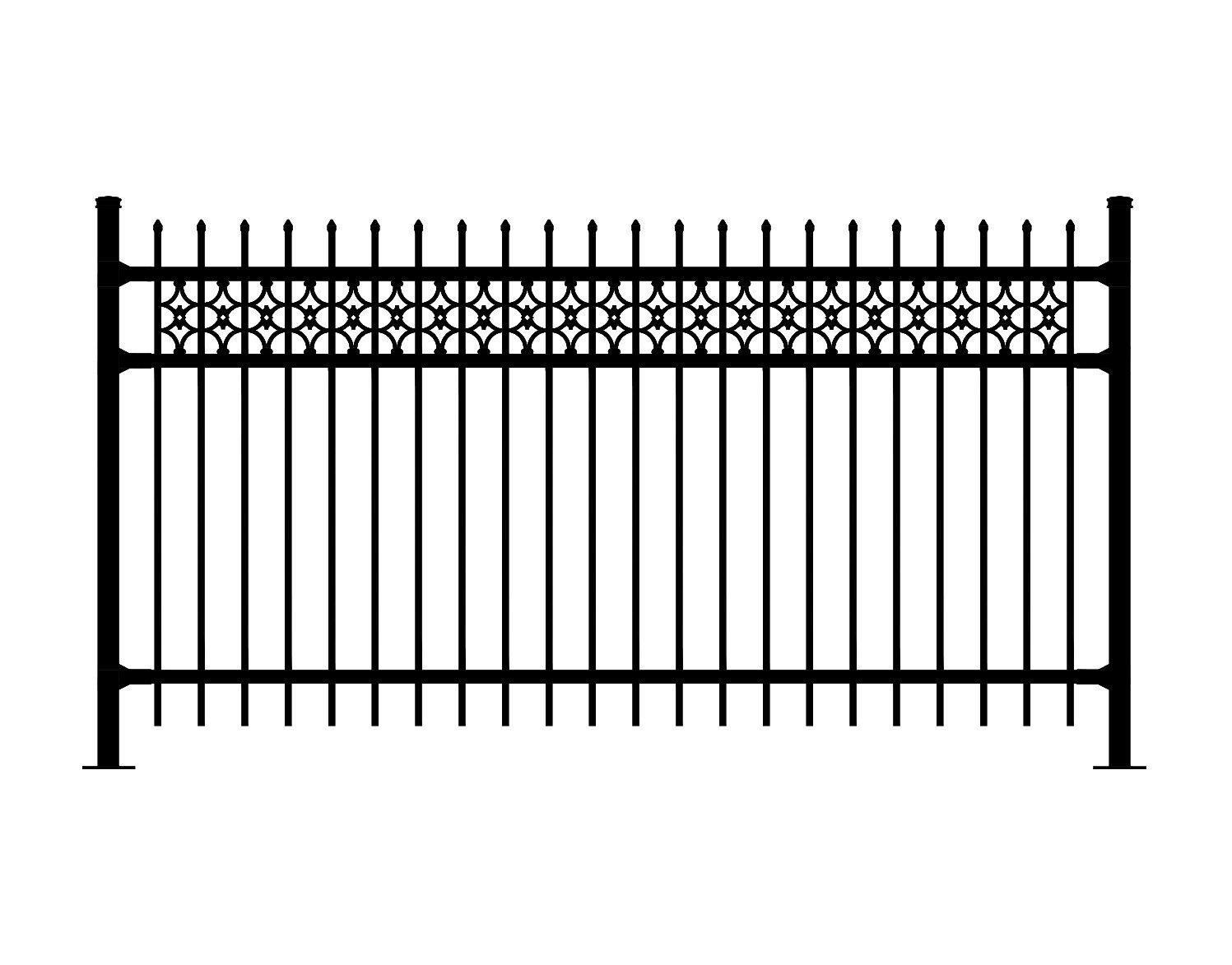
Aristrocat-DR-DDEP
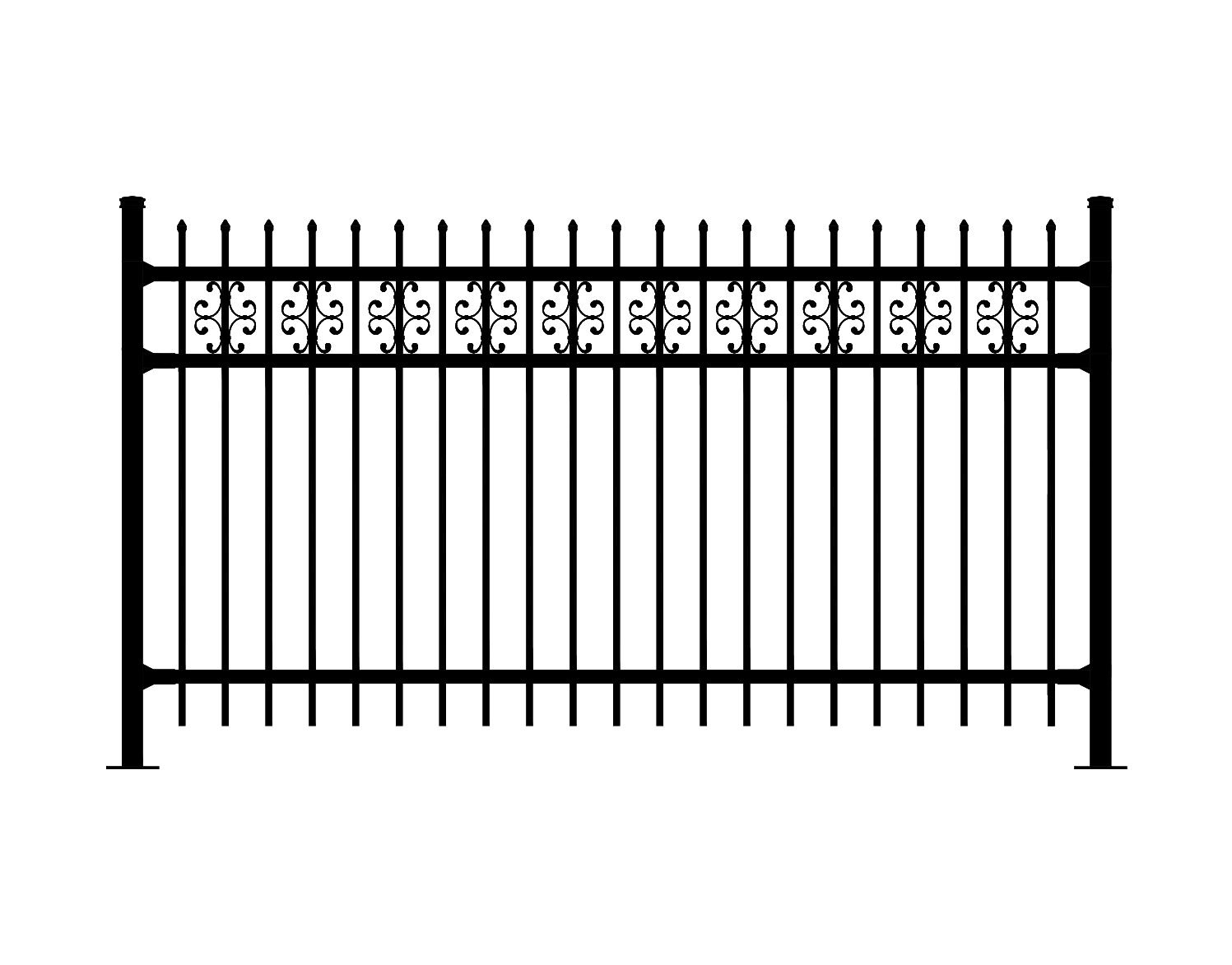
Aristrocat-DR-DSEO
Gates on Slopes: The Detail Everyone Forgets
You can build a beautiful fence line on a slope and then blow the whole job on the gate. Gates need to swing, and swinging requires clearance. On a slope, the bottom of the gate is going to hit the ground on the uphill side of the swing arc unless you account for it during layout.
The two options are to either set the gate at the flattest point of the run or to use a gate design with enough bottom clearance to swing over the grade. Medallion offers Custom Gates including arched passage gates and wave-style gates that give you more bottom clearance without looking like an afterthought.
Custom Gates
Click here to see the products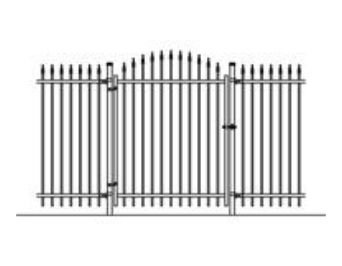
Arched Pickets Only
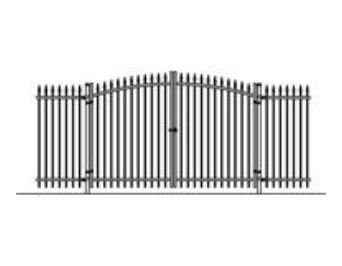
Mirror Image Single Arch Rail
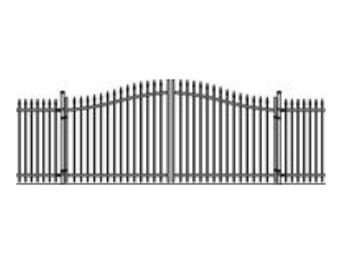
(W) SINGLE RAIL DBL GATE
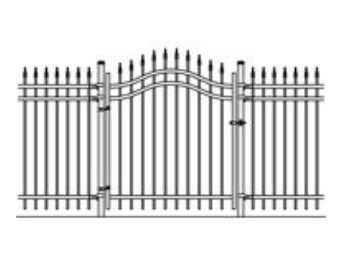
(W) STANTON PASSAGE
Pre-Installation Checklist for Sloped Sites
Before you break ground on any sloped aluminum fence job, walk through these steps.
Survey the Grade
Survey the grade using a laser level or transit. Know your vertical drop per linear foot across the entire fence line.
Decide on Method
Decide between racking and stepping based on the degree of slope, the product specifications, and the client's aesthetic preference.
Confirm Code Requirements
Confirm your local code requirements for bottom-of-fence clearance, especially on pool enclosures.
Check Soil Conditions
Check the soil conditions. Clay soils on slopes need more drainage consideration than sandy or loamy ground.
Plan Gate Locations
Plan your gate locations at the flattest sections of the run wherever possible.
Why Product Choice Matters More on Slopes Than Anywhere Else
On flat ground, most aluminum fence panels install in roughly the same way. You dig, you set, you attach. Slopes expose the engineering differences between products. A rackable panel that binds at 15 degrees is going to cost you time and callbacks. A post system that does not give you enough vertical adjustment is going to produce an uneven top line. And a finish that cracks when the pickets pivot is going to look terrible by next spring.
Medallion Fence manufactures all of their products in Canada, engineered specifically for the conditions we install in. The Hillcrest™ rackable series and the heavier commercial lines like the Oxford™ and Preston™ give you real options for every slope scenario you will encounter, backed by a 25-year warranty.
When you select the right product for the terrain, the installation goes faster, the finished product looks professional, and the callback rate drops. That is what separates a good fence job from a great one.
Get Support for Your Next Slope Job
For technical support, spec sheets, or to request a quote on your next sloped-terrain project, contact the Medallion team directly.