


If you have ever tried to specify ornamental fencing for a commercial project in Canada, you know how quickly the process gets complicated. Municipal bylaws differ from one city to the next. Provincial building codes layer on additional requirements for pool enclosures, fall protection, and construction site perimeters. And then there is the question every architect and contractor eventually asks: what performance benchmarks should this fence actually meet? That is where ASTM International comes in. Most design professionals have encountered ASTM standards in other areas of construction, from structural steel to concrete testing. But when it comes to fencing, the ASTM framework is surprisingly robust and, frankly, underused in Canadian specification documents. This guide breaks down the standards that matter most, explains how they apply to projects north of the border, and addresses some of the practical questions that rarely get answered in product brochures.
What Is ASTM, and Why Should Canadian Specifiers Care?
ASTM International (originally the American Society for Testing and Materials) was founded in 1898 by a group of engineers and scientists working in the railroad industry. Today, the organization maintains over 12,000 standards across virtually every material and product category used in construction.
For the fencing industry specifically, ASTM Committee F14 on Fences oversees the development and revision of standards covering chain-link fabric, ornamental metal systems, welded wire mesh, gate construction, protective coatings, and more. The 14th edition of ASTM Standards for Fence Materials and Products contains 68 individual specifications, test methods, and practices. That is a substantial body of technical guidance, and it is the closest thing the fencing industry has to a universal performance language.
Now, here is the part that trips up a lot of Canadian professionals. ASTM standards are technically American in origin, and they are not automatically adopted into the National Building Code of Canada (NBC) or provincial codes like the Ontario Building Code (OBC). However, they are widely recognized and frequently referenced in Canadian project specifications, especially for commercial and institutional work. When a Canadian architect writes a Division 32 fence specification, ASTM designations are typically the standards they cite, because no equivalent Canadian standard exists for most ornamental fence products.
The Core ASTM Standards Every Fence Specifier Needs to Know
Let's walk through the standards you will encounter most often when specifying ornamental metal fencing in Canada.
ASTM F2408: Ornamental Fences Employing Galvanized Steel Tubular Pickets
This is arguably the most referenced standard for ornamental steel fencing. ASTM F2408 establishes the minimum requirements for coated tubular picket ornamental fence systems made from galvanized steel components. It covers structural dimensions for residential, commercial, and industrial fence grades, and it specifies that steel must be galvanized by the hot-dip process, either before or after forming.
The standard also addresses coating requirements in detail. Powder coatings must be polyester or epoxy-polyester combinations, and wet coatings require a two-coat paint system with a primer and a topcoat. There are two structural test methods built into F2408: a vertical load assembled panel test (which checks overall panel rigidity) and a picket test (which evaluates individual picket strength under load).
For Canadian projects, this standard matters because it provides a measurable benchmark for structural adequacy. If you are specifying steel fencing for a school board, a municipal park, or a condo development, referencing ASTM F2408 in your contract documents gives you a defensible performance baseline that goes well beyond "the fence should be strong enough."
ASTM F2589: Ornamental Fences Employing Steel Tubular Pickets
F2589 is closely related to F2408, but it applies to steel tubular picket systems that may not be galvanized in the traditional sense. This standard is relevant when evaluating proprietary coating systems that go beyond simple hot-dip galvanization. If a manufacturer uses a multi-layer corrosion protection process (galvanization plus chromate conversion plus powder coat, for example), F2589 provides the performance criteria that the finished product should meet.
ASTM F2957: Ornamental Aluminum Fence Systems
This is a newer standard, and it is an important one for the Canadian market. Before F2957 was approved, all ornamental metal fence specifications pertained to steel systems. There was no ASTM standard specifically addressing aluminum fence performance.
F2957 defines minimum selection criteria and test procedures to verify that an aluminum fence system has adequate strength for its intended application and that it has the right combination of material properties and organic coating protection to resist corrosion and weathering over an extended service life. The standard includes required physical dimensions categorized by residential, commercial, and industrial grades, along with structural tests and surface finish testing for adhesion, impact resistance, and weathering resistance.
For architects and engineers in Canada, this standard is especially relevant because aluminum fencing has become increasingly popular for pool enclosures, residential perimeters, and light commercial applications. Aluminum does not rust, which makes it well suited for properties near the coast in British Columbia and the Maritimes, or anywhere that road salt exposure is a concern in Ontario and Quebec.
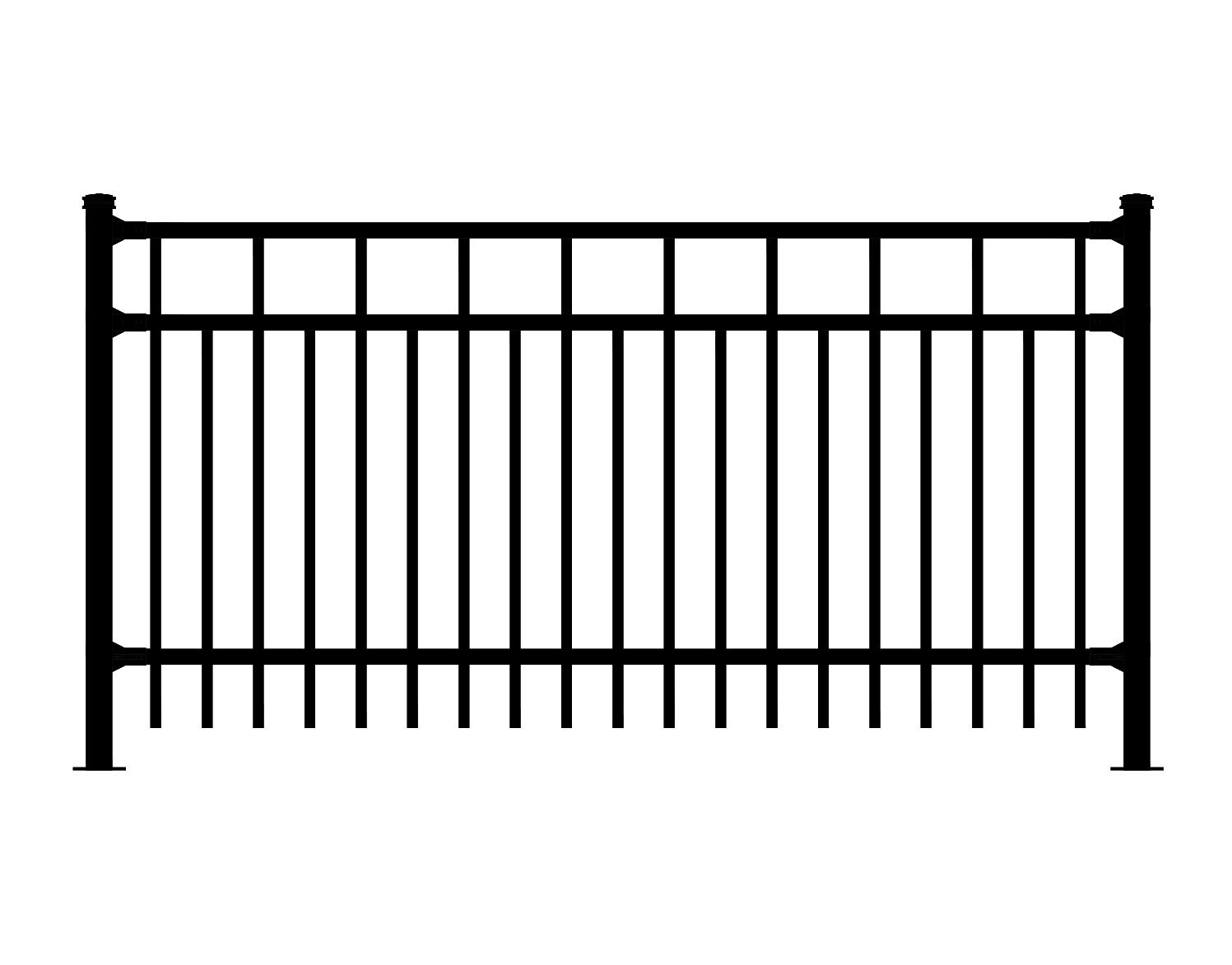
Medallion Fence's Fairmont Series is a good example of a residential-grade aluminum fence system built with 1-1/4" x 1-1/4" rails and 5/8" x 5/8" pickets, designed to meet the performance expectations that F2957 addresses.
ASTM F2200: Automated Vehicular Gate Construction
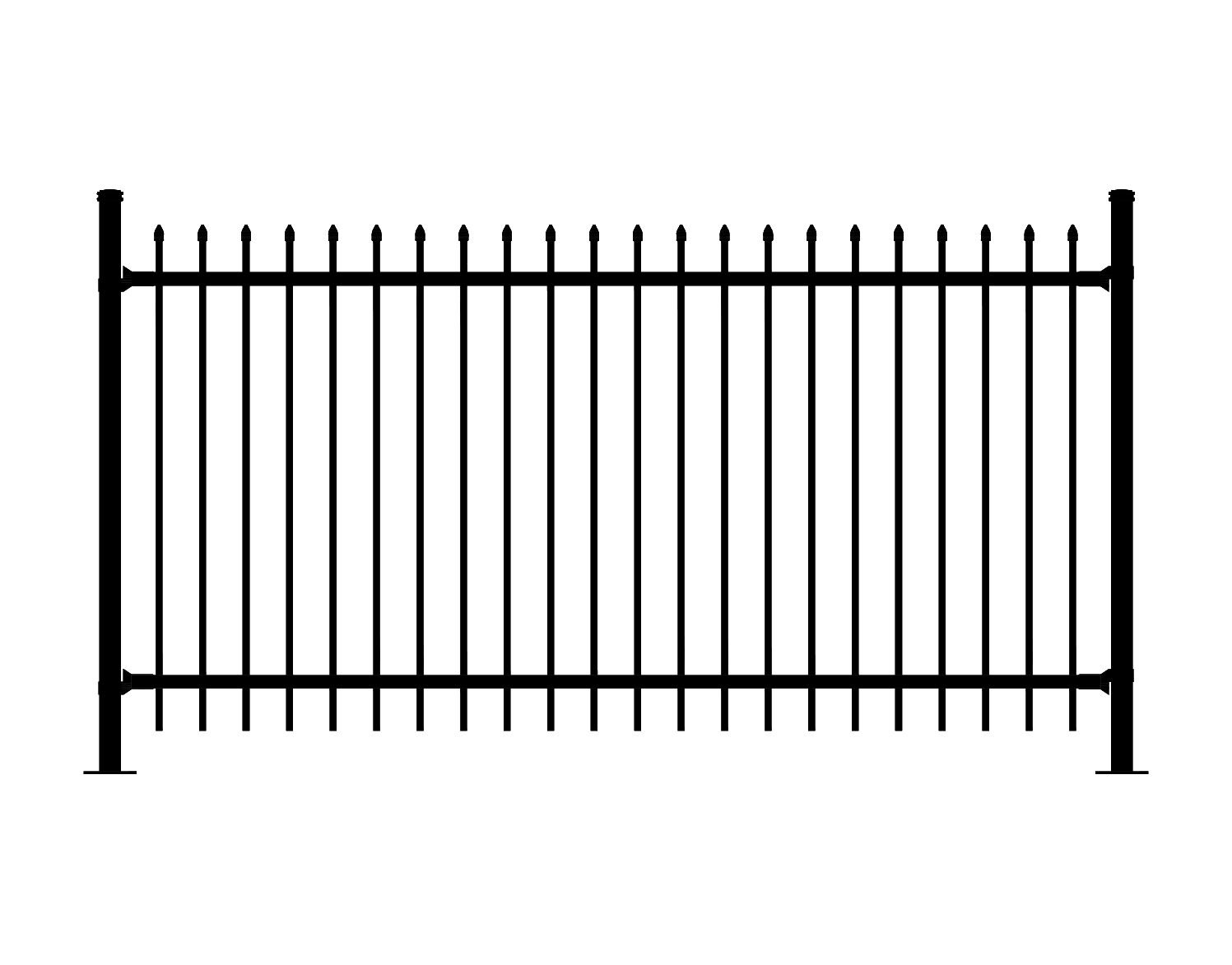
If your project involves automated gates (and most commercial or institutional fences in Canada will), ASTM F2200 is the standard you need to understand. It covers design and construction requirements for horizontal slide, horizontal swing, vertical lift, vertical pivot, and overhead pivot gates that are intended for automation. Key requirements include guard posts, protective screen mesh, covers for exposed rollers, and gap limitations. Slide gates and adjacent fence sections must not allow a 2-1/4" sphere to pass through up to 48" from the ground, which is a critical anti-entrapment provision, especially for projects near schools or public facilities.
F2200 works in tandem with UL 325, which governs the gate operator itself. Together, these two standards form the safety framework for any automated gate system in North America.
Medallion Fence offers Custom Gates engineered for automated applications, with construction details that align with the dimensional and safety provisions in F2200.
Coating and Corrosion Standards: Why They Matter More in Canada
Canadian fence installations face environmental conditions that are genuinely punishing. We are not just talking about rain and humidity. In Ontario, road salt gets thrown onto properties from November through April. In Alberta, chinook winds create rapid freeze-thaw cycles. In the Maritimes, coastal salt air is a year-round reality.
This is where ASTM B117 becomes relevant. ASTM B117 is the standard practice for operating salt spray (fog) apparatus. It establishes a controlled corrosive environment using a continuous spray of 5% sodium chloride solution at 35 degrees Celsius to evaluate the relative corrosion resistance of metals and coated metals. While B117 is not a fencing-specific standard, it is the test method that fencing manufacturers use (or should use) to validate the durability of their coating systems.
ASTM D3359 (adhesion testing) and ASTM D1654 (evaluation of coating failure after exposure) are also commonly referenced alongside B117. Together, these standards tell you whether a coating will stick, whether it will resist salt exposure, and how it will degrade over time.
For Canadian specifiers, the practical takeaway is this: when you are evaluating fence products, ask the manufacturer what coating tests they have performed and to which ASTM standards. A manufacturer that can demonstrate B117 salt spray hours alongside adhesion and impact testing data is giving you real, verifiable evidence of durability, not just marketing language.
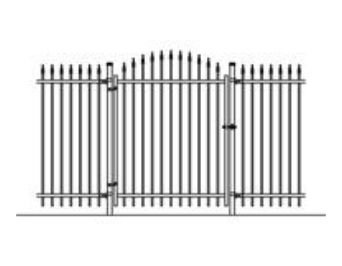
Medallion Fence's Oxford Series is built for commercial, industrial, and institutional applications with 1-1/2" x 1-1/2" rails and 1" x 1" pickets. Their steel products use a proprietary Armour-Shield corrosion protection system that combines hot-dip galvanization, chromate conversion, and UV-stable powder coating, a multi-layer approach designed specifically for Canadian climate conditions.
The Questions Canadian Consumers Ask That Nobody Answers
After years of working with homeowners, contractors, and architects across the country, there are a handful of questions that come up repeatedly but rarely get a straight answer in online content. Let's address them here.
"Are ASTM standards legally required in Canada?"
Technically, no. ASTM standards are voluntary consensus standards. They do not carry the force of law on their own. However, when a Canadian municipality, school board, or provincial agency references an ASTM standard in a contract document or procurement specification, compliance with that standard becomes a contractual obligation. More importantly, in the event of a liability dispute or personal injury claim, adherence to (or failure to meet) recognized ASTM standards can be used as evidence of reasonable care. So while they are not "law," they carry significant legal weight.
"My municipality says I need a 1.2-metre pool fence. Does ASTM cover that?"
ASTM F1908 (Standard Guide for Residential Pool Safety Covers and Barriers) provides baseline performance criteria for pool barriers, including minimum height, maximum openings, gate hardware behaviour, and climbability resistance. Canadian municipalities layer their own height and setback requirements on top of these guidelines. In Ontario, the OBC and local bylaws govern pool enclosures. In Quebec, the Reglement sur la securite des piscines residentielles sets the strictest pool fence requirements in the country: 1.2-metre minimum height, no climbable surface within 1 metre, and self-closing self-latching gates with a 1.5-metre latch height. The point is that ASTM gives you the performance framework, and local bylaws give you the dimensional specifics.
"Does it matter if the fence is aluminum or steel from an ASTM perspective?"
Yes, it does. Different ASTM standards apply to each material. ASTM F2408 and F2589 cover steel systems, while ASTM F2957 covers aluminum. The structural testing criteria, coating specifications, and dimensional requirements differ between the two materials. When you are writing a specification, make sure you are citing the correct standard for the material you intend to use.
"What about chain-link fencing? Is that covered by the same standards?"
Chain-link fencing has its own set of ASTM standards, including ASTM F668 (which covers chain-link fence fabric), ASTM F1043 (which addresses the strength and testing of fence posts and rails), and ASTM F2611 (which provides guidance on the design and construction of chain-link security fencing). These are separate from the ornamental metal fence standards and should not be confused with them in your specification documents.
How to Use ASTM Standards in Your Next Canadian Project
If you are an architect or engineer preparing a fence specification for a Canadian project, here is a practical approach. Start by identifying the application: residential boundary, commercial perimeter, pool enclosure, or high-security installation. Each application has a different set of performance needs and a different subset of ASTM standards that apply.
Next, specify the correct ASTM designation for the material and grade you intend to use. For example, if you are specifying a commercial-grade steel ornamental fence, reference ASTM F2408 and include the appropriate grade classification (residential, commercial, or industrial). If you are specifying an aluminum system for a pool enclosure, reference ASTM F2957 along with the applicable provincial pool enclosure requirements.
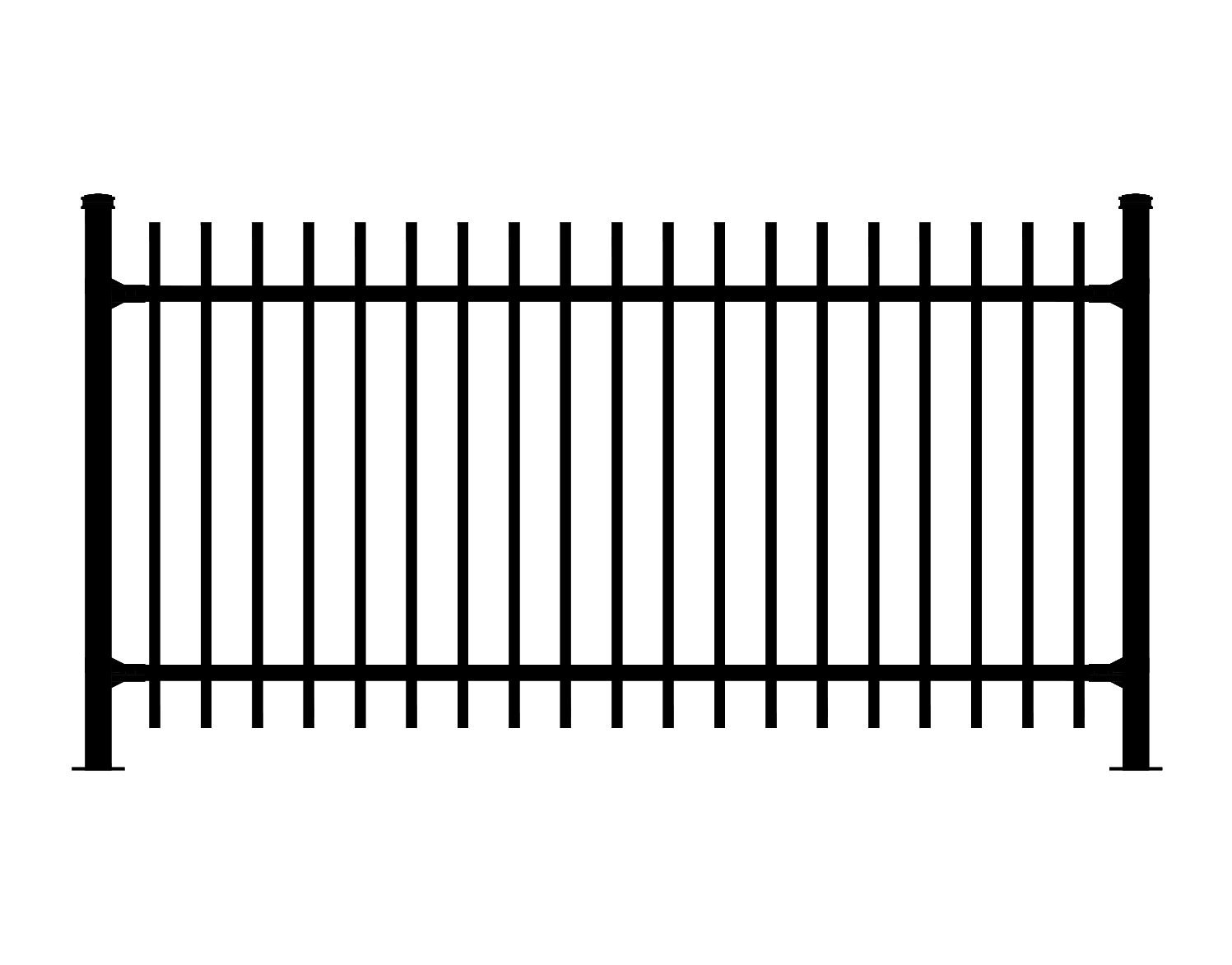
For heavier commercial and industrial perimeter applications, Medallion Fence's Hawkstone Series provides the structural profile and material thickness needed to meet higher-grade ASTM performance categories.
Finally, do not overlook coating and corrosion standards. Include ASTM B117 salt spray test requirements in your specification, along with ASTM D3359 adhesion testing and any relevant weathering or UV exposure tests. This is where many Canadian specifications fall short. It is not enough to say "powder-coated finish." You need to specify the test methods and performance thresholds that the coating must meet.
ASTM fence standards exist to give architects, engineers, contractors, and property owners a common performance language. In a Canadian market where municipal bylaws vary wildly and provincial codes address fencing inconsistently, these standards provide the technical backbone that specification documents need.
Whether you are designing a residential subdivision in Vaughan, a school campus in Ottawa, or a commercial development in Calgary, understanding and properly citing ASTM standards protects you professionally and ensures the fence system you specify will actually perform as intended in our climate.
Ready to Specify with Confidence?
Medallion Fence manufactures all of their ornamental aluminum and steel fencing in Maple, Ontario, and ships across every Canadian province. Their product lines, including the Fairmont, Oxford, and Hawkstone series, are engineered with Canadian conditions in mind and backed by a 25-year warranty on aluminum and a 20-year warranty on steel products.
All Series