


Aluminum Fence Systems
Aluminum Fence Systems
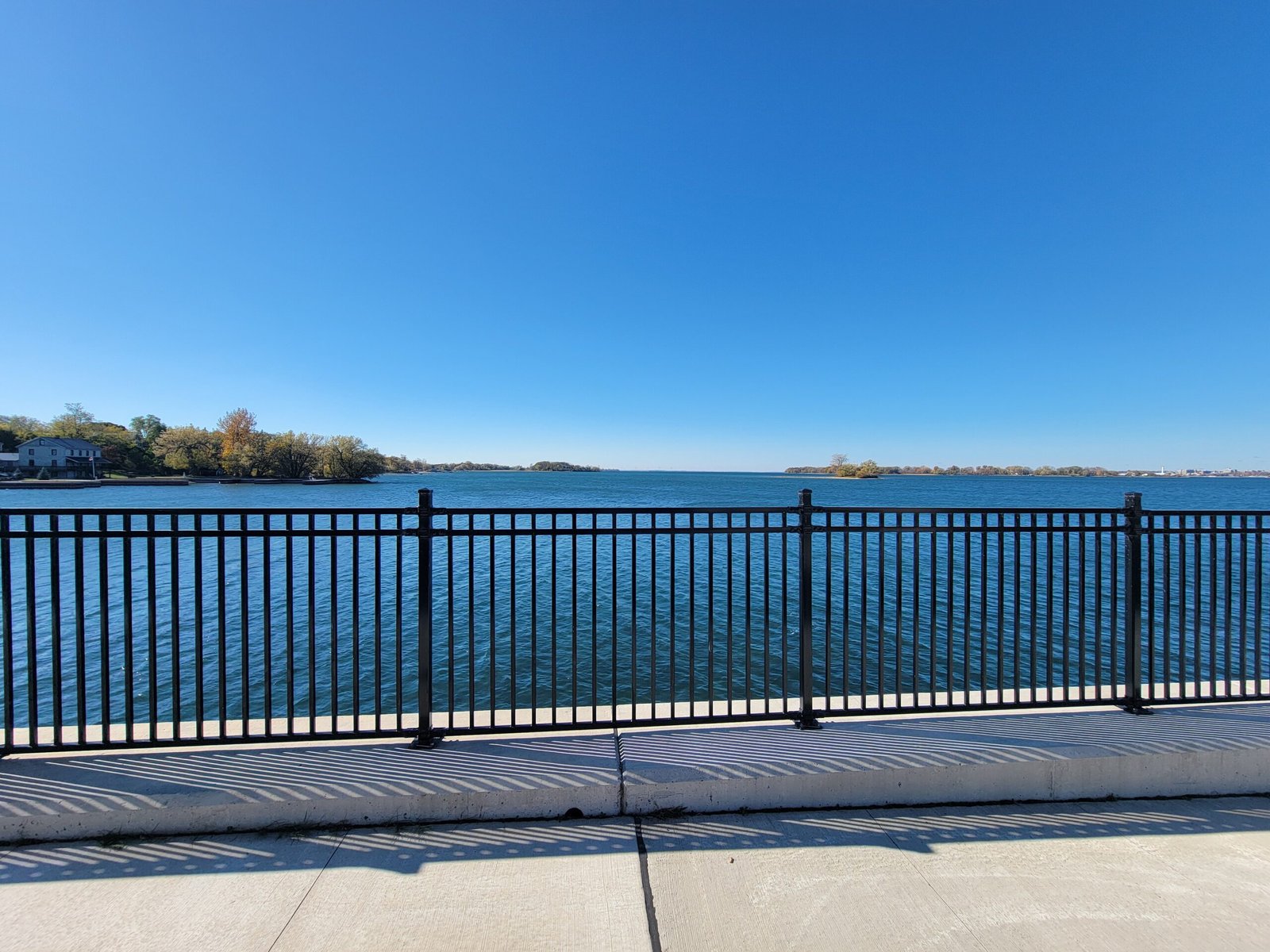
The blog cover image is for reference purposes only and does not depict the actual Medallion Fence product.
If you own property along Lake Muskoka, the Okanagan shoreline, or anywhere across the Maritimes, you already know the toll that water takes on outdoor structures. You have watched cedar boards turn grey, warp, and eventually rot. You have pulled rusty chain link out of the ground after just a handful of seasons. And every spring, you have asked yourself the same question every waterfront homeowner eventually asks: "What fence material actually holds up next to water without falling apart?"
It is a fair question. And the answer, more and more, is marine-grade aluminum.
Across Ontario's cottage country, BC's lakefronts, and the coastal communities of Nova Scotia and New Brunswick, aluminum fencing has been steadily replacing both traditional wood and galvanized chain link. This is not a trend driven by aesthetics alone. It is a material science decision, and architects, contractors, and informed property owners are making it for very specific reasons.
Wood fencing has always been the default choice for cottage properties. Western red cedar, pressure-treated pine, and spruce are all commonly used across Ontario and BC. And on a dry suburban lot, these materials can perform reasonably well for 10 to 15 years with regular maintenance.
But waterfront is a completely different environment.
Within 20 metres of a lake or river, relative humidity stays consistently elevated. Moisture wicks into end grain. Freeze-thaw cycling, which is relentless across most of Canada from October through April, causes wood fibres to expand and contract repeatedly, accelerating structural fatigue. In Muskoka alone, cottage owners report having to restain or reseal their wood fences every two to three years just to slow the rate of deterioration. Even with pressure-treated lumber, ground-contact rot can start appearing in as little as five years near a shoreline where soil stays saturated.
And then there is the maintenance burden. Most waterfront properties in Ontario sit within conservation authority jurisdictions. This means shoreline vegetation buffers, setback restrictions, and environmental approvals already consume time and money. Adding a fence that demands annual attention on top of that is a hard sell for seasonal property owners who would rather spend their weekends on the water.
Chain link fencing is affordable, and its open mesh design preserves sightlines to the water. That is why it has been a go-to for lakefront lots and pool enclosures for decades. But the material has a fundamental weakness: it is made from steel, and steel contains iron.
Iron reacts with oxygen and moisture to form iron oxide. Rust. Galvanization, which involves coating the steel wire with a sacrificial zinc layer, slows this reaction down. But it does not stop it permanently. On a waterfront property, where the fence is exposed to constant humidity, morning dew, and in coastal areas like Halifax or the Bay of Fundy, salt spray, the galvanized coating erodes significantly faster than it would on a property even a few kilometres inland.
Once that zinc layer is compromised at any point, whether through a scratch, an impact, or simple wear over time, corrosion begins immediately at the exposed spot. Rust spreads along the wire, weakening joints, tension bands, and post connections. Property owners near salt water report needing to apply rust-preventative coatings or epoxy treatments every one to two seasons. That is a level of upkeep most people did not sign up for when they chose chain link for its simplicity.
And aesthetically, let's be honest: a rusting chain link fence alongside a pristine Canadian lake does not do the property any favours.
This is where the conversation shifts from opinion to chemistry.
Aluminum does not contain iron. It cannot rust. Period. But that alone is not the full story.
When aluminum is exposed to air, it immediately forms a thin, passive oxide layer composed of alumina (Al2O3). This film is typically between 5 and 10 nanometres thick, and it bonds directly to the surface of the metal. It acts as a continuous barrier that prevents further oxidation from reaching the base material. More importantly, this oxide layer is self-healing. If the surface gets scratched or nicked during installation, transport, or everyday use, the exposed aluminum reacts with ambient oxygen and reforms the protective film within milliseconds.
This self-repairing behaviour is what sets aluminum apart from every other common fencing material in high-moisture environments. Steel needs an applied coating to resist corrosion, and once that coating fails, the clock starts ticking. Wood needs chemical preservatives that leach out over time. Aluminum protects itself, continuously, without any intervention from the property owner.
In marine and coastal applications, this matters enormously. Seawater has a pH range of roughly 8.0 to 8.2, and aluminum's oxide layer remains chemically stable across a pH range of approximately 5 to 9. That means the protective film holds up in virtually every freshwater and saltwater environment found along Canadian shorelines.
For architects and contractors specifying materials for lakefront or oceanfront projects, understanding this passivation mechanism is critical. It is the reason marine-grade aluminum has been standard in boat building, dock construction, and marine infrastructure for decades.
While the natural oxide layer provides inherent corrosion resistance, most quality aluminum fence systems add a factory-applied powder coat finish as a secondary line of defence. This electrostatically applied polyester coating, typically between 60 and 120 microns in dry film thickness, provides additional UV protection, colour retention, and resistance to abrasion.
This is where Medallion Fence's Alu-Tuff finish comes in. Designed specifically for aluminum panels, the Alu-Tuff coating system works in tandem with aluminum's natural oxide layer to deliver lasting performance in Canadian conditions, including freeze-thaw cycling, lake moisture, and UV exposure from long summer days on the water.
For waterfront residential properties, the Fairmont Series is a strong starting point. It features fully welded construction with 5/8" x 5/8" pickets and 1-1/4" x 1-1/4" rails. The open picket design preserves your view of the water while providing secure perimeter definition. Styles like the Cavalier and Aristocrat within the Fairmont line offer clean, classic profiles that suit everything from a Muskoka cottage to a BC lakefront retreat.
For properties that require a heavier-duty specification, particularly larger estates, waterfront commercial developments, or institutional sites near shorelines, the Oxford Series is engineered for industrial and commercial-grade applications. With 3/4" x 3/4" or 1" x 1" pickets, 1-1/2" x 1-1/2" rails, and a minimum 2-1/2" x 2-1/2" post specification, it delivers the structural rigidity needed for exposed, high-wind waterfront locations.
Both series are manufactured at Medallion Fence's facility in Maple, Ontario, with all CNC punching, welding, and powder coating done under one roof. For architects and contractors, this means consistent tolerances and the ability to request CAD-compatible DWG spec sheets directly from the manufacturer.
Explore Medallion Fence's full product lineup here.
After years of conversations with property owners, contractors, and design professionals working on waterfront projects, a few questions come up repeatedly. These are rarely addressed in typical fencing guides, so let's tackle them directly.
Yes. Aluminum does not absorb water, so ice formation on the surface does not cause the kind of internal damage that freeze-thaw creates in wood or concrete. If floodwater pushes debris against the fence, the powder coat may sustain surface scratches, but the self-healing oxide layer protects the base metal underneath. This is a major consideration in areas like the Ottawa River corridor and BC's Fraser Valley, where seasonal water levels can fluctuate significantly.
This depends entirely on your municipality and local conservation authority. In Muskoka and Simcoe County, most townships require a 20 to 30 metre setback from the high-water mark for structures. However, fences are sometimes treated differently than buildings under local bylaws. Always confirm with your township zoning office and your local conservation authority (such as the Lake Simcoe Region Conservation Authority or the Muskoka Watershed Council) before finalizing your fencing plan.
Road salt (sodium chloride) is a concern for steel and iron fencing, but aluminum's passivation layer handles chloride exposure far better than ferrous metals. A periodic rinse with clean water, especially in early spring after the last of the road salt runoff, is all that is typically needed to keep aluminum fencing in excellent condition.
Wood fencing may cost less upfront, but the ongoing expenses of staining, sealing, and eventual board replacement add up. Over a 20-year period, maintenance costs for wood can exceed $3,000 to $6,000 beyond the initial installation. Chain link requires rust treatment and periodic recoating. Aluminum fencing, by contrast, requires nothing more than occasional washing with mild soap and water. For seasonal properties where the owner is only on-site a few months a year, that difference in maintenance commitment is significant.
Beyond homeowner convenience, there are practical reasons why design and construction professionals are increasingly writing aluminum into their specifications for waterfront work. The material's weight-to-strength ratio makes it easier to transport and install in remote or difficult-access shoreline locations, which is common for cottage builds in Haliburton, Georgian Bay, and the Gulf Islands. Aluminum's dimensional stability means panels do not expand and contract seasonally the way wood does, which translates to cleaner long-term aesthetics and fewer callback issues. And the fact that Medallion Fence backs its aluminum products with a 25-year warranty gives specifiers confidence when presenting material recommendations to clients.
For contractors working across multiple provinces, Medallion ships coast to coast, from BC to the Atlantic provinces, directly from their Maple, Ontario manufacturing facility.
If your property sits next to water, your fencing material needs to handle what water brings: humidity, condensation, freeze-thaw, and in coastal areas, salt. Wood rots. Chain link rusts. Aluminum does neither. Its self-healing oxide layer, reinforced by modern powder coat systems, delivers decades of performance without asking anything from you in return.
That is not marketing. That is chemistry.
Request a quote from Medallion Fence or call 905-832-2922 to speak with their team directly.
Request a Quote