




Aluminum Fence Systems
Aluminum Fence Systems
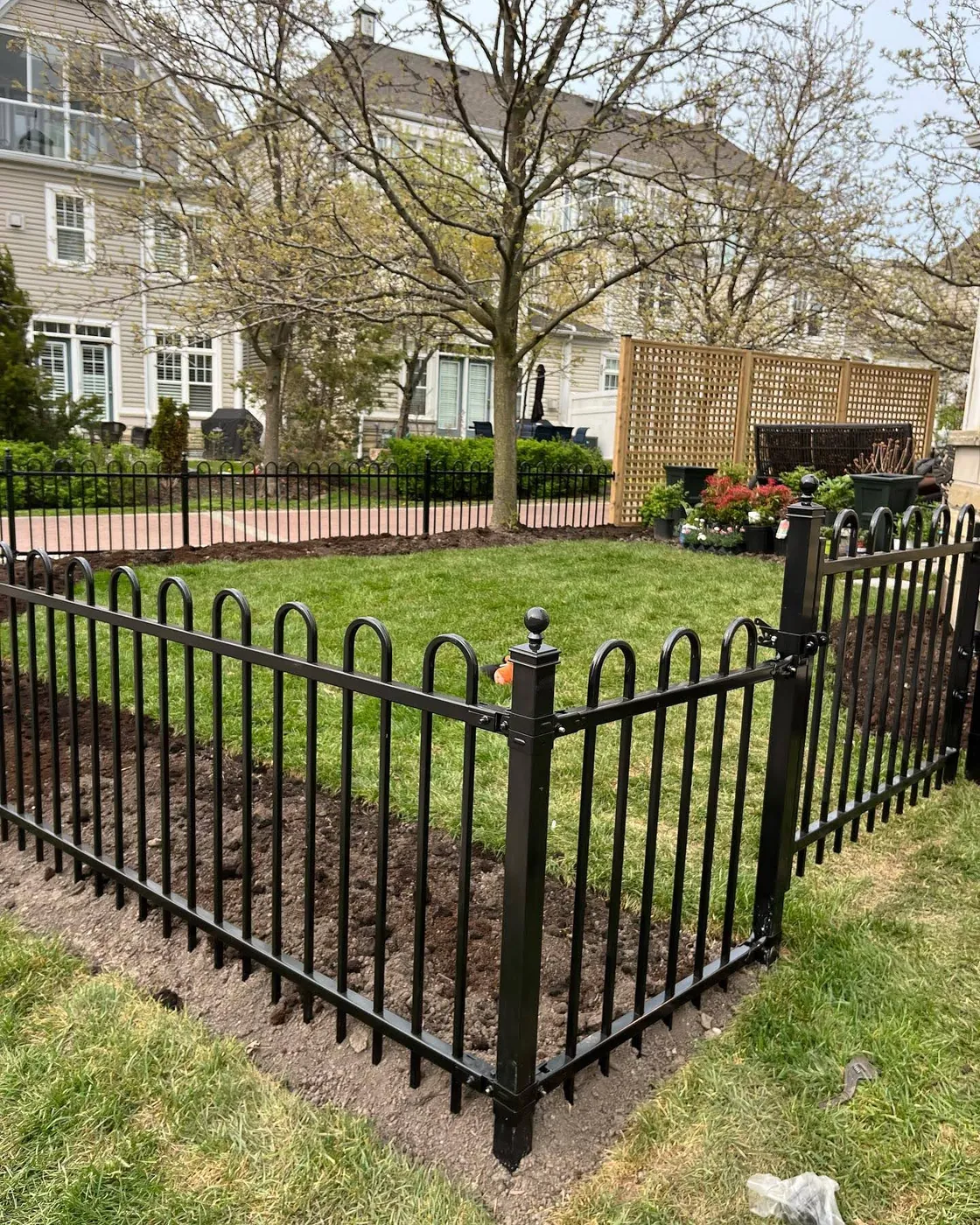
The blog cover image is for reference purposes only and does not depict the actual Medallion Fence product.
On a subdivision drawing set, the fence along a park, a walkway or a stormwater pond looks like the simplest line item. In practice it is one of the most tightly controlled pieces of the landscape package. It is written into the development agreement, built to a municipal standard detail, and inspected before the municipality accepts it. Then it is handed to a homeowner whose purchase agreement tells them not to touch it.
If you are a developer, builder, landscape architect or fencing contractor, the hard part is not the rules themselves. It is that they live in five different documents, and every municipality arranges them differently. This guide doesn't pretend there is one national rulebook. It walks through what to check, where to find it, and where aluminum fits in.
Start with the agreement, not the product catalogue. In Ontario, fencing obligations usually come out of draft plan conditions and land in the subdivision agreement. A typical clause is short and points somewhere else: the owner provides fencing for stormwater management facilities and parks in accordance with plans approved by a named municipal director, plus boundary and privacy fencing as required by another department. The real requirements sit in the approved drawings and the municipality's standard details.
In Alberta, the equivalent document is usually a servicing agreement. Edmonton defines it as a contract between developers and the City setting out the obligations, terms and conditions for building and warrantying the municipal improvements needed to service approved lands.
The trail usually runs in this order:
Also check which version of each standard governs your project. Standards get revised mid-build, and they sometimes cite bylaws that no longer exist. Edmonton's landscaping standard says projects that entered circulation before April 1, 2021 follow the landscaping standards in place when they were initiated. The same document points to Zoning Bylaw 12800 for fence heights, yet that bylaw was repealed when Zoning Bylaw 20001 took effect on January 1, 2024. The big rules rarely catch anyone out. The outdated cross-references do.
This decides who owns the fence, so it matters more than most people think. In Brampton, chain-link, decorative metal, wood privacy and light-duty acoustic fences between municipal and private property go 0.15 metre (centre line) inside the residential lot. Edmonton goes further for park edges: school and park sites must be separated from private development by permanent fencing built wholly within private property, concrete pile included.
For the installer, that means layout is taken from the surveyed property line, not "roughly along the park." Get a surveyor's stakeout before drilling.
Heights are tied to the adjacent land use, not to taste. Brampton's standard calls for:
Edmonton sets 1.2 m as the minimum next to parks, and the fence has to be able to keep pets in. Next to sports fields the number jumps to 1.8 m to stop stray balls, including beside parkland that could get sports fields in the future. That last clause catches people out. An empty park block today can still trigger the taller fence.
Some municipalities require gates, some forbid them, and many leave it to staff. In Brampton, every rear yard backing onto parkland without public access to that park gets a gate in its chain-link fence. The Commissioner can waive it for safety reasons and may allow other gates on request if they meet City standards. Vaughan takes the opposite position on stormwater ponds, as covered below. Never assume a gate is allowed because a drawing shows one.
Draft plan conditions often require builders to put fencing warnings into every purchase agreement. One Caledon example requires warning clauses stating that all required fencing and barriers, foundations included, sit entirely on private property, and that the fencing must not be altered. Read these before you quote a homeowner on replacing a developer-installed fence.
The fence is a municipal improvement until the municipality signs off. Edmonton inspects fencing year-round, weather permitting, and fencing on private property does not need a Final Acceptance Certificate. Parks fencing is different: metal, chain link, wood screen and post-and-rail fencing on parkland has to be maintained as the servicing agreement requires. Before you price maintenance obligations, find out which category your fence falls into.
The commercial reality is that many municipal standards are written around black vinyl-coated chain link. Mississauga's subdivision specification calls for 38 mm by 38 mm black vinyl-coated mesh. Ontario's provincial component specification requires black vinyl coating on the fabric, with posts, sleeves and rails coated to match whenever vinyl-coated fabric is used.
Vaughan shows how this plays out at stormwater ponds. Its current design criteria require a 1.5 m black vinyl fence wherever private rear or flanking lot lines back onto a pond, built in an informal style so it suits the naturalized setting. The same criteria discourage hard fencing inside the pond block itself, decorative metal included, because it blocks wildlife movement, and they strictly enforce a no-gate, no-encroachment policy along those lot lines. Recent Vaughan draft plan conditions add two words that matter to anyone specifying aluminum: "or approved equal." Every fence component, foundations included, must sit wholly on the lot.
Ornamental metal does have its own places. Brampton publishes standard details for ornamental metal fences in conventional developments, with ring and diamond options. Colour matching to existing park fencing has even been written into land use rules: one Calgary direct control bylaw required a green wrought-iron fence compatible with the adjacent park fence. Black is common, but it is not universal.
For aluminum, the route is usually one of two things. Either the standard already permits "decorative metal" or "approved equal" and your system meets the detail, or you submit an alternative. Edmonton spells the process out. Anyone proposing a different material has to justify it on implementation feasibility and on economic, engineering, environmental, operational and maintenance grounds, using a change request form. The same standard says other fence styles may be proposed, subject to Parks approval.
Treat your aluminum submission as a technical argument, not a brochure. Lead with lifecycle maintenance, corrosion resistance and repairability, because those are the criteria reviewers are told to weigh.
One detail rules out many residential aluminum styles. Edmonton prohibits developer-supplied fencing with pickets that extend past the top rail on or next to residential properties. That eliminates spear tops and finial pickets, so specify flush-top or captured-picket profiles from the start.
These are the items reviewers and senior designers look at when an aluminum system is specified or submitted.
Ask for the alloy designation and temper in writing, not just "aluminum." Extruded 6061 in T6 temper is a common structural choice. Match the product grade to the exposure. A park or pond edge sees mower decks, snow storage and kids climbing, so a residential-grade panel there is a false economy. Ask for member sizes and wall thicknesses for pickets, rails and posts, and check them against the municipal detail you are calling "approved equal."
Ask what resin system the powder coat uses and which AAMA standard it has been tested to. Ask whether a zinc-rich or e-coat primer is available for sites near road salt spray. Get the colour approved in writing, and match gloss as well as hue to any existing park fence or black vinyl chain link nearby.
Follow the municipal standard detail for pile diameter and depth, and remember that municipalities such as Edmonton and Vaughan want the foundation inside the private lot too. Ask the manufacturer how they want aluminum posts set in concrete, keep aluminum isolated from dissimilar metals, and use stainless fasteners.
If the standard says the fence must restrain pets, picket spacing and the gap at grade have to meet that requirement. On sloped lots, decide early between racked panels and stepped panels. Uneven gaps under stepped panels are a common inspection deficiency.
Mow strips sit right against the fence line. Edmonton requires 1.0 m mow strips next to private property fence lines at stormwater facilities. Vaughan requires a three metre wide sodded mow strip along stormwater blocks where they back onto development. Design the bottom rail and finish to survive a trimmer head.
If a homeowner later adds a pool, the park fence may become part of the pool enclosure. The local pool enclosure bylaw then controls climbability and openings. Flag this at handover.
Medallion Fence makes its panels in-house in Maple, Ontario, inside the City of Vaughan, so the standards above are its home-market rules. Its panels are fully welded from marine-grade aluminum tubing rather than bolted or roll-formed. Here is how its published data maps to the checks in this guide.
Submittals. Medallion publishes DWG and PDF details for each style. That makes an "approved equal" submittal faster to assemble, because the reviewer can compare it directly against the municipal standard detail.
No. You still own that strip, and in most cases the fence on it. That is also why maintenance usually becomes your job once the municipality accepts the works. Check your agreement and your survey.
Often yes, but read your warning clauses first. Some prohibit any alteration, and before the subdivision is assumed the developer may still be responsible for the fence. Get written approval, and keep the same height, location and colour family. Where the original condition reads "or approved equal," an aluminum replacement has a clear path to approval.
Sometimes. It depends on the municipality, the park design and safety concerns. Ask parks staff before buying hardware.
Open-view fencing along parks and walkways is usually deliberate, so people can see into public space. Treat screening as something that needs permission, not something to assume is fine.
Many municipalities rely on lot-line fencing, signage, planting and gentle side slopes rather than full enclosure. Calgary is adding fencing, signage and vegetation at 15 storm ponds this year, and a City spokesperson acknowledged that not every storm pond can be made completely inaccessible. Recreation on Calgary's ponds is prohibited year-round under its Stormwater Bylaw. In Vaughan, the City strictly enforces a no-gate policy on lot lines backing onto ponds, so don't plan on a gate there, whatever the fence is made of.
Zoning bylaw height limits still apply, and the agreement may fix the height. Check both. Some municipalities, Vaughan included, may call for a 1.8 m wood privacy fence along walkways next to ponds instead of chain link, decided site by site.
Pull the registered agreement and draft plan conditions, and list every fencing clause.
Confirm which version of the standards governs the project.
Get the standard detail for each condition: park, walkway, school, pond, arterial frontage.
Confirm the offset from the property line and order a survey stakeout.
Confirm height, gates, colour and finish, and whether aluminum is permitted outright, allowed as "approved equal," or needs a change request.
Check picket top style, bottom clearance and any pet-containment wording.
Confirm inspection timing, warranty period and maintenance obligations.
Read the purchaser warning clauses so homeowner expectations match the paperwork.
Fences along parks, walkways and ponds are not lot-by-lot design decisions. They are municipal infrastructure that happens to sit on private land. The developers and contractors who avoid redo work treat them that way: they read the agreement first, build to the detail, and bring aluminum forward as a documented "approved equal" rather than a surprise on inspection day. Rules vary by municipality, so the most valuable thing you can bring to a project is knowing exactly what to check, and checking it early.