


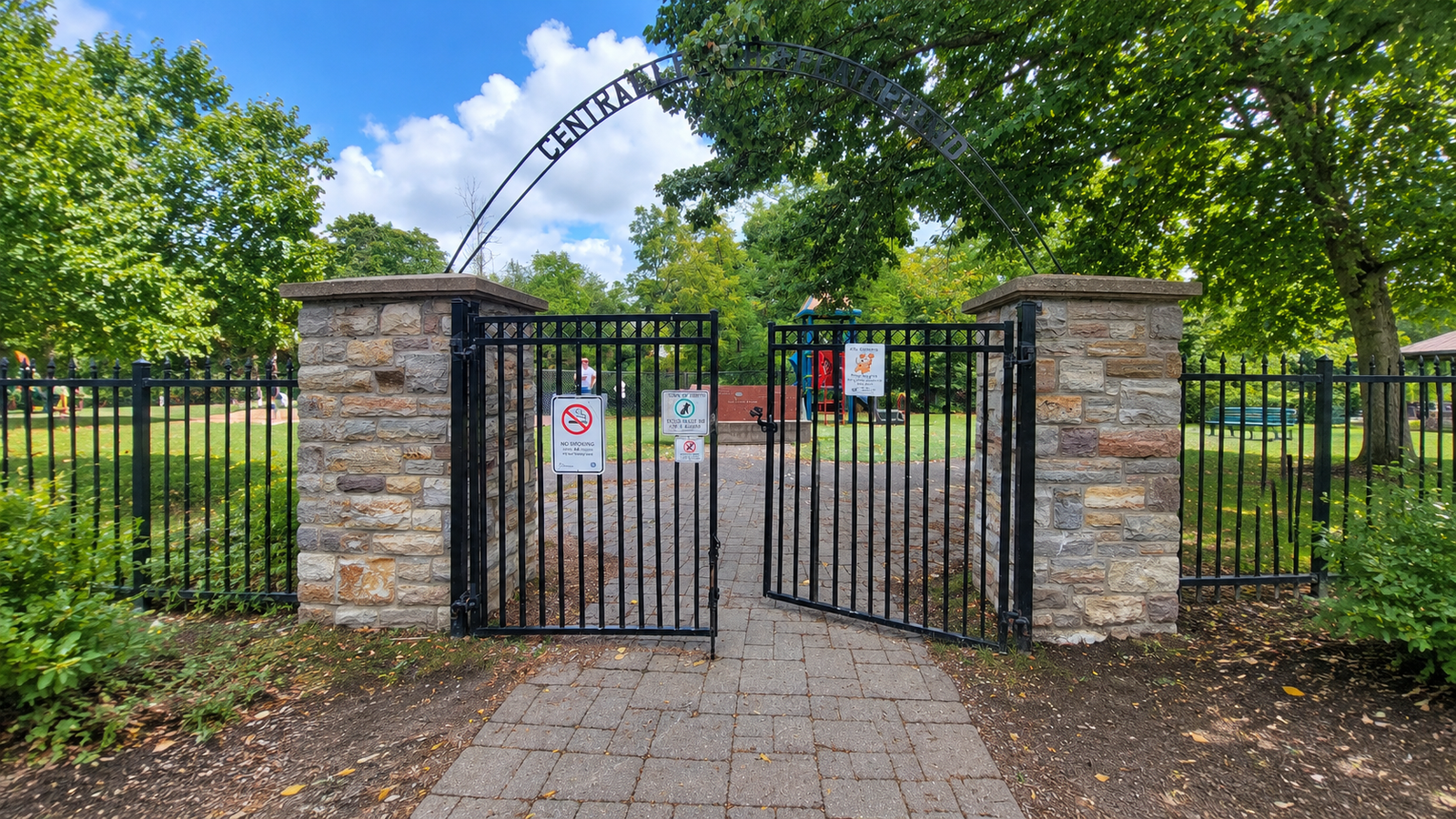
The blog cover image is for reference purposes only and does not depict the actual Medallion Fence product.
If you have been researching driveway gates for a residential estate, a commercial building, or an institutional project here in Canada, you have probably run into the same question everyone asks: should I go with a sliding gate or a swing gate?
It is not as simple as picking one style over the other. The answer depends on your property layout, your local climate conditions, how much traffic your entrance handles, and what you are actually trying to achieve with the gate in the first place. Having worked with architects, contractors, and homeowners across Ontario and beyond, we can tell you that a gate choice that works perfectly on a flat suburban lot in Oakville can turn into a daily headache on a sloped commercial property in Barrie.
Let us break this down properly, using the technical and practical factors that actually matter on Canadian job sites.
How Each Gate Type Works (The Basics)
Swing Gates
A swing gate operates on a hinge-and-pivot mechanism, much like a standard door. It mounts to hinge posts and swings open either inward toward the property or outward toward the street. You can configure it as a single leaf for narrower openings or as a double leaf (sometimes called a bi-parting gate) for wider driveway entrances. For residential applications, swing gates are often paired with underground or articulated-arm operators that control the opening arc.
Sliding Gates
A sliding gate, on the other hand, moves horizontally along a ground track or, in the case of a cantilever system, along a guide rail mounted to the post assembly without touching the ground at all. The gate panel rolls on wheel carriages or hangs from an upper track, clearing the opening width and stacking alongside the fence line. Cantilever sliding gates have become increasingly popular in Canada because they eliminate the ground-level track that can collect ice, gravel, and debris through our long winters.
Space And Site Layout: The First Factor To Settle
This is where most gate decisions are actually made, and it is the factor that too many homeowners overlook early in the planning process.
Swing Gates
Swing gates need unobstructed clearance in the direction they open. A single-leaf gate swinging inward requires a clear arc equal to the full width of the gate panel. If you have a 12-foot opening, you need 12 feet of clear, level ground behind the gate line for the leaf to sweep through. Double-leaf gates cut that arc in half per side, but you still need space on both sides of the driveway free of landscaping, parked vehicles, retaining walls, or grade changes.
Sliding Gates
Sliding gates need lateral space along the fence line for the gate to stack when open. A standard rule of thumb is that you need side space equal to the opening width, plus about 10% for overlap and the motor assembly. So for a 16-foot opening, plan on roughly 18 feet of clear fence line beside the gate. The big advantage here is that this space runs parallel to the property line and does not eat into your driveway apron depth.
For properties with short driveways, tight setbacks from the municipal right-of-way, or sloped terrain near the entrance, sliding gates are almost always the better fit. Many newer subdivisions in the GTA, particularly in Vaughan, Markham, and Brampton, have lot configurations where the driveway depth from the property line to the garage is minimal. A swing gate in that scenario risks blocking the sidewalk or encroaching into the road allowance when it opens outward, which is a bylaw violation in most Ontario municipalities.
Frost Heave, Winter Performance, And The Canadian Climate Factor
Here is the part of the conversation that almost nobody outside of Canada talks about, and it matters enormously.
Canadian frost lines range from about 0.6 metres in coastal British Columbia to well over 1.5 metres on the Prairies and in Northern Ontario. Gate posts must be set below the local frost line in concrete footings to resist frost heave, that seasonal upward push caused by water freezing and expanding in the soil. If your gate posts shift even slightly out of plumb after a winter or two, the alignment of the entire gate system is compromised.
Swing Gates
For swing gates, post heave affects hinge alignment. When hinge posts move differentially (one post heaves more than the other), the gate leaf drops on one side, starts dragging on the ground, or fails to latch properly. On a double-leaf swing gate, the two leaves may no longer meet at centre. Correcting this usually means digging out and re-setting the posts, which is expensive and disruptive.
Sliding Gates
For sliding gates, post heave is still a concern for the guide posts and motor mount, but the gate panel itself runs on a track or cantilever system that can often be re-adjusted without a full post reset. Cantilever gates, in particular, are more forgiving of minor ground movement because the panel hangs above grade and does not rely on a ground-level track for alignment. If you are in a deep frost zone (Ottawa, Thunder Bay, Edmonton, Saskatoon), a cantilever slide gate will save you maintenance headaches over the long term.
Another winter factor is snow and ice accumulation. Swing gates need a clean arc to operate, and if snow piles up behind the gate (or ice forms on the driveway surface inside the swing path), the gate either cannot open fully or the operator strains against the resistance. Many homeowners in Ontario discover this the hard way after their first real snowfall. Sliding gates handle snow better because the travel path is linear and narrow. A quick shovel or plow pass along the fence line is all it takes to keep the track or guide rail clear.
Wind load is worth mentioning too. A swing gate acts like a sail when it is in the open position. Strong crosswinds can catch the leaf and slam it shut, stressing the hinge hardware and the operator arm. Sliding gates sit parallel to the fence line when open and present almost no wind profile. If your property is in an exposed location, say a rural lot on the Prairies or a lakefront estate in Muskoka, wind resistance is a real operational consideration.
Security And Access Control
Sliding Gates
From a perimeter security standpoint, sliding gates generally offer superior forced-entry resistance. The gate panel is supported along its full length by the track or cantilever system, and the weight is distributed across the guide rollers. This makes it much harder to push or ram a sliding gate off its track compared to forcing a swing gate past its latch point.
For commercial and institutional projects (warehouses, distribution centres, school campuses, municipal yards), sliding gates are the industry standard for exactly this reason. They integrate cleanly with access control systems such as card readers, keypads, intercom stations, and loop detectors, and they handle high-cycle daily use without the wear that swing gate hinges accumulate over time.
Swing Gates
That said, swing gates remain a strong choice for residential estates and low-traffic commercial entrances where the primary concern is visual presence and curb appeal rather than high-security perimeter control. A well-designed ornamental swing gate, particularly a double-leaf arched or mirror-image design, makes an architectural statement that a sliding gate simply cannot replicate in the same way.
Cost: What Canadian Homeowners And Contractors Should Expect
Swing Gates
Swing gates are generally less expensive to purchase and install. There is no track to pour, no cantilever mechanism to engineer, and the operator hardware is simpler. For a standard residential driveway, a swing gate system (including posts, panels, and a basic automation kit) will typically come in at a lower total project cost than a comparable sliding gate.
Sliding Gates
Sliding gates cost more up front because of the additional civil work (track slab or cantilever foundation), the heavier-duty operator, and the more precise installation required. However, the long-term maintenance cost is often lower, especially in Canadian climates where frost heave and snow accumulation drive recurring service calls on swing gate systems.
For contractors pricing out commercial projects, it is worth noting that sliding gate operators are typically rated for higher cycle counts per day (some commercial units handle 50+ cycles daily) compared to swing gate operators, which means less frequent motor replacement on busy sites.
So Which One Should You Choose?
If your property has a flat, open driveway with plenty of depth behind the gate line, you are in a mild frost zone, you want a traditional ornamental look, and your daily traffic is moderate, a swing gate is a great choice.
If your driveway is short or sloped, you are in a deep frost zone, you need the gate to handle heavy daily traffic, wind exposure is a concern, or security is the primary driver, a sliding gate (especially a cantilever model) is the stronger option.
And sometimes the best answer is a combination. We have seen projects where a sliding gate handles the main driveway entrance for vehicle access, while a swing passage gate provides pedestrian entry alongside it.
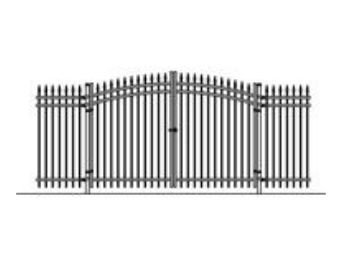
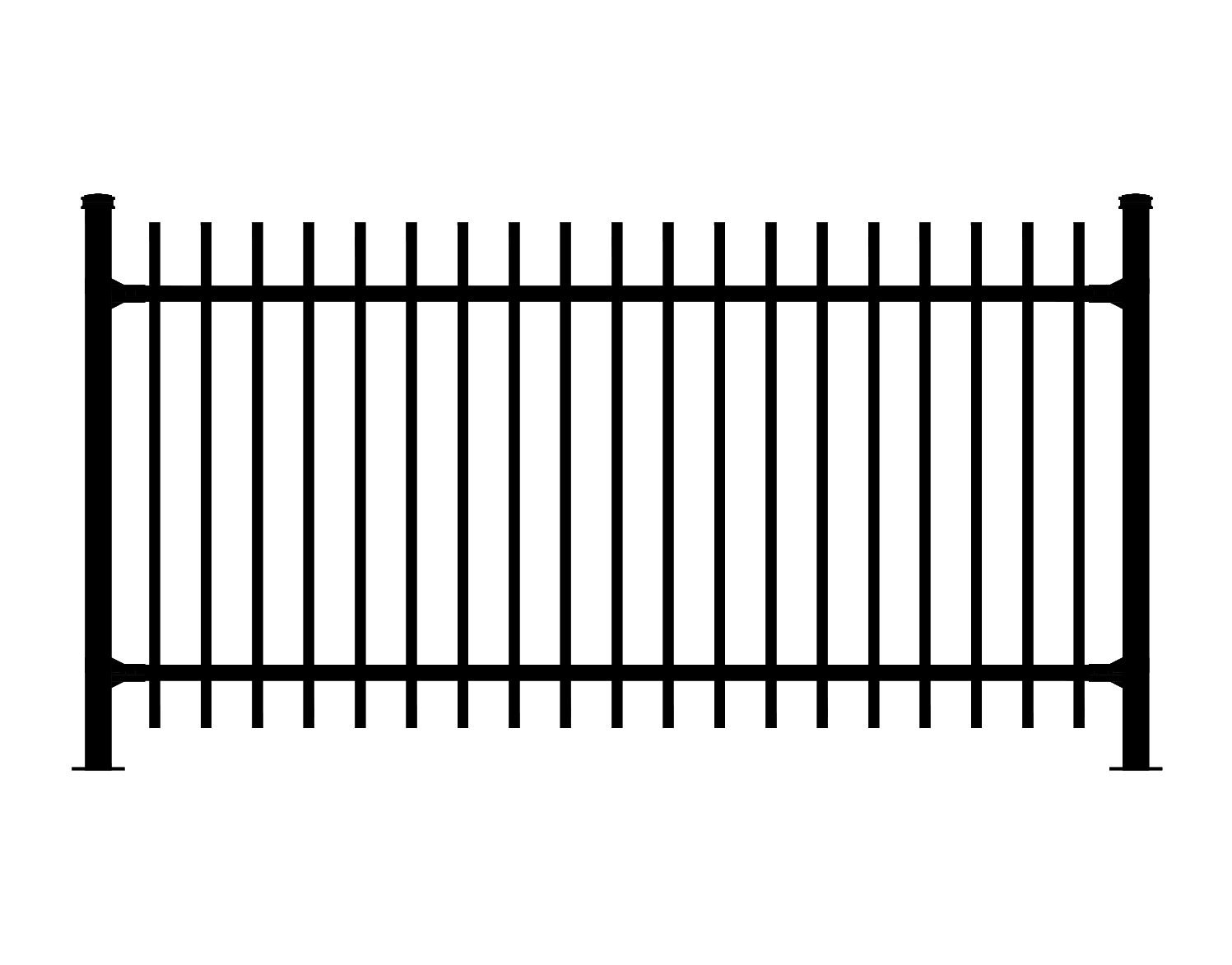
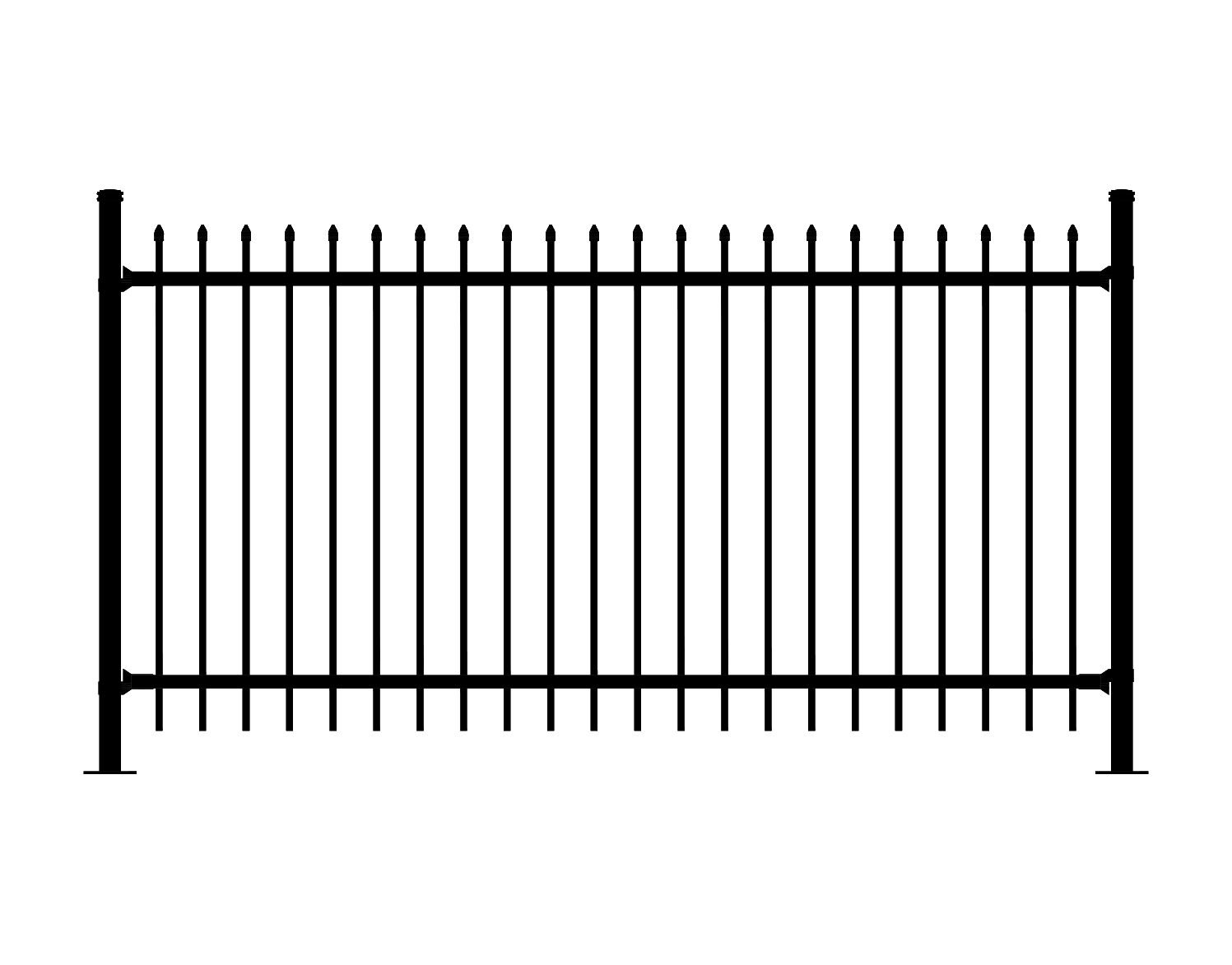
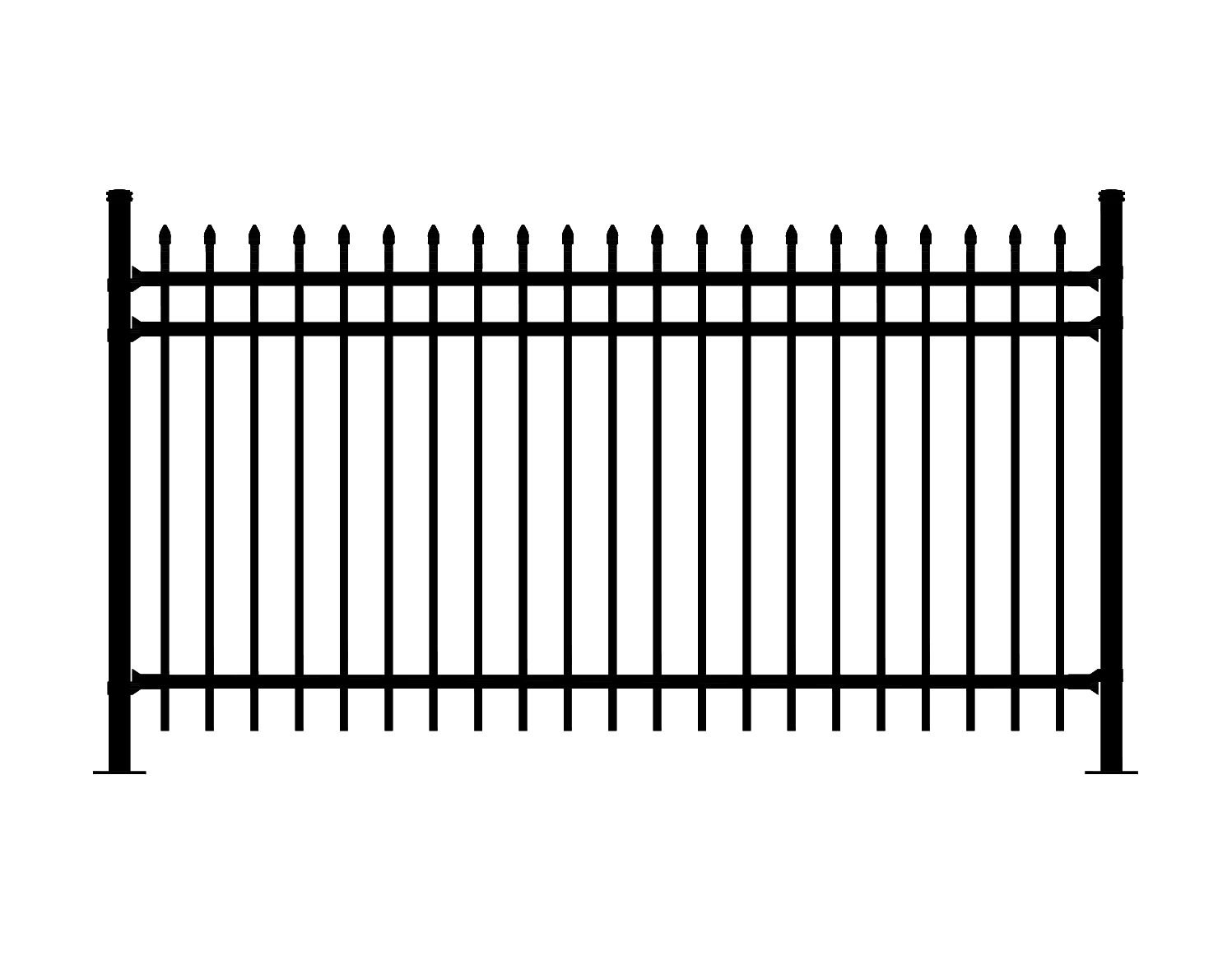
Whatever gate configuration you choose, the quality of the fencing and gate panels matters as much as the operating mechanism. Here are a few products from Medallion Fence that pair well with both sliding and swing gate installations:
A Note On Canadian Building Codes And Permits
Before you commit to either gate type, check your municipal bylaws. In Ontario, gate height and placement relative to the property line determine whether a building permit is required. Most municipalities limit front yard fence and gate heights to 1.0 metre (about 3.3 feet) within the front yard setback, with taller installations allowed further from the road. If your gate exceeds 2.0 metres in any jurisdiction, a building permit is almost certainly required.
Automated gates with electric operators also require a notification of work to the Electrical Safety Authority (ESA) in Ontario. Only a Licensed Electrical Contractor (LEC) can pull this notification on your behalf. This is separate from any building permit and is something many homeowners miss entirely during project planning.
For commercial and institutional projects, gates must also comply with accessibility standards (barrier-free pathways, minimum landing dimensions on both sides of the gate) and emergency egress requirements. These requirements can influence whether a swing or sliding gate is even permissible at a given location, so early coordination between the architect, the contractor, and the local building department is critical.
There is no universally "better" gate type. There is only the gate that is right for your property, your climate, your budget, and your daily operational needs. Take the time to evaluate your site conditions honestly (driveway depth, grade, frost exposure, wind patterns, traffic volume), and the right choice will usually become obvious.
If you are an architect specifying gate systems for a project, or a contractor quoting a job, or a homeowner trying to make sense of it all, Medallion Fence can help. They manufacture ornamental aluminum and steel fencing and custom gate panels right here in Maple, Ontario, with over 50 years of experience and a 25-year warranty on aluminum products.