


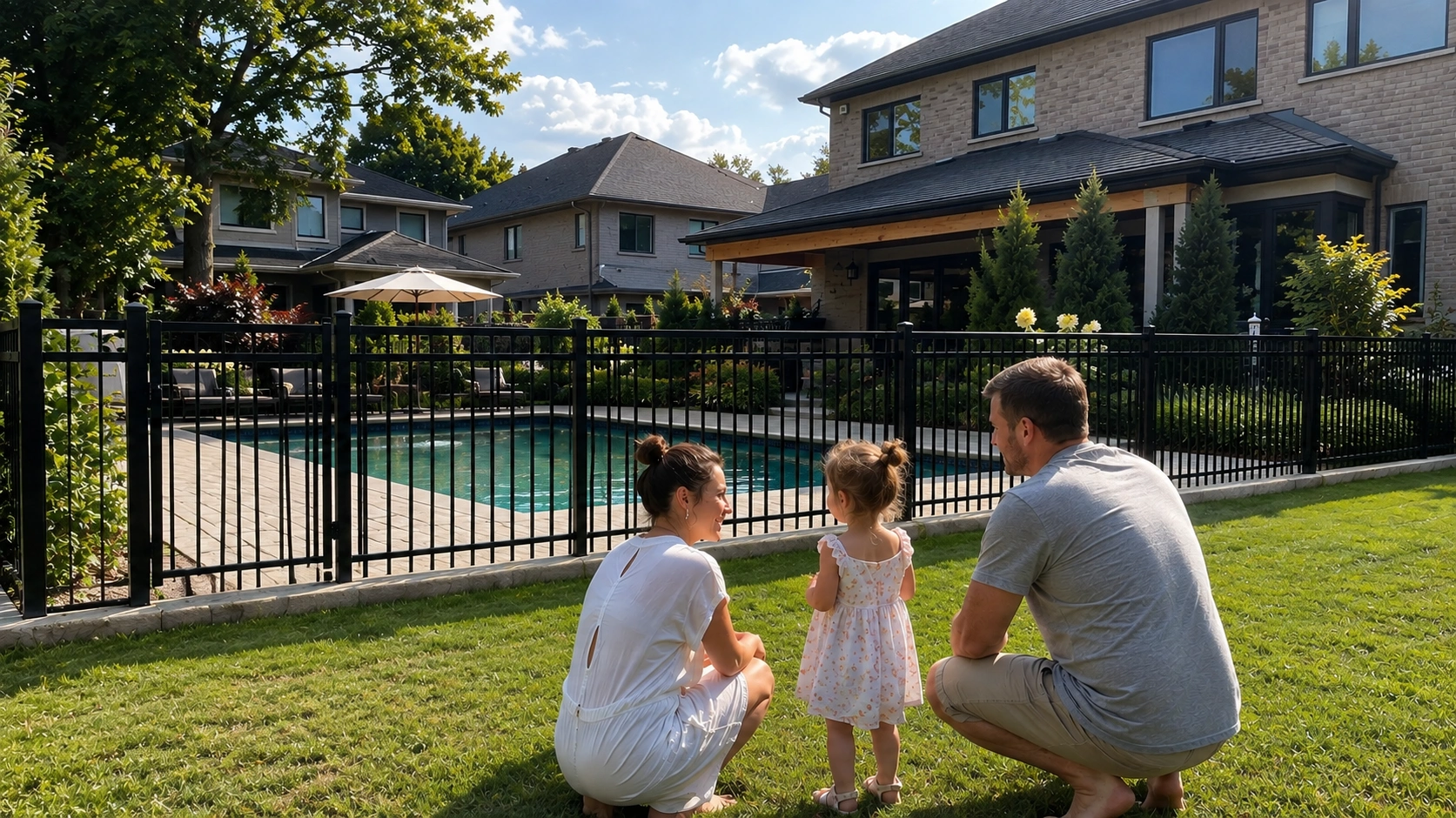
If you are reading this, you have probably already committed to a pool project or you are deep into planning one. You have picked the shape, debated fiberglass versus vinyl liner, maybe even chosen your coping stone. And then the question hits: what exactly does Ontario require when it comes to the fence around this thing?
It sounds simple. It is not.
Pool fencing is one of those areas where homeowners, contractors, and even some architects get caught off guard. The rules are strict, they vary by municipality, and the consequences of getting them wrong go well beyond a failed inspection. We are talking about the single most important safety barrier on a residential property with a swimming pool. In Canada, drowning remains the third leading cause of injury-related death for children aged 14 and under. Research estimates that compliant pool fencing could prevent up to 75 percent of drowning incidents involving young children. So this is not red tape for the sake of red tape. There is real weight behind these regulations.
Let's walk through what Ontario actually requires, where most people trip up, and which product solutions make the compliance process smoother from day one.
The Ontario Building Code: Your Starting Point, Not Your Finish Line
The Ontario Building Code (OBC), specifically Section 3.10 of Division B, sets the provincial baseline for pool enclosures. Every outdoor residential swimming pool with a water depth exceeding 600 millimetres (roughly 24 inches) must be surrounded by a barrier. That includes in-ground pools, above-ground pools with decks or external access points, hot tubs, spas, decorative ponds, and yes, even some larger inflatable pools.
Here is the part that creates the most confusion. The OBC establishes a minimum fence height of 1.2 metres (4 feet). But that number is the provincial floor, not the ceiling. Municipalities across Ontario are allowed to set stricter standards, and many of them do.
Toronto requires a minimum of 1.5 metres (5 feet). Hamilton requires the same 1.5 metres under By-law 16-184. London pushes it to 1.53 metres. Norfolk County sits at the provincial baseline of 1.2 metres. Ottawa enforces its own Pool Enclosure By-law No. 2013-39, which also mandates 1.5 metres and comes with fines that can reach $10,000 for non-compliance.
For contractors quoting jobs across the GTA, this variation is critical. What passes in Mississauga might fail in Brampton. Every single project needs a bylaw check with the local building department before materials are ordered.
Gate Requirements: Where Most Inspections Fail
Panels are rarely the problem. Gates are. In our experience, and according to municipal building inspectors across Ontario, gate compliance is where the majority of pool fence failures occur.
The OBC requires all gates providing access to the pool area to be self-closing and self-latching. The gate must close automatically from any open position, typically achieved through spring hinges or a hydraulic closer mechanism. The latch must engage on its own when the gate swings shut. No manual action should be required to secure the gate after it closes.
Latch placement is another area where people run into trouble. The latch must be installed on the pool side of the gate. If it is placed on the exterior side for any reason, it must sit at a minimum height of 1.5 metres from the outside grade to prevent young children from reaching it. In Ottawa, the latch height requirement is 1.35 metres on the pool side.
Gates must swing outward, away from the pool area. And they must be locked at all times except when the pool is in active use.
Ontario winters are brutal on gate hardware. Freeze-thaw cycles cause spring hinges to weaken, gate frames to shift, and latches to seize up. Magnetic or spring-loaded latches rated for outdoor use in Canadian climates tend to hold up better, but even those need regular seasonal checks. The most common compliance issue across the province is a gate that used to self-close properly but no longer does because the hardware wore out over winter.
Picket Spacing, Climb Resistance, and the 100mm Rule
Under the OBC, no opening in a pool enclosure can be large enough to allow a 100 mm (approximately 4 inch) sphere to pass through. This applies to the gaps between pickets, the space between the bottom rail and grade, and any transition points near retaining walls, decorative posts, or grade changes.
This is where specifying the right fence system from the start saves you from expensive field corrections later. A fence can look tight at first glance and still fail where the ground slopes or where custom trim creates an oversized gap near the bottom.
The OBC also prohibits any design that creates a "ladder effect." Horizontal rails, lattice panels, decorative scrollwork, or protruding hardware on the exterior face of the fence can give a child footholds to climb over. If horizontal members are used, they must be on the pool side of the fence only. Chain-link fencing is generally not accepted for pool enclosures in Ontario because the diamond mesh pattern is inherently climbable.
For architects specifying pool enclosures on residential estate projects, the anti-climb requirement deserves careful detailing. It is not enough for the fence to look non-climbable from a plan view. Inspectors will check the actual exterior face in the field, and anything that could serve as a toehold or handhold will be flagged.
Can Your Existing Backyard Fence Count as a Pool Enclosure?
This might be the single most common question homeowners ask, and the answer is usually "not without modifications."
Most standard residential yard fences in Ontario are 4 feet tall. That is not enough in municipalities like Toronto, Hamilton, or Ottawa, where 5 feet is the minimum. Beyond height, the bigger issue is gate hardware. Standard backyard gate latches and hinges almost never meet the self-closing, self-latching requirement out of the box. Upgrading the hardware is often more affordable than replacing the entire fence, but it still requires careful selection and installation to pass inspection.
A neighbour's fence presents its own problems. Even if it appears to meet every dimensional requirement, you do not control that fence. Your neighbour could modify it, remove it, or let it deteriorate. Because pool enclosure compliance falls entirely on the pool owner, relying on a fence you do not own is a liability issue that most building departments will flag during the permit process.
Can Your House Wall Serve as One Side of the Enclosure?
This depends entirely on your municipality. Some Ontario cities explicitly prohibit using the house as one wall of the pool enclosure. Others allow it, but only if every door and window opening into the pool area is equipped with a self-closing device, a high-mounted child-resistant lock, or an audible alarm that sounds when the door opens.
Before assuming your patio door can double as a pool barrier, confirm the local rules. Getting this wrong after the pool is already installed means retrofitting alarm systems or adding a secondary fence section, both of which drive up costs and delay final inspection.
Do Above-Ground Pools Need a Fence?
In most cases, an above-ground pool with rigid walls at least 1.2 metres high and no exterior deck, permanent ladder, or attached stairs does not need a separate fence. The pool wall itself acts as the barrier. But the moment you build a deck up to or around that pool, or attach a permanent staircase, the enclosure requirement kicks in. That deck becomes an access point, and it needs to be fenced and gated just like an in-ground pool area.
Permits, Inspections, and What Happens If You Skip Them
Pool enclosure permits are mandatory in all Ontario municipalities. No exceptions. The permit must be obtained before construction begins, and a municipal inspector must assess and approve the completed enclosure before the pool can legally be filled with water. Filling the pool before receiving that approval is a bylaw violation in itself.
Non-compliance consequences are serious. Municipal bylaw enforcement can issue fines that are applied repeatedly until the enclosure meets code. In some jurisdictions, the municipality can issue orders to drain and cover the pool until a compliant fence is erected. Beyond the fines, a non-compliant pool enclosure creates significant personal liability. If a child gains access through an inadequate barrier and is injured, the homeowner faces both civil and potentially criminal liability. Most home insurance policies require proof of a compliant pool enclosure, and claims arising from incidents involving a non-compliant fence are routinely denied.
Choosing the Right Fence System for Ontario Pool Enclosures
Material selection matters. The OBC does not mandate a specific material, but the fence must maintain its required height, spacing, anti-climb profile, and gate function through years of Canadian weather. That means the system needs to handle freeze-thaw cycles, salt exposure, UV degradation, and regular family use without warping, corroding, or losing structural integrity.
Ornamental aluminum is widely regarded as the best-performing material for residential pool enclosures in Ontario. It does not rust from chlorine splash or irrigation runoff, it holds its dimensions across the full range of Canadian temperatures, and it requires virtually zero ongoing maintenance beyond an occasional wash.
Here are a few product lines worth considering for your next pool fencing project:
Fairmont™ Series
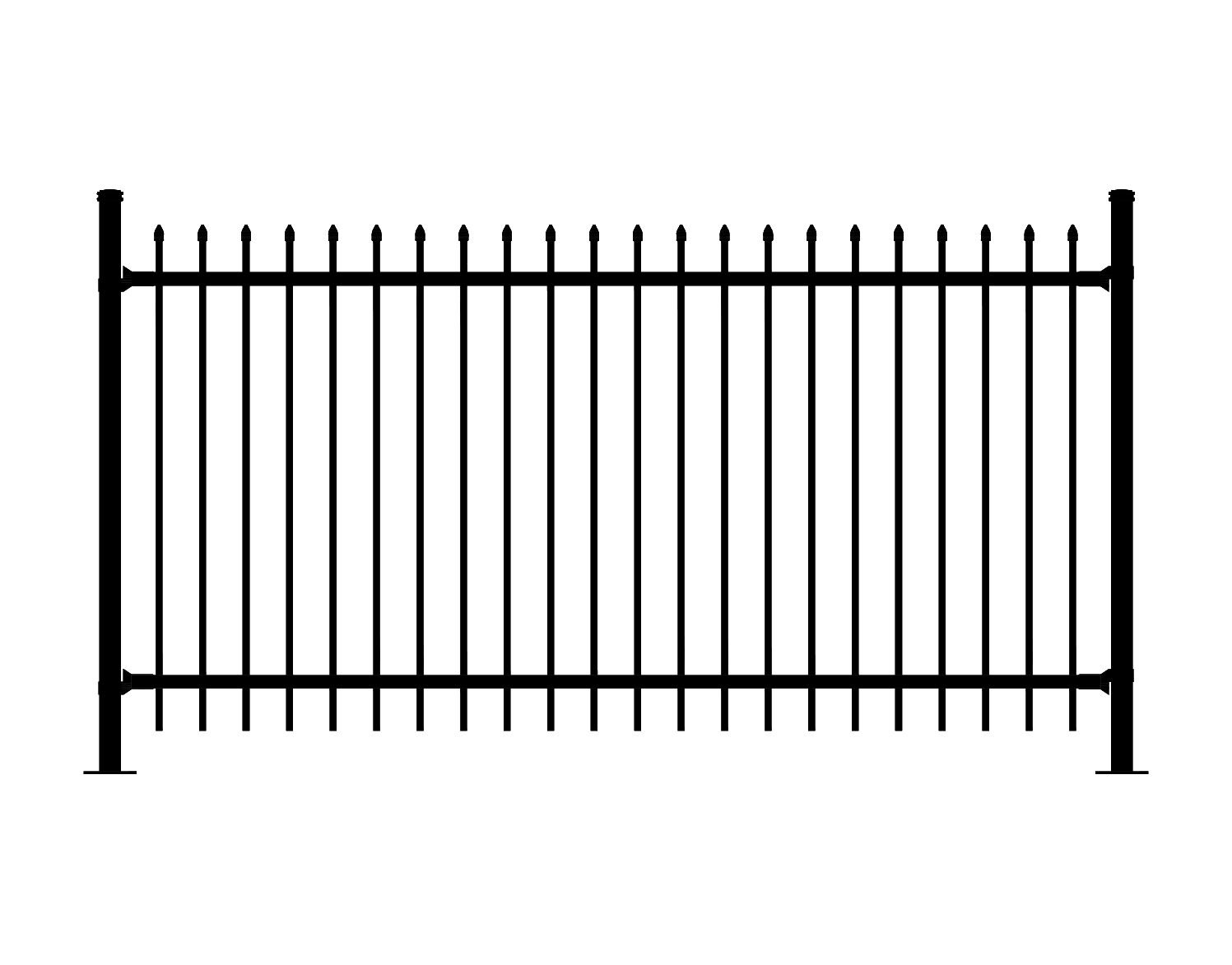
The Fairmont™ Series from Medallion Fence is one of the most popular residential aluminum fence systems for pool enclosures in Ontario. Built with 5/8" x 5/8" pickets and 1-1/4" x 1-1/4" rails on a minimum 2" x 2" post, the picket spacing on these panels is engineered to meet the sub-100 mm gap requirement right out of the box. Available in both steel (with Armour-Shield™ corrosion protection) and aluminum (with Alu-Tuff™ finish), these panels handle Ontario's freeze-thaw cycles without warping or corroding. Styles like the Aristocrat, Cavalier, and Stanton give architects and homeowners a range of aesthetic profiles while keeping compliance baked into the panel geometry.
Wellington™ Series
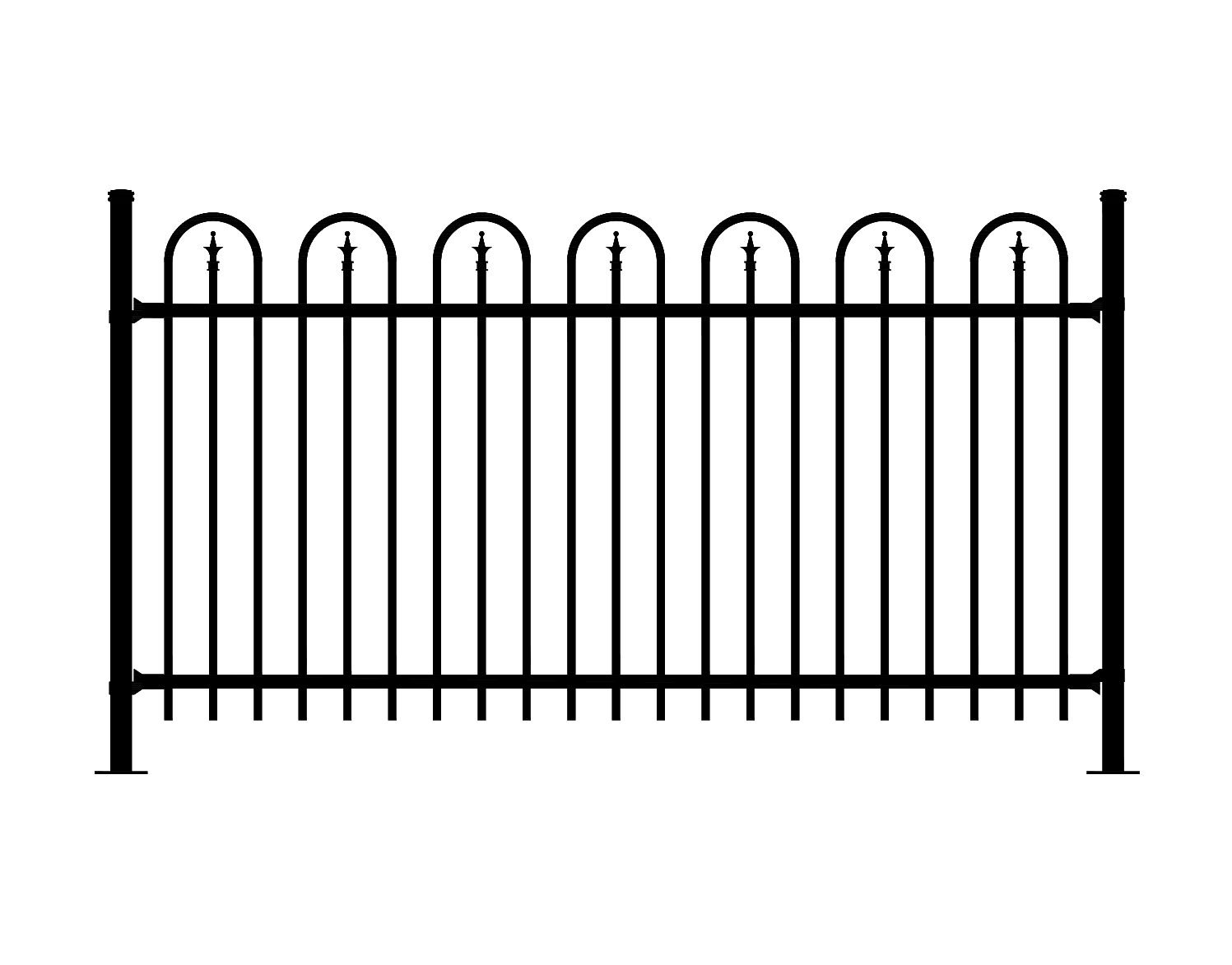
For estate properties and higher-end residential projects where the client wants something more refined, the Wellington™ Series offers 3/4" x 3/4" pickets with 1-1/4" x 1-1/4" rails. The heavier picket profile gives the panels a more substantial visual presence along pool perimeters and is particularly well-suited for properties where the fence needs to complement stone or masonry hardscaping. Like the Fairmont, it is available in both steel and aluminum with the same corrosion protection systems.
Custom Gates
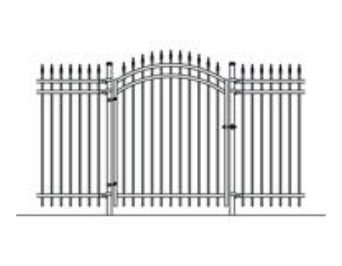
Since gate compliance is where most pool fence inspections fail, specifying a purpose-built gate system is critical. Medallion Fence manufactures custom arched passage gates, mirror image double gates, and wave-style gates designed to integrate with their panel series. These gates are fully welded (not bolted or roll-formed) and can be paired with self-closing hinges and self-latching hardware that meets OBC and municipal gate requirements.
Oxford™ Series
For commercial pool facilities, community centres, condominium amenity areas, or institutional aquatic projects, the Oxford™ Series provides an industrial-grade enclosure solution. With 3/4" x 3/4" or 1" x 1" pickets, 1-1/2" x 1-1/2" rails, and a minimum 2-1/2" x 2-1/2" post, this series is designed for higher traffic environments where durability and vandal resistance are priorities alongside code compliance.
Final Thoughts for Homeowners, Contractors, and Specifiers
Pool fencing in Ontario is not a one-size-fits-all situation. The provincial code gives you a baseline, but your municipal bylaw is what you will actually be inspected against. Height, gate swing direction, latch placement, anti-climb design, and picket spacing all need to be confirmed with your local building department before materials are ordered.
If you are a contractor, build the bylaw check into your quoting process. If you are an architect, detail the gate hardware and anti-climb profile in your specifications rather than leaving it to field interpretation. And if you are a homeowner, do not leave the fence for last. It is one of the first things the inspector will look at, and your pool cannot be filled until it passes.
The right fence system, specified correctly from the beginning, saves time, passes inspection on the first try, and most importantly, keeps kids safe.
Ready to Build a Compliant Pool Enclosure?
All Medallion Fence products are manufactured in-house at their Maple, Ontario facility and come backed by a 25-year warranty on aluminum and a 20-year warranty on steel. For pricing, lead times, and technical support, visit our website or give us a call.
Visit Medallion Fence