
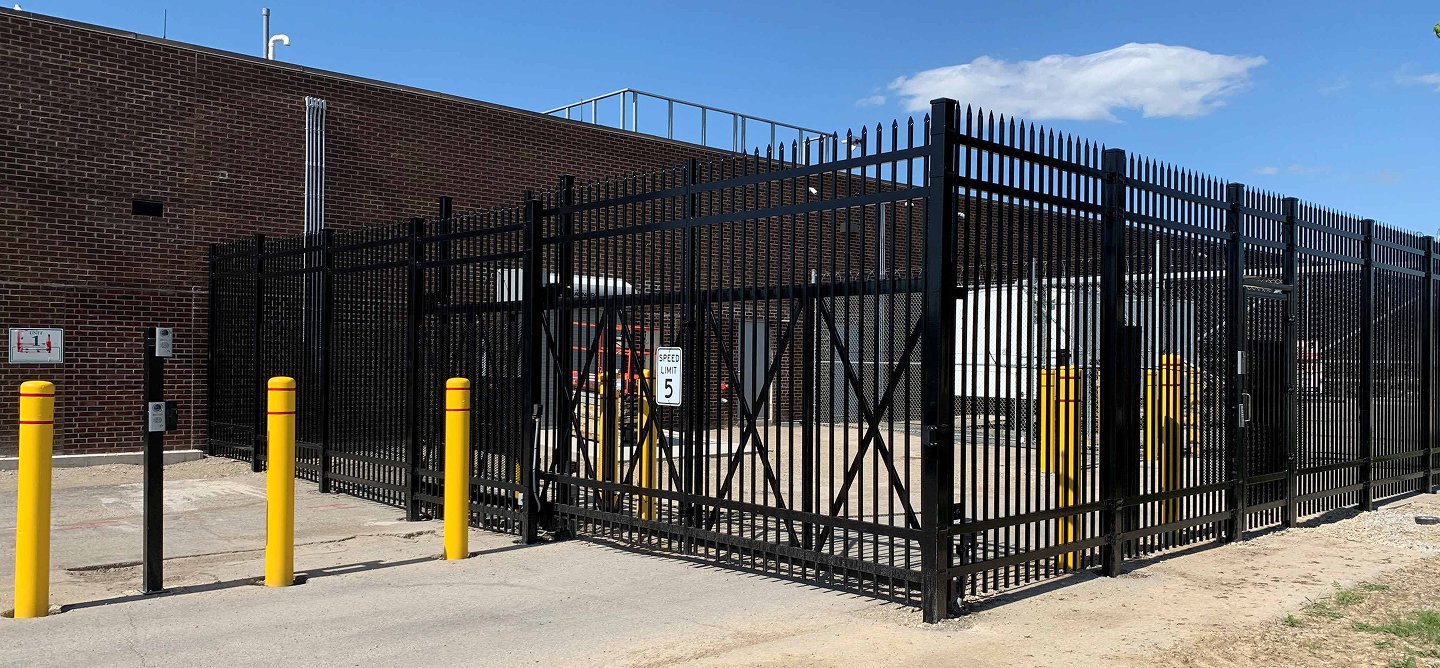
Installing a perimeter fence in Canada isn’t just a design or security decision—it’s often a legal and compliance issue. Whether you’re fencing a commercial property, industrial site, multi-family building, school, construction zone, or public facility, Canadian perimeter fencing must align with local bylaws, provincial/territorial building codes, and in many cases, national model code requirements.
One important thing to understand right away is that Canada does not have a single “fence code” that applies everywhere. Instead, most jurisdictions follow a combination of:
-
The National Building Code of Canada (NBC) (a model code used as a foundation)
-
Provincial/Territorial Building Codes, which adapt or modify NBC standards
-
Municipal fencing bylaws, which often contain the most direct fence rules (heights, setbacks, materials, location rules, etc.)
-
Occupational health & safety rules, especially for construction sites and industrial environments
This guide breaks down the key code-related concepts you need to know—without overwhelming legal language—so you can plan, design, and build a perimeter fence that’s both effective and compliant.
1. Is Perimeter Fencing Covered by the Canadian Building Code?
Most of the time, standard property boundary fencing is governed mainly by municipal bylaws, not strictly by the National Building Code. However, building codes become very relevant when the fence is part of:
-
Guarding against falls (like fencing around drop-offs, retaining walls, elevated walkways)
-
Pool enclosures
-
Construction site safety fencing
-
Industrial safeguarding barriers
-
Fire and emergency access requirements
-
Security fencing for government or high-risk sites
The National Building Code of Canada 2020 is a model code developed by the NRC (National Research Council of Canada) and adopted differently across provinces and territories. It sets out technical requirements for new buildings and renovations—and supports consistency across Canada. nrc.canada.ca+1
So while a typical decorative perimeter fence may not be “NBC regulated,” the moment it becomes a safety or access control structure, building code requirements can apply.
2. The Big Three Compliance Layers for Perimeter Fencing in Canada
A) Municipal Fence Bylaws (Most Important)
Municipal bylaws typically regulate:
-
Fence height limits (front/side/rear yards)
-
Fence styles and permitted materials
-
Visibility rules near intersections (corner lots)
-
Setback requirements
-
Rules for fences near public sidewalks or utilities
-
Permit requirements depending on height/type
Most commercial perimeter fence issues are solved by consulting the city’s fence bylaw first.
B) Provincial/Territorial Building Codes
Your province’s building code may add requirements when the fence is:
-
used as a guard
-
used as a pool enclosure
-
attached to a structure
-
part of an accessible route
-
used near commercial entrances/exits
Example: Ontario Building Code includes detailed technical requirements for guard heights in many contexts. buildingcode.online
C) National Model Codes and Other Standards
The National Building Code influences provincial codes, but certain situations also involve:
-
Occupational Health and Safety regulations
-
CSA standards (industrial guarding, machinery safety)
-
RCMP or government security guidance for high-security facilities
For example, the Government of Canada’s Security Fencing Considerations Guide provides guidance for selecting and designing security fencing for federal facilities. rcmp.ca
3. Fence vs. Guard: A Key Code Difference
A “fence” is typically considered a boundary or access control feature.
A “guard” is a protective barrier used to prevent falls.
If your perimeter fence is acting as a guardrail, it may need to meet building code guard requirements.
For example, federal occupational safety rules describe guardrail features like:
-
top rail height between 900 mm and 1,100 mm
-
intermediate rail
-
posts spaced at maximum intervals
-
load resistance requirements laws-lois.justice.gc.ca
Similarly, the National Building Code and provincial codes include minimum heights depending on location and risk. In Ontario, for instance, general guard height is not less than 1,070 mm in many applications. buildingcode.online
Why this matters
If your “fence” is placed along:
-
a platform edge
-
a retaining wall
-
an elevated parking area
-
loading docks or ramps
-
balconies or rooftop areas
…it might be regulated as a guard, not just a fence—meaning it must meet stricter design and load requirements.
4. Common Perimeter Fence Code Requirements (What Most Cities Look For)
Even though codes vary, these are the most common compliance points inspectors and municipalities enforce:
A) Fence Height Rules
Commercial perimeter fences often have different height allowances than residential fences. Municipalities may limit:
-
front yard fences to shorter heights for visibility
-
rear and side yard fences to taller heights (often up to 6 ft / 1.8 m or more)
-
higher fences for industrial sites or high-security properties
In some areas, fences above a certain height require:
-
a permit
-
engineered drawings
-
specific setbacks
B) Setbacks and Property Line Requirements
Cities often regulate:
-
fences on easements (utility corridors)
-
fences near sidewalks and roads
-
fences too close to fire hydrants, transformers, or underground services
A common compliance issue is installing a fence that blocks utility access or violates right-of-way rules.
C) Visibility Triangle Rules
Corner lots and driveways require visibility for vehicles and pedestrians.
Many bylaws restrict tall or solid fences in “sight triangles.”
D) Materials and Structural Safety
Municipalities may specify:
-
acceptable fence types (chain link, ornamental metal, wood, vinyl, etc.)
-
restrictions on barbed wire
-
anti-climb measures only in certain zones
-
minimum structural stability (especially for tall fences)
5. Construction Site Perimeter Fencing Requirements
Construction sites have additional requirements because fencing is about public safety and site security.
Many municipalities require fencing during construction and demolition before work begins. For example, the City of Markham requires fencing when the Chief Building Official determines it is necessary, and the permit holder must erect fencing to prevent unauthorized entry. markham.ca
Some municipalities also publish detailed guidance about when and how to fence construction sites to protect the public. Regional Municipality of Wood Buffalo
Common construction fencing expectations include:
-
minimum fence heights
-
secure access points
-
protection around hazards (excavations, debris, equipment)
-
wind-load stability and ballast requirements in high-wind zones
-
signage requirements in some provinces (including language requirements like French in Quebec)
6. Pool and Perimeter Fencing (One of the Strictest Categories)
Pool enclosures are among the most strictly enforced fence requirements in Canada because they are a major safety concern.
Most municipalities require:
-
minimum fence height (commonly 1.2 m / 4 ft)
-
gates that are self-closing and self-latching
-
no climbable horizontal members (to prevent children from climbing)
-
restrictions on spacing between pickets or chain link mesh sizes
Many Ontario guides confirm that pool fences must meet local bylaws and permits are required for enclosures. documents.ottawa.ca+1
Some municipalities publish detailed technical sheets for pool fence requirements and drawings. cityofwoodstock.ca
And many Ontario municipalities consistently reference 1.2 m (4 ft) minimum height requirements for pool fencing. springwater.ca+1
Important note
Pool rules are often:
-
provincially influenced
-
but municipally enforced
-
with strict permit procedures and inspections
Even if you’re installing a fence around an existing yard, you may still need a pool enclosure permit. documents.ottawa.ca
7. Industrial Perimeter Fencing and CSA Standards
For industrial sites, perimeter fencing may be tied to workplace safety, not just property boundaries.
A major reference for industrial guarding is CSA Z432, which is a machine safeguarding standard. It’s often used in Ontario and other regions when defining safe distances and guard requirements for perimeter barriers around hazards or machinery. HITE Engineering
These requirements can include:
-
minimum distance from danger zones
-
height requirements depending on hazard level
-
anti-reach or anti-climb considerations
-
gate interlocks or controlled access systems
If your “perimeter fence” is acting as a safety barrier—not just a boundary—it may require compliance with workplace safety standards, not just fence bylaws.
8. Emergency and Fire Access Considerations
Commercial fencing must not interfere with:
-
emergency exits
-
fire routes
-
firefighter access zones
-
hydrants and fire department connections
-
required driveway widths for emergency vehicles
While fence bylaws set most rules, inspectors may request adjustments if shown that fencing blocks emergency response pathways.
This is especially important for:
-
warehouses
-
multi-family residential buildings
-
commercial complexes
-
industrial facilities
-
sites with fire lanes
9. Permits: When Do You Need One?
Permitting varies widely, but generally you may need a permit if:
-
the fence is above a certain height
-
the fence includes retaining walls or guards
-
you are installing a pool enclosure
-
the fence is in a commercial or industrial zone
-
the fence is on a public right-of-way or easement
-
it’s part of a construction/demolition permit requirement
Many municipalities specifically say permits are required for pools and enclosures to ensure compliance with bylaws and safety standards. stcatharines.ca+1
10. Best Practices to Ensure Code Compliance (Without Delays)
Here are the smartest steps to prevent costly rework:
1. Confirm Local Fence Bylaws First
Search your city’s fencing bylaw and check:
-
max heights (front vs side vs rear)
-
allowed materials
-
corner-lot visibility restrictions
-
special commercial/industrial rules
2. Check if the Fence Acts as a Guard
If it protects from falls or is near elevated surfaces, it may need to meet guardrail requirements.
3. Confirm Site Use Type
Construction sites, industrial safety zones, and pool enclosures have completely different requirements than standard perimeter fences.
4. Plan for Gate Compliance
Gates must often meet accessibility or safety requirements and should not block emergency pathways.
5. Consider Engineering for Tall or High-Wind Zones
Some cities require engineered drawings for:
-
tall fences
-
hoarding systems
-
temporary fencing in wind zones
-
complex commercial perimeter fences metalfencetech.com
Conclusion: Canadian Fence Compliance Is Local—But Planning Makes It Easy
Understanding Canadian building code requirements for perimeter fencing starts with one key reality: most fence rules are governed locally, but safety-related fencing often triggers provincial building codes and national guidelines.
If your fence is only a property boundary, bylaws will dominate. But if it’s protecting from falls, securing construction sites, enclosing pools, or safeguarding industrial hazards, then building code standards and additional safety regulations may apply.
The best approach is to treat perimeter fencing as a compliance project—not just an installation—and plan around the right code sources:
- Municipal bylaws
- Provincial building code rules
- Occupational health and safety requirements
- Special standards like CSA Z432 for industrial environments